

When a loved one is hospitalized with sepsis, one of the first fears family members face is whether they can catch it too. It is a completely understandable concern, especially when the condition is described in urgent, life-threatening terms by medical staff and the patient appears critically ill. The fear of contagion in these moments is natural, but understanding exactly what sepsis is and how it actually develops will put that fear to rest and help you focus on what actually matters during a medical crisis.
Sepsis is not a contagious illness. It cannot be transmitted from one person to another through physical contact, shared air, or other forms of exposure. What can sometimes spread are the underlying infections that trigger sepsis, and understanding this difference can help protect yourself and those around you. Seek timely medical care at an emergency room Waxahachie TX if an infection shows signs of becoming serious.
What Is Sepsis?
Sepsis is not an infection itself but rather the body’s own extreme response to one. When an infection enters the body and the immune system overreacts, it begins releasing inflammatory chemicals that damage healthy tissues and organs rather than just targeting the threat. This cascade of inflammation and organ stress is what defines sepsis, and it can develop from almost any type of infection anywhere in the body.
According to the Centers for Disease Control and Prevention, at least 1.7 million adults in the United States develop sepsis each year, and it remains one of the leading causes of death in hospital settings. The condition can progress from a manageable infection to life-threatening organ failure in a matter of hours, which is why recognizing it early and seeking emergency care immediately is so critical to survival.
Is Sepsis Contagious From Person to Person?
No. Sepsis cannot be passed from one person to another under any circumstances. It is a physiological response that occurs inside a specific individual when their own immune system loses control of its response to an infection they already have. You cannot catch sepsis by sitting next to someone who has it, touching them, or being in the same room as them. There is no sepsis pathogen that transfers between people because sepsis is not caused by a single pathogen at all.
What sometimes confuses people is that sepsis looks and feels like an aggressive infectious disease from the outside. The patient is severely ill, often in the ICU, and the medical staff takes careful precautions around them. Those precautions are there to protect the vulnerable patient from additional infections, not to protect visitors from catching sepsis itself.
Can the Infections That Cause Sepsis Spread?
This is where the important nuance lies. While sepsis itself is not contagious, the infections that can trigger it sometimes are, and this is what people should actually be thinking about when they worry about exposure.
- Bacterial infections like strep throat, bacterial pneumonia, and meningitis spread through respiratory droplets and direct contact. In vulnerable individuals, these infections can escalate to sepsis if not treated promptly
- Upper respiratory infections, including influenza and severe viral pneumonia, can spread easily through airborne droplets and, in some cases, create the conditions that lead to secondary bacterial infections and eventually sepsis
- Urinary tract infections are generally not contagious, but when bacteria ascend to the kidneys and go untreated, they become a leading cause of sepsis, particularly in older adults and women
- Skin and wound infections like cellulitis can sometimes spread through direct contact with open wounds, but more commonly develop from a person’s own skin bacteria entering through a cut or abrasion
The practical takeaway is that protecting yourself from common contagious infections like the flu and strep through vaccinations and good hygiene is one of the most effective ways to reduce your risk of developing sepsis. For flu-related symptoms that require medical attention, flu treatment near me can help provide timely evaluation and care.
What Are the Symptoms of Sepsis?
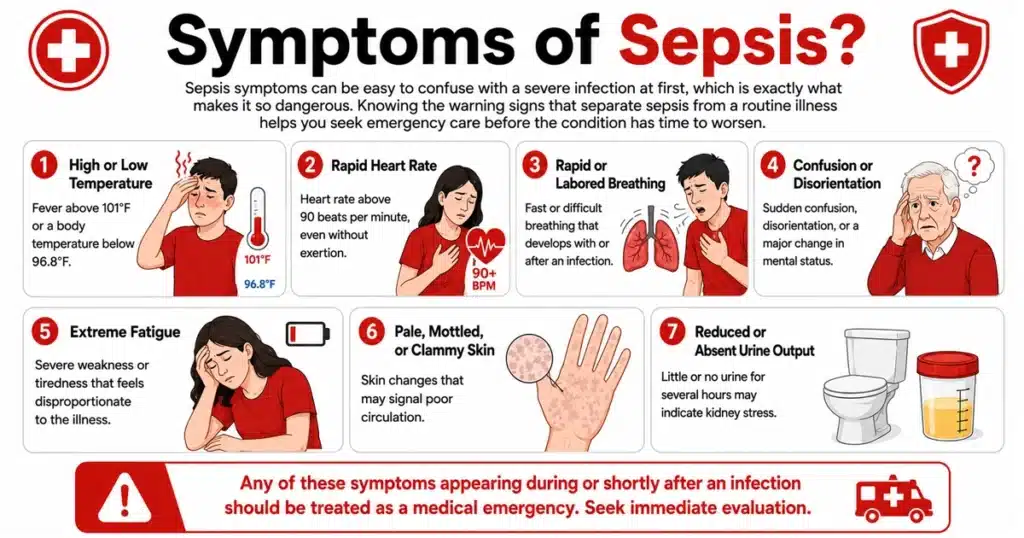
Sepsis symptoms can be easy to confuse with a severe infection at first, which is exactly what makes it so dangerous. Knowing the warning signs that separate sepsis from a routine illness helps you seek emergency care before the condition has time to worsen.
- Fever above 101°F or, conversely, a body temperature that drops abnormally low below 96.8°F
- Rapid heart rate exceeding 90 beats per minute, even without physical exertion
- Rapid or labored breathing that develops alongside or shortly after an infection
- Sudden confusion, disorientation, or significant change in mental status
- Extreme fatigue or weakness that is disproportionate to visible symptoms
- Skin that appears pale, mottled, or clammy, which signals compromised circulation
- Reduced or absent urine output over several hours, indicating the kidneys are under significant stress
Any of these symptoms appearing during or shortly after an active infection should be treated as a medical emergency requiring immediate evaluation rather than a monitoring situation at home.
Who Is Most at Risk for Developing Sepsis?
Sepsis can affect anyone with any type of infection, but certain groups face a significantly elevated risk of developing it and experiencing the most severe outcomes.
Older Adults and Infants
Adults over 65 and infants under one year old are among the most vulnerable populations for sepsis because their immune systems are either still developing or have weakened with age. Even relatively common infections like urinary tract infections or pneumonia can escalate rapidly in these age groups without showing the obvious warning signs that would prompt faster action in a healthy adult. Regular monitoring of any infection in elderly patients or young infants is especially important for catching deterioration early.
People With Chronic Conditions
Diabetes, chronic kidney disease, liver disease, cancer, and cardiovascular disease all compromise the immune system’s ability to contain infections before they spiral out of control. A urinalysis and blood testing become especially critical diagnostic tools for people with chronic conditions who present with fever or other infection symptoms, since their baseline immune response may be too weakened to mount a clear visible reaction before sepsis sets in.
Immunocompromised Individuals
People receiving chemotherapy, long-term corticosteroid therapy, or immunosuppressants for autoimmune conditions have a dramatically reduced ability to fight infections before they progress to dangerous levels. Even minor cuts, dental procedures, or respiratory illnesses that a healthy person’s immune system would handle easily can become pathways to serious systemic infection in immunocompromised patients. These individuals should seek medical evaluation for any signs of infection rather than waiting to see if symptoms resolve on their own.
How Is Sepsis Treated?
Sepsis treatment is time-sensitive and almost always requires hospitalization and intensive medical intervention to stabilize the patient and prevent organ failure from progressing further.
- IV antibiotics are administered immediately when sepsis is suspected, targeting the most likely bacterial sources before laboratory culture results are available to guide more specific therapy
- Fluid resuscitation using intravenous fluids restores blood volume and helps maintain adequate blood pressure and organ perfusion throughout the acute phase
- Vasopressors are medications used when IV fluids alone cannot bring blood pressure to a safe level in cases of severe sepsis or septic shock
- Oxygen therapy supports breathing when the respiratory system is affected by the inflammatory response or the underlying infection, causing sepsis
- Source control addresses the underlying infection directly through additional targeted antibiotics, surgical drainage of abscesses, or removal of infected tissue when medication alone is insufficient
Sepsis Warning Signs That Require Immediate Emergency Care
Certain symptoms developing during or after any active infection indicate that sepsis may already be underway and cannot be safely monitored at home.
- Sudden confusion or altered mental status in someone who has been fighting an illness
- Fever above 103°F or a temperature drop below 96.8°F that does not respond to medication
- Rapid heart rate or labored breathing alongside an active infection
- Pale, mottled, or bluish skin tone developing during a febrile illness
- No or very little urine output over several consecutive hours
- Extreme weakness or dizziness that prevents normal functioning
When to Go to the ER?
Do not wait if an active infection develops any of the warning signs above. Know the top reasons to visit the ER right now and act immediately if you experience any of the following:
- Fever accompanied by confusion, disorientation, or sudden difficulty staying awake
- Rapid heart rate, low blood pressure, or difficulty breathing alongside an infection
- Physical deterioration that is visibly worsening by the hour despite home care
- Any combination of infection symptoms and signs of sepsis that are not improving
If these warning signs appear, seek immediate medical attention instead of waiting for symptoms to improve. Visit the nearest emergency room for prompt evaluation and treatment to reduce the risk of serious infection-related complications.
Sepsis Care at Altus Emergency
Sepsis can progress from a concerning infection to full organ failure in a matter of hours, which is why fast and accurate emergency evaluation is the most critical factor in survival. With ER wait times of 10 minutes, at Altus Emergency, our team is equipped to identify sepsis quickly, initiate IV antibiotic therapy immediately, run comprehensive blood panels and cultures, and monitor organ function continuously throughout treatment. Whether your symptoms began with a respiratory illness, a urinary infection, or a wound that became infected, we are available around the clock to provide the immediate and thorough care that sepsis demands.
Key Takeaways
- Sepsis is not contagious and cannot be transmitted from person to person under any circumstances
- The infections that trigger sepsis, such as pneumonia, UTIs, and strep, can sometimes be contagious
- Sepsis is the body’s extreme immune overreaction to an existing infection and can develop from almost any source
- Older adults, infants, people with chronic conditions, and immunocompromised individuals face the highest risk
- Symptoms like sudden confusion, rapid heart rate, high fever, and pale or mottled skin require immediate ER evaluation
- Early IV antibiotic therapy and fluid resuscitation dramatically improve survival rates when sepsis is identified promptly