

A constantly dripping nose can be frustrating, uncomfortable, and hard to ignore, especially when it disrupts your sleep, work, or daily routine. If you’re searching for how to stop a runny nose, you’re likely looking for quick relief while also wondering if your symptoms could signal something more serious.
Although a runny nose is often temporary, it can sometimes accompany symptoms that require prompt medical attention. If it occurs with a high fever, severe facial swelling, difficulty breathing, persistent symptoms, or follows a head injury, don’t delay seeking emergency care, as these signs may indicate a more serious underlying condition that needs immediate evaluation. Our Altus ER Lake Jackson TX is open 24/7 to provide fast, comprehensive emergency care when you need it most.
Runny Nose Symptoms You Should Never Ignore
A runny nose is usually harmless, but some symptoms may indicate a more serious condition that needs prompt medical evaluation. Seek medical care if you notice any of the following:
- Difficulty breathing or shortness of breath.
- High or persistent fever.
- Severe facial pain or swelling.
- Thick, foul-smelling nasal discharge lasting over 10 days.
- Blood in the nasal discharge.
- Severe headache or neck stiffness.
- Clear nasal drainage after a head injury.
- Wheezing or chest tightness.
- Symptoms lasting more than 10–14 days.
- Poor feeding or breathing problems in infants.
If your runny nose is accompanied by a high fever that doesn’t improve or keeps returning, seeking urgent care for high fever can help identify the underlying cause and prevent potential complications.
How To Stop A Runny Nose Effectively
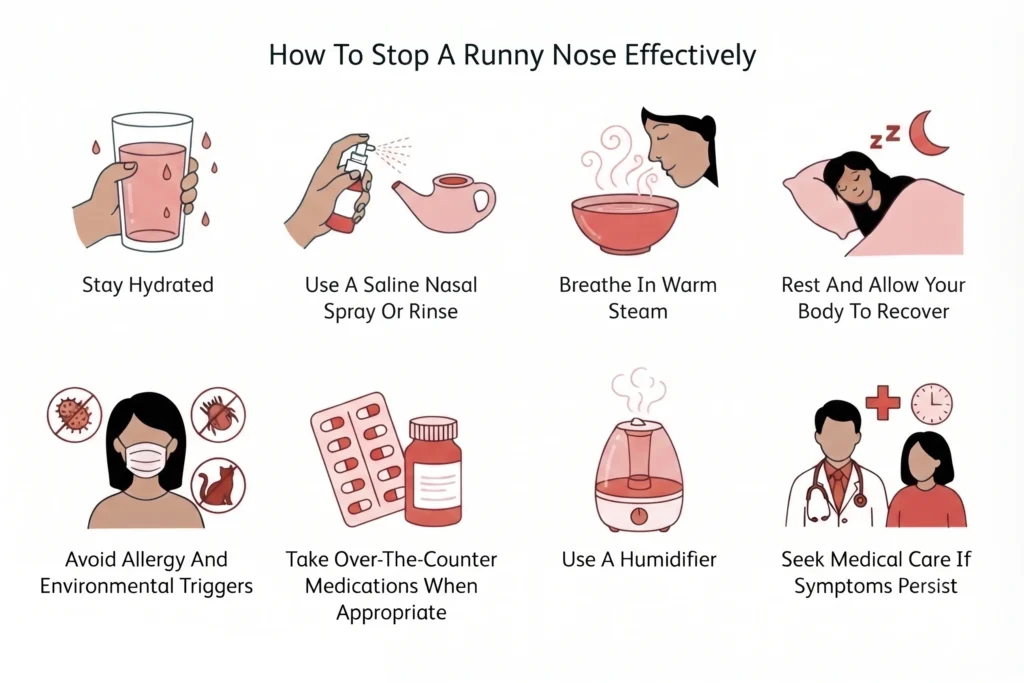
A runny nose can make even simple daily activities uncomfortable, but the right treatment depends on what’s causing your symptoms. While many cases improve with supportive care, some require targeted treatment for allergies, infections, or other underlying conditions. Taking the right approach can help reduce nasal drainage, improve comfort, and prevent symptoms from lingering or worsening.
Stay Hydrated
Drinking plenty of water, herbal tea, or clear broths helps thin nasal mucus, making it easier to drain instead of building up in the nasal passages. Staying hydrated also keeps the nasal lining moist, which may reduce irritation and improve overall comfort while your body recovers.
Use A Saline Nasal Spray Or Rinse
Saline sprays and nasal rinses help flush out mucus, allergens, and irritants from the nose without medication. They also moisturize dry nasal tissues and reduce congestion, making breathing easier. Always use sterile, distilled, or previously boiled water for nasal rinses.
Breathe In Warm Steam
Inhaling steam from a warm shower or bowl of hot water can temporarily loosen mucus and soothe irritated nasal passages. While steam does not cure the underlying cause, it may provide short-term relief and make it easier to breathe through your nose.
Rest And Allow Your Body To Recover
Getting enough sleep and reducing physical strain supports your immune system, especially if your runny nose is caused by a viral illness. Adequate rest gives your body the energy it needs to fight infection and may help symptoms resolve sooner.
Avoid Allergy And Environmental Triggers
If allergies are causing your runny nose, limiting exposure to pollen, dust mites, pet dander, smoke, or strong odors can significantly reduce symptoms. Keeping windows closed during high-pollen days and maintaining a clean indoor environment may also help.
Take Over-The-Counter Medications When Appropriate
Depending on the cause, antihistamines can relieve allergy-related symptoms, while decongestants may temporarily reduce nasal swelling. These medications should be used as directed, and some are not suitable for young children or people with certain medical conditions.
Use A Humidifier
A cool-mist humidifier adds moisture to dry indoor air, helping prevent nasal passages from becoming irritated. This can be especially helpful during winter or in air-conditioned environments. Clean the humidifier regularly to prevent mold and bacteria buildup.
Seek Medical Care If Symptoms Persist
A runny nose that lasts longer than 10 days, keeps returning, or occurs with severe symptoms may require medical evaluation. A healthcare provider can identify the underlying cause and recommend treatments such as prescription medications or further testing if needed.
When To Go To The ER
Most runny noses improve with home care, but some symptoms can indicate a serious infection, severe allergic reaction, or another medical emergency. Don’t ignore symptoms that worsen rapidly or are accompanied by breathing problems, severe pain, or changes in mental status. Prompt evaluation can help prevent complications and ensure you receive the right treatment.
- Difficulty breathing, wheezing, or shortness of breath.
- Swelling of the face, lips, tongue, or throat.
- High fever with severe headache or neck stiffness.
- Confusion, extreme drowsiness, or difficulty waking up.
- Clear nasal drainage after a head injury.
- Severe facial swelling, redness, or intense pain.
- Persistent nosebleeds that do not stop.
- Chest pain or persistent coughing with breathing difficulty.
- Symptoms in infants with poor feeding, lethargy, or breathing problems.
- A runny nose that continues to worsen despite treatment.
If your symptoms become severe or rapidly worsen, visiting the nearest emergency room can ensure you receive immediate evaluation and treatment.
Runny Nose Treatment At Altus Emergency Centers
A runny nose is often mild, but when it is accompanied by difficulty breathing, a high fever, severe facial pain, or symptoms that continue to worsen, it may require immediate medical attention. If you’re searching for how to stop a runny nose and your symptoms are severe or persistent, Altus Emergency Centers provides prompt evaluation and treatment at our 24/7 emergency room, ensuring you receive the emergency care you need without delay.
At Altus Emergency Centers, our experienced emergency physicians are available 24/7 to diagnose the underlying cause of your symptoms and provide appropriate treatment. Whether your runny nose is caused by a severe infection, an allergic reaction, or another urgent condition, we deliver fast, compassionate care to help you recover and avoid complications.
Key Takeaways
- Most runny noses improve with supportive care, including hydration, saline nasal spray, rest, and avoiding irritants.
- The best way to stop a runny nose depends on the underlying cause, such as a cold, allergies, or a sinus infection.
- A runny nose lasting longer than 10 days or worsening over time should be evaluated by a healthcare provider.
- Seek emergency care immediately if you develop difficulty breathing, facial swelling, a high fever, severe headache, or clear nasal drainage after a head injury.
- Prompt medical evaluation can help identify the cause of your symptoms and prevent serious complications when home treatment is not enough.
Frequently Asked Questions
How Long Does A Runny Nose Last?
A runny nose caused by the common cold usually lasts 7 to 10 days, while allergy-related symptoms may continue as long as you’re exposed to the trigger. If your symptoms persist beyond 10 days, worsen, or are accompanied by a high fever or severe facial pain, seek medical evaluation.
Can Teething Cause A Runny Nose?
Teething may cause extra drooling, which can sometimes look like a runny nose, but it does not directly cause significant nasal drainage. If your child has a persistent runny nose, fever, cough, or difficulty breathing, another illness may be responsible and should be evaluated by a healthcare provider.