
Watching someone you love struggle to breathe through a bad cough or constant congestion can be frightening, especially when it’s a baby, older adult, or someone with a weakened immune system. RSV is one of the most common respiratory viruses, yet many people don’t realize how serious it can become in vulnerable individuals.
Respiratory syncytial virus (RSV) is a highly contagious virus that causes upper respiratory infections affecting the nose, throat, and lungs. While many healthy people experience symptoms similar to a common cold, RSV can lead to bronchiolitis, pneumonia, breathing difficulties, and hospitalization in infants, older adults, and people with chronic medical conditions. Altus ER Waxahachie provides prompt evaluation and treatment for severe RSV symptoms and respiratory complications.
RSV Symptoms You Should Never Ignore
Most RSV infections are mild, but some people develop serious complications that require immediate medical attention. Infants younger than 12 months, adults over 65, premature babies, and people with heart, lung, or weakened immune systems have the greatest risk of severe illness.
According to a National Institutes of Health review, approximately 2–3% of infants younger than six months with RSV require hospitalization, highlighting the importance of recognizing warning signs early.
- Difficulty breathing or rapid breathing.
- Wheezing continues to worsen.
- Blue lips, tongue, or fingernails.
- Chest muscles pulling inward during breathing.
- Long pauses in breathing (especially in infants).
- Persistent high fever.
- Severe dehydration or very few wet diapers.
- Extreme sleepiness or difficulty waking up.
- Refusing to eat or drink.
- Confusion or unusual behavior in older adults.
If RSV symptoms worsen or include breathing difficulties, persistent cough, or signs of complications, seek care at an ER for respiratory infection to receive timely evaluation and treatment.
What Causes RSV?
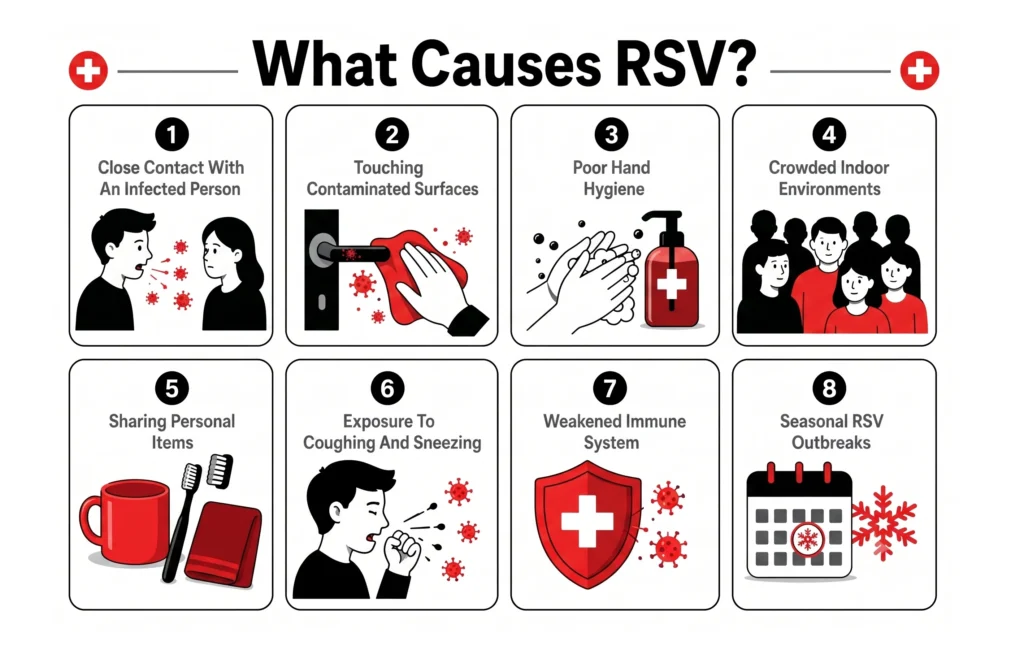
RSV is an extremely common viral infection that spreads easily from person to person throughout the year, with infections increasing during fall and winter in many regions. Nearly everyone is infected with RSV during childhood, but reinfections are common because immunity decreases over time. Understanding how people become infected can help reduce transmission and protect those at highest risk.
Close Contact With An Infected Person
RSV spreads quickly when an infected person coughs, sneezes, laughs, or talks. Tiny respiratory droplets carrying the virus can enter another person’s nose, mouth, or eyes. Family members, classmates, and caregivers frequently transmit RSV through everyday interactions before they realize they are sick.
Touching Contaminated Surfaces
The virus can survive on hard surfaces such as tables, toys, doorknobs, phones, and countertops for several hours. Touching these objects and then rubbing your eyes, nose, or mouth allows the virus to enter your body. Frequent handwashing significantly reduces this risk.
Crowded Indoor Environments
Schools, daycare centers, nursing homes, hospitals, and crowded public spaces allow RSV to spread rapidly because people remain in close contact. Seasonal outbreaks often begin in these settings before spreading throughout the community.
Direct Physical Contact
Shaking hands, hugging, kissing, or sharing drinks and utensils with someone who has RSV can transmit the virus. Babies frequently become infected through close contact with caregivers or siblings who have mild cold symptoms.
Weakened Immune System
People receiving chemotherapy, organ transplant recipients, or those with immune disorders are more likely to become infected after exposure because their immune systems cannot fight the virus effectively. They are also at greater risk for severe disease.
Previous Infection Does Not Provide Lifelong Immunity
Unlike some viral illnesses, having RSV once does not provide permanent protection. Immunity gradually declines, allowing children and adults to become infected multiple times throughout life, although repeat infections are often milder in healthy individuals.
RSV Test
Many mild RSV infections can be diagnosed based on symptoms and a physical examination alone. However, testing becomes important when symptoms are severe, hospitalization is being considered, or healthcare providers need to distinguish RSV from influenza, COVID-19, or other respiratory infections. Early diagnosis also helps guide appropriate treatment and infection control measures.
- Rapid Antigen Test: A quick nasal swab that detects RSV within minutes and is commonly used in clinics and emergency departments.
- PCR (Polymerase Chain Reaction) Test: The most accurate RSV test, capable of detecting very small amounts of the virus.
- Multiplex Respiratory Viral Panel: Tests for RSV, influenza, COVID-19, and other respiratory viruses using a single nasal sample.
- Chest X-Ray: Helps detect pneumonia or other lung complications in patients with severe symptoms.
- Pulse Oximetry: Measures blood oxygen levels to determine if oxygen therapy or hospitalization is needed.
RSV Vaccine For Adults
Several RSV vaccines are now available to help protect older adults from severe RSV disease. Vaccination is especially recommended for adults aged 75 years and older and for many adults aged 60–74 years who have certain chronic medical conditions or increased risk factors. Speak with your healthcare provider about which vaccine is appropriate for you.
- Arexvy (GSK): Approved to reduce the risk of RSV lower respiratory tract disease in eligible older adults. It stimulates a strong immune response before RSV season.
- Abrysvo (Pfizer): Recommended for eligible older adults and is also given during pregnancy to help protect newborns against severe RSV during their first months of life.
- mResvia (Moderna): An mRNA-based RSV vaccine approved for certain older adults that provides protection against serious RSV-related lower respiratory tract disease.
RSV Vaccine For Babies
Infants are among the groups most likely to develop severe RSV illness. Protection can be provided through maternal vaccination during pregnancy or by giving infants a long-acting preventive antibody before or during RSV season, depending on eligibility and medical guidance.
- Nirsevimab (Beyfortus): A long-acting monoclonal antibody recommended for most infants entering their first RSV season. It provides protection throughout the season with a single dose in most cases.
- Palivizumab (Synagis): Recommended for certain high-risk premature infants and children with specific heart or lung conditions. Monthly injections are given during RSV season.
- Maternal RSV Vaccination: When an eligible pregnant person receives the RSV vaccine during pregnancy, protective antibodies pass to the baby before birth, helping reduce the risk of severe RSV during early infancy.
When To Go To The ER
Although many RSV infections improve at home, severe symptoms should never be ignored. Babies, older adults, and people with chronic medical conditions can deteriorate quickly. Seek emergency medical care immediately if any of the following symptoms develop.
- Difficulty breathing or severe shortness of breath.
- Blue lips, face, or fingernails.
- Wheezing becomes severe or persistent.
- Chest retractions during breathing.
- Long pauses in breathing in infants.
- Oxygen levels that appear low or worsening breathing distress.
- High fever that does not improve.
- Severe dehydration or inability to drink fluids.
- Extreme lethargy or difficulty waking.
- Confusion or sudden change in mental status.
If these warning signs develop, visit the nearest emergency room immediately for evaluation and emergency treatment.
RSV Treatment
There is no single medication that cures RSV, and treatment focuses on relieving symptoms while supporting the body’s recovery. Most healthy individuals recover at home with rest and hydration, while severe infections may require hospital-based care. Treatment depends on the patient’s age, symptoms, and risk factors.
- Acetaminophen (Tylenol): Most doctors recommend it to reduce fever and relieve discomfort when used as directed.
- Ibuprofen (Advil, Motrin): Most doctors recommend it for fever and pain relief in patients older than six months, when appropriate.
- Saline Nasal Drops And Suctioning: Help clear nasal mucus, making breathing and feeding easier, especially for infants.
- Humidified Air: A cool-mist humidifier may ease congestion and soothe irritated airways. Clean it regularly to prevent mold.
- Hydration: Drinking plenty of fluids helps prevent dehydration and thins mucus for easier clearance.
- Rest: Adequate sleep and rest support the immune system during recovery.
- Supplemental Oxygen: May be needed if RSV causes low oxygen levels or breathing difficulties.
- Intravenous (IV) Fluids: Used when dehydration or poor fluid intake prevents adequate hydration.
- Mechanical Ventilation: Rarely needed for severe respiratory failure requiring intensive care.
- Bronchodilators: Most doctors do not routinely recommend them but may prescribe them in selected cases.
- Antibiotics: Most doctors recommend them only if a bacterial infection develops alongside RSV.
Altus Emergency Centers For RSV Care
If you or your loved one develops severe RSV symptoms such as trouble breathing, persistent high fever, blue lips, or signs of dehydration, seek emergency care without delay. At Altus Emergency Centers, our 24/7 emergency room is staffed by board-certified emergency physicians available to evaluate RSV, perform on-site diagnostic testing, and provide immediate treatment to reduce the risk of serious complications.
From oxygen therapy and IV fluids to advanced care for RSV-related conditions like bronchiolitis and pneumonia, Altus Emergency Centers are equipped to deliver prompt, compassionate emergency care. Our experienced team is dedicated to helping children and adults receive the timely treatment they need for a safe recovery.
Key Takeaways
- RSV is a contagious respiratory virus that usually causes cold-like symptoms but can become severe in infants, older adults, and high-risk individuals.
- Early symptoms include a runny nose, cough, fever, sneezing, congestion, and decreased appetite before progressing to more serious breathing problems.
- Most RSV infections improve with supportive care, but severe cases may require oxygen therapy, IV fluids, or hospitalization.
- RSV spreads easily through respiratory droplets, contaminated surfaces, and close personal contact.
- Immediate emergency care is needed for severe breathing problems, blue lips, dehydration, confusion, or persistent high fever.
Frequently Asked Questions
How Long Is RSV Contagious?
Most people with RSV are contagious for 3 to 8 days. However, infants and individuals with weakened immune systems may continue spreading the virus for several weeks, even after symptoms begin improving.
How Long Does RSV Last?
Most RSV infections improve within 1 to 2 weeks. Coughing may continue for several weeks, particularly in young children and older adults, even after other symptoms resolve.
Can Adults Get RSV?
Yes. Adults can become infected with RSV, even if they have had it before. Healthy adults often experience mild cold-like symptoms, while older adults and those with chronic heart, lung, or immune conditions are at greater risk for severe illness.
How Long Does RSV Vaccine Last?
Current evidence suggests RSV vaccines provide protection for at least one RSV season (about one year). Ongoing research continues to evaluate how long immunity lasts and whether future booster doses will be recommended.
How Is RSV Spread?
RSV spreads through respiratory droplets released when an infected person coughs, sneezes, or talks. It can also spread by touching contaminated surfaces and then touching your eyes, nose, or mouth, or through close personal contact with someone who has the virus.