
When itchy, dry, irritated skin keeps coming back, it can be frustrating and uncomfortable, especially when scratching makes the skin feel even worse. Eczema can affect daily activities, sleep, and confidence when symptoms become persistent.
Eczema is a group of inflammatory skin conditions that cause itching, dryness, redness, scaling, and irritation. Most cases can be managed with appropriate care, but severe symptoms or signs of infection should be evaluated promptly. If you need urgent medical attention, Altus ER Lumberton, TX is available to evaluate concerning symptoms.
What Does Eczema Look Like?
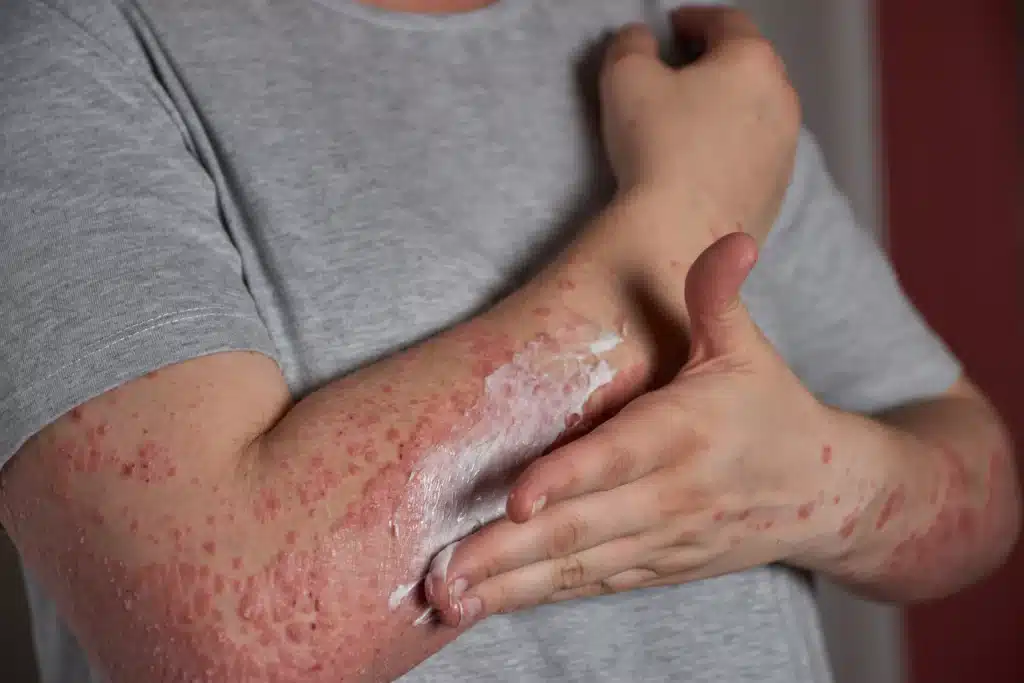
Eczema can look different depending on your age, skin tone, the type of eczema, and whether the flare-up is new or long-lasting. Common signs include itchy, dry, scaly, red or inflamed patches, but the skin may also become swollen, cracked, crusted, thickened, or develop small bumps and oozing areas.
On darker skin tones, eczema may appear brown, purple, gray, or darker than the surrounding skin rather than bright red, so changes in pigmentation can be an important clue. A PubMed study of children with atopic dermatitis found that 100% had dry skin (xerosis) and 54% had facial redness, showing how frequently these features can occur.
Dangerous Eczema Symptoms
Most eczema symptoms are uncomfortable, but some can signal an infection or serious reaction. Seek prompt medical attention if you notice:
- Rapidly spreading redness, swelling, or warmth.
- Pus, drainage, blisters, or yellow crusting.
- Severe pain or rapidly worsening symptoms.
- Fever, chills, or unusual tiredness.
- Trouble breathing or swelling of the face, lips, or tongue.
What Causes Eczema?
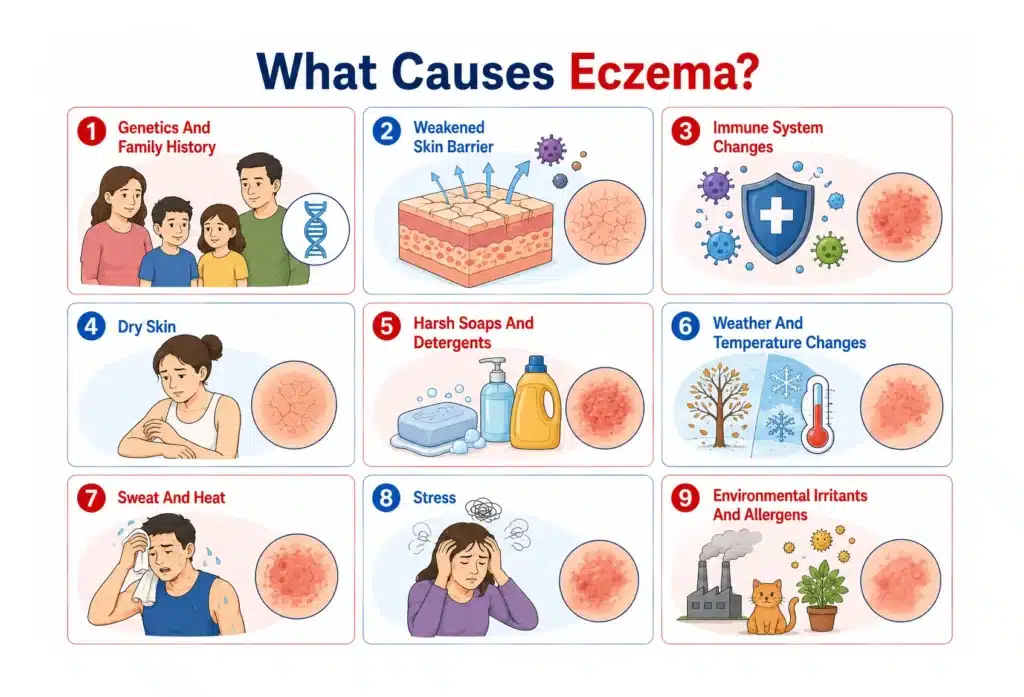
If you keep experiencing itchy, dry, red, or irritated skin, it is natural to wonder why eczema keeps coming back. Eczema does not have one single cause, and its development usually involves a combination of genetic, immune, skin-barrier, and environmental factors. These factors can make the skin more sensitive and prone to inflammation, dryness, and flare-ups.
Genetics And Family History
Genetics can increase your risk of developing eczema, particularly if close family members have eczema, asthma, hay fever, or other allergic conditions. Certain inherited gene variations can affect proteins involved in maintaining the skin barrier. However, having a family history does not mean you will definitely develop eczema because environmental and immune factors also play a role.
Weakened Skin Barrier
A weakened skin barrier is an important factor in eczema because healthy skin helps retain moisture while keeping irritants, allergens, and germs out. When this barrier does not function properly, water escapes more easily, leaving the skin dry, cracked, and vulnerable to irritation. This can contribute to inflammation, itching, and recurring eczema flare-ups.
Immune System Changes
Changes in immune system activity can contribute to the inflammation associated with eczema. The immune system can promote inflammation in the skin, leading to redness, swelling, irritation, and intense itching. This inflammation can further damage the skin barrier and contribute to the recurring itch-scratch cycle.
Dry Skin
Very dry skin can make eczema more likely to flare because moisture loss can weaken the skin’s protective barrier. Skin may become rough, flaky, tight, cracked, and increasingly itchy as it loses hydration. Dryness can be particularly troublesome in cold or dry environments and may worsen existing eczema symptoms.
Harsh Soaps And Detergents
Harsh soaps, detergents, fragrances, and certain skin-care ingredients can irritate sensitive skin and trigger eczema flare-ups. Frequent exposure may strip protective oils from the skin or cause direct irritation. Choosing fragrance-free products and avoiding products that consistently worsen symptoms can help reduce unnecessary skin irritation.
Weather And Temperature Changes
Weather conditions can affect eczema by changing how much moisture the skin retains and how easily it becomes irritated. Cold, dry air can increase moisture loss, while hot weather can promote sweating and itching. Sudden changes in temperature may also aggravate sensitive skin and contribute to eczema flare-ups in some people.
Sweat And Heat
Heat and sweating can aggravate eczema, particularly in people whose symptoms worsen during exercise or hot weather. Sweat can irritate already sensitive skin and may increase itching, which can lead to scratching and further skin damage. Keeping the skin cool and changing out of sweaty clothing may help reduce irritation for people who notice this pattern.
Stress
Stress can trigger or worsen eczema flare-ups in some people, although it is not considered the sole cause of eczema. Periods of significant stress may contribute to increased itching and make it harder to avoid scratching. Repeated scratching can damage the skin barrier, increasing inflammation and potentially creating a cycle of worsening itch and irritation.
Environmental Irritants And Allergens
Environmental exposures can aggravate eczema in susceptible people, particularly when the skin barrier is already weakened. Fragrances, certain skin-care products, tobacco smoke, air pollutants, dust mites, and other substances may contribute to flare-ups. However, eczema is not always caused by an allergy and triggers can vary considerably from one person to another.
When To Go To The ER
Dealing with a painful or rapidly worsening eczema flare can feel frightening, especially when you are unsure whether it is becoming serious. If you are searching for an ER near me, seek emergency care if you experience:
- Trouble breathing or severe swelling of the face, lips, or tongue.
- Rapidly spreading redness, swelling, warmth, or severe pain.
- Fever or chills with a worsening skin rash.
- Pus-filled blisters, extensive drainage, or rapidly spreading sores.
- Severe symptoms that worsen quickly or make you feel seriously unwell.
Eczema Treatment
Living with persistent eczema can be frustrating, especially when itching, dryness, and flare-ups keep returning despite your efforts to care for your skin. Treatment focuses on calming inflammation, protecting the skin barrier, relieving itching, and preventing future flare-ups. The right approach depends on the severity of your symptoms, your age, affected areas, and how your skin responds to treatment.
Moisturizers And Emollients
Moisturizers are a key part of eczema care because they restore hydration and support the skin barrier. Fragrance-free creams and ointments are often preferred for dry, sensitive skin. Applying moisturizer regularly, especially after bathing, can help reduce dryness, cracking, and irritation.
Topical Corticosteroids
Topical corticosteroids are commonly prescribed during eczema flare-ups to reduce inflammation, redness, swelling, and itching. Different strengths may be used depending on the affected area and severity of symptoms. They should be used as directed by a healthcare professional to minimize potential side effects.
Topical Calcineurin Inhibitors
Topical calcineurin inhibitors, including tacrolimus and pimecrolimus, are nonsteroidal medications that help reduce eczema-related inflammation and itching. They may be useful when corticosteroids are unsuitable or when eczema affects sensitive areas such as the face. A healthcare professional can determine whether these medications are appropriate.
Wet Wrap Therapy
Wet wrap therapy can help during severe eczema flares when the skin is extremely dry, irritated, or difficult to control. It involves applying moisturizer or prescribed medication and covering the area with a damp layer followed by a dry layer. This can increase hydration and improve the effectiveness of topical treatments when properly supervised.
Phototherapy
Phototherapy uses controlled ultraviolet light to treat eczema that has not responded adequately to topical medications. Treatment is performed under medical supervision and usually requires repeated sessions. It should not be replaced with tanning beds or excessive sun exposure, which can damage the skin and increase skin cancer risk.
Biologic And Systemic Medications
For moderate to severe eczema that does not improve with topical treatments, doctors may recommend biologic or other systemic medications. These treatments target specific pathways involved in eczema-related inflammation and can significantly reduce symptoms for appropriate patients. Because these medications can have important risks, they require medical evaluation and ongoing monitoring.
Altus Emergency Centers For Eczema Care
If you or your loved one develops severe eczema symptoms such as rapidly spreading redness, severe swelling, intense pain, pus-filled blisters, or fever, seek medical care without delay. If you are wondering what eczema is and whether your symptoms could indicate a more serious skin problem, our team at Altus Emergency Centers can evaluate concerning symptoms and help determine whether urgent treatment is needed.
At Altus Emergency Centers, our 24/7 emergency rooms are staffed by experienced emergency physicians who can assess severe skin symptoms, check for signs of infection, and provide prompt treatment when necessary. From medications and wound care to treatment for complications such as skin infections, our team provides compassionate emergency care for children and adults when eczema symptoms become severe.
Key Takeaways
- Eczema is a group of inflammatory skin conditions that commonly causes itching, dryness, redness, scaling, and irritation.
- Genetics, a weakened skin barrier, immune system changes, dry skin, stress, and environmental triggers can contribute to eczema.
- Eczema can look different depending on skin tone, age, eczema type, and the severity of the flare-up.
- Regular moisturization and appropriate medical treatment can help control symptoms and reduce flare-ups.
- Severe pain, rapidly spreading redness, pus, fever, or significant swelling may indicate an infection or complication requiring prompt medical attention.
- If eczema symptoms become severe or rapidly worsen, seek urgent medical evaluation rather than relying only on home treatment.
Frequently Asked Questions
Is Eczema An Autoimmune Disease?
Eczema is not generally classified as an autoimmune disease. It involves an overactive or dysregulated immune response along with problems with the skin barrier. However, immune system activity plays an important role in the inflammation and symptoms associated with eczema.
Does Eczema Go Away?
Eczema can improve or become inactive for periods of time, particularly with appropriate treatment and trigger management. Some people experience fewer symptoms as they get older, while others have recurring flare-ups throughout life. Even when the skin looks clear, eczema can return when triggers or other contributing factors are present.
Can Eczema Be Cured?
There is currently no permanent cure for eczema, but it can often be effectively managed. Treatment can reduce itching and inflammation, repair the skin barrier, and help prevent or shorten flare-ups. The best treatment depends on the type and severity of eczema and should be tailored to the individual.