

Appendicitis is one of the most common reasons people visit an emergency room, and without prompt treatment, it can quickly become a life-threatening condition. It occurs when the appendix, a small finger-shaped pouch attached to the large intestine on the lower right side of the abdomen, becomes inflamed and infected. Recognizing the symptoms early can help prevent serious complications. Visit our Altus ER Lake Jackson TX for prompt evaluation and treatment of severe abdominal pain.
The condition can affect anyone at any age, though it is most common in people between 10 and 30 years old. Once appendicitis develops, it does not resolve without medical treatment, which is why knowing the warning signs and acting quickly is so critically important for anyone experiencing sudden or worsening abdominal pain.
What Is Appendicitis?
Appendicitis is the inflammation of the appendix, a small pouch that branches off the large intestine in the lower right side of the abdomen. According to MedlinePlus, appendicitis is the most common cause of emergency abdominal surgery in the United States, affecting approximately 1 in 500 people each year. When the appendix becomes blocked, bacteria multiply rapidly inside it, causing swelling, increased pressure, and eventually infection that requires urgent medical attention to prevent rupture.
What Are the Symptoms of Appendicitis?
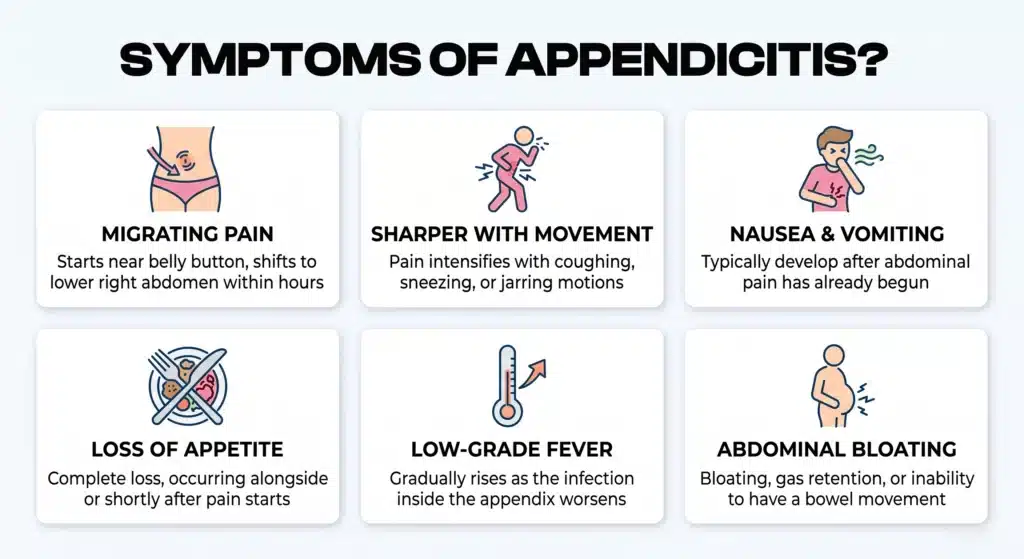
Recognizing the symptoms of appendicitis early gives you the best chance of getting treatment before the condition worsens or the appendix ruptures. Symptoms typically develop over 6 to 24 hours and progressively worsen without medical intervention.
- Sudden pain that begins around the belly button and shifts to the lower right side of the abdomen
- Pain that worsens with movement, coughing, sneezing, or taking a deep breath
- Nausea and vomiting that develop shortly after abdominal pain begins
- Loss of appetite that accompanies or follows the onset of pain
- Low-grade fever that may rise as the infection worsens over time
- Bloating, inability to pass gas, or significant constipation alongside abdominal discomfort
If you experience these symptoms, especially worsening abdominal pain, seek prompt medical attention. An abdominal pain specialist near me can evaluate your condition and help determine whether appendicitis or another urgent problem is causing your symptoms.
What Causes Appendicitis?
Appendicitis almost always begins with a blockage inside the appendix that allows bacteria to multiply and cause infection. The exact source of the blockage can vary, but the result is the same in nearly every case.
Intestinal Blockage From Stool
The most common cause of appendicitis is a hardened piece of stool, called a fecalith or appendicolith, that becomes lodged inside the narrow opening of the appendix. This blockage prevents normal drainage, allowing bacteria already present in the digestive tract to multiply rapidly and cause the appendix to swell and become infected. Once this process begins, it escalates quickly without medical intervention to remove the appendix.
Bacterial or Viral Infections
In some cases, an infection elsewhere in the gastrointestinal tract causes the lymph nodes near the appendix to swell significantly. This swelling can compress the appendix from the outside, restricting its opening and creating the same environment where bacteria thrive, and infection develops. Respiratory illnesses, gastrointestinal infections, and other bacterial or viral conditions can all trigger this type of lymph node response in certain patients.
Inflammatory Bowel Disease
Conditions like Crohn’s disease and ulcerative colitis cause chronic inflammation throughout the gastrointestinal tract that can extend to the appendix and trigger appendicitis in affected individuals. The ongoing inflammation associated with these conditions makes the tissue lining of the appendix more vulnerable to blockage and infection than it would be in someone without an underlying bowel condition. Patients with a known history of inflammatory bowel disease should take any sudden lower right abdominal pain especially seriously and seek evaluation immediately.
Abdominal Trauma or Injury
In rare cases, a direct blow or injury to the abdomen can trigger inflammation in the appendix that progresses into a full appendicitis episode. Trauma disrupts normal tissue function and can introduce conditions that allow bacterial overgrowth inside the appendix even without a classic blockage. Any new or worsening lower abdominal pain following an abdominal injury should be evaluated promptly to rule out appendicitis before symptoms have a chance to worsen.
Who Is at Risk for Appendicitis?
Appendicitis can develop in anyone, but certain factors increase the likelihood of experiencing it at some point during your lifetime.
- Age: Most common between 10 and 30 years old, though it can occur at any age
- Sex: Males are slightly more likely to develop appendicitis than females overall
- Family history: A family history of appendicitis may increase personal risk
- Inflammatory bowel disease: Crohn’s disease and colitis increase susceptibility
- Previous gastrointestinal infections: Recurring infections can contribute to lymph node swelling near the appendix
If you have these risk factors and develop severe abdominal pain, do not delay medical care. Visit an ER near me for timely evaluation and treatment before complications develop.
How Is Appendicitis Diagnosed?
Diagnosing appendicitis typically involves a combination of physical examination, blood tests to check for signs of infection, and imaging studies. A CT scan is the most reliable diagnostic tool for confirming appendicitis and ruling out other causes of abdominal pain, while an ultrasound may be used in children or pregnant patients to avoid radiation exposure. Blood tests showing elevated white blood cell counts alongside the patient’s symptoms and physical examination findings help the medical team confirm the diagnosis and move quickly toward treatment.
How Is Appendicitis Treated?
Treatment depends on how far the condition has progressed, but in almost every case, appendicitis requires prompt medical intervention rather than a wait-and-see approach at home.
- Appendectomy: Surgical removal of the appendix is the standard treatment, performed laparoscopically in most uncomplicated cases, with a recovery time of one to two weeks
- Intravenous antibiotics: Given before and after surgery to control infection and prevent bacteria from spreading further into surrounding tissue
- Antibiotic-only treatment: In carefully selected early-stage cases, some patients may be treated with antibiotics alone without immediate surgery, though recurrence rates are higher
- Emergency surgery: A ruptured appendix requires immediate surgery to remove the appendix, drain any abscesses, and thoroughly clean the abdominal cavity
When to Go to the ER for Appendicitis?
Appendicitis is a medical emergency that will not improve on its own. With our 24/7 emergency room, Altus Emergency Centers provides prompt evaluation and treatment if you experience symptoms of appendicitis. Do not wait to seek emergency care.
- Sudden sharp pain in the lower right abdomen that is worsening rather than improving
- Fever above 100.4°F accompanied by abdominal pain and nausea
- Abdominal pain so severe that it limits your movement or keeps you from standing up straight
- Vomiting alongside persistent lower right abdominal pain that has lasted more than a few hours
- A rigid or tender abdomen that is painful to the touch in the lower right area
- Any suspicion of appendicitis in a child with stomach pain and fever
If you are unsure whether your pain needs emergency evaluation, our guide on when to go to the ER for stomach pain can help you decide quickly.
Appendicitis Care at Altus Emergency Centers
Appendicitis escalates fast, and every hour of delayed treatment increases the risk of rupture and serious complications. At Altus Emergency Centers, our team provides immediate evaluation, advanced imaging, and expert emergency care for patients with suspected appendicitis around the clock. Do not wait for symptoms to get worse. Visit Altus Emergency Centers today for fast, accurate diagnosis and the prompt treatment your condition demands.