

If asthma runs in your family, it is natural to wonder whether you or your child could develop the condition too. A family history can raise asthma risk, but it does not mean asthma is inevitable.
Yes, asthma can have a genetic component, but genes are only part of the picture. Environmental factors, allergies, respiratory infections, and other triggers also influence risk. If breathing problems become severe or you are struggling to breathe, seek immediate care at Altus ER Lumberton, TX; an asthma attack can become a medical emergency quickly.
The Role Of Family History And Asthma
A family history of asthma can increase a person’s likelihood of developing the condition, particularly when a parent or sibling has asthma. However, asthma is not caused by a single inherited gene; multiple genetic factors can influence airway sensitivity, immune responses, and allergic tendencies.
Environmental exposures, respiratory infections, tobacco smoke, and allergens can also interact with genetic susceptibility. A U.S. study of 15,008 adults found lifetime asthma prevalence was 37.6% among those at high familial risk, compared with 9.4% among those at average familial risk, highlighting the influence of family history on asthma risk.
Other Asthma Risk Factors
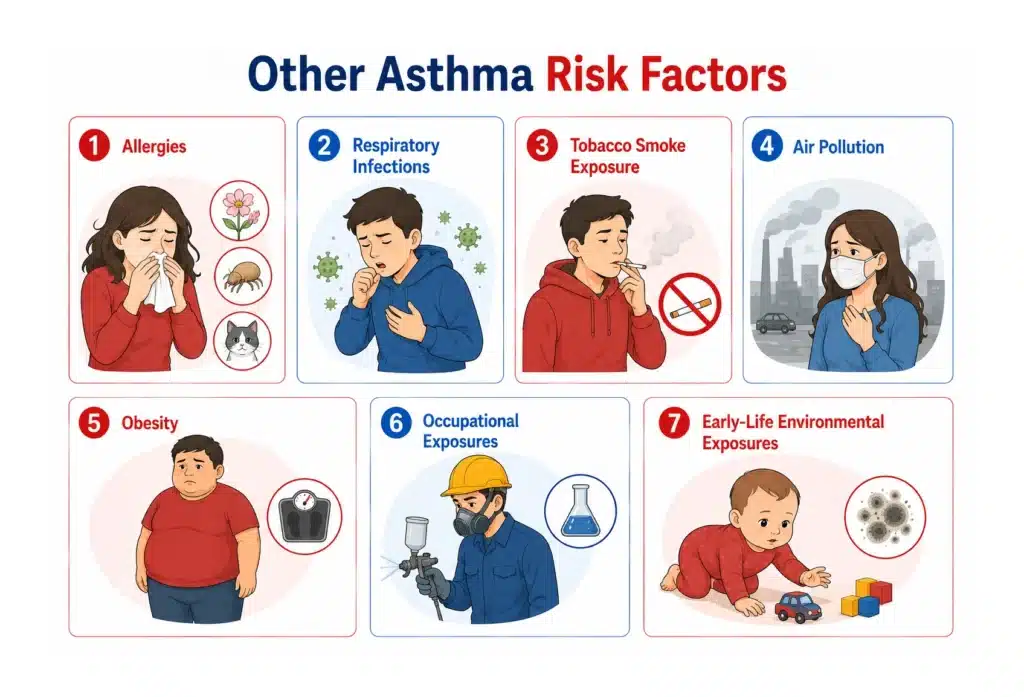
Having a genetic predisposition does not guarantee that someone will develop asthma. Several influences can affect how the airways, immune system, and lungs respond over time, and some people may have more than one risk factor. These influences can increase the likelihood of developing asthma or make breathing symptoms more difficult to control. Recognizing them can help you and your healthcare provider identify potential concerns early.
Allergies
People with allergies are more likely to develop asthma because both conditions can involve an overactive immune response. Common allergens include pollen, dust mites, mold, and pet dander. In sensitive people, exposure can cause airway inflammation, coughing, wheezing, chest tightness, or shortness of breath.
Respiratory Infections
Viral respiratory infections, particularly during early childhood, can influence the development of asthma. Colds, influenza, and other infections can also worsen airway inflammation in people who already have asthma. Persistent coughing, wheezing, or breathing difficulty after an infection should be medically evaluated.
Tobacco Smoke Exposure
Exposure to cigarette smoke can irritate developing and mature airways and is associated with a greater risk of asthma. Secondhand smoke can be particularly harmful to children whose lungs are still developing. Smoking or breathing in smoke can also worsen asthma symptoms and make the condition harder to control.
Air Pollution
Air pollution can irritate the respiratory system and contribute to airway inflammation. Pollutants such as particulate matter and ozone may increase the likelihood of asthma symptoms and breathing problems. People with sensitive airways may experience worsening cough, wheezing, chest tightness, or shortness of breath when air quality is poor.
Obesity
Being overweight or having obesity is associated with an increased risk of developing asthma and can make existing symptoms more difficult to manage. Excess weight may affect breathing mechanics and contribute to inflammation. Maintaining a healthy weight may support better lung function and asthma control.
Occupational Exposures
Certain workplace exposures can increase asthma risk, especially when a person regularly inhales chemicals, dust, fumes, or other respiratory irritants. Occupational asthma may cause coughing, wheezing, chest tightness, or shortness of breath that worsens during or after work. Identifying the workplace exposure early can help prevent continued airway irritation.
Early-Life Environmental Exposures
Conditions affecting the lungs and immune system during early childhood may influence the likelihood of developing asthma later. Exposure to cigarette smoke, certain environmental irritants, and respiratory infections can affect developing airways. These early-life influences may be especially important in children who already have an underlying susceptibility to asthma.
Dangerous Asthma Symptoms You Should Never Ignore
Most asthma symptoms can be managed with appropriate treatment, but severe symptoms can signal a life-threatening asthma attack. Seek emergency medical care if breathing becomes difficult, symptoms rapidly worsen, or your usual rescue treatment is not providing relief.
- Severe Shortness Of Breath.
- Rapid Or Difficult Breathing.
- Severe Wheezing Or Chest Tightness.
- Trouble Speaking In Full Sentences.
- Blue, Gray, Or Pale Lips And Fingertips.
- Confusion, Drowsiness, Or Extreme Weakness.
- Little Or No Relief After Using A Rescue Inhaler.
- Severe Difficulty Walking Or Performing Normal Activities Because Of Breathing Problems.
Can You Prevent Asthma If It Runs In Your Family?
Yes, you can lower your risk, but you cannot completely prevent asthma when it runs in your family. Genetics can increase susceptibility, while environmental factors also affect whether asthma develops. Taking practical steps to protect your lungs may help reduce avoidable risks.
- Avoid Tobacco Smoke: Keep your home and car smoke-free to reduce airway irritation and asthma risk.
- Reduce Mold And Dampness: Fix leaks, control indoor moisture, and remove visible mold to limit respiratory irritants.
- Limit Air Pollution: Check air-quality levels and reduce outdoor exposure when pollution is high.
- Maintain A Healthy Weight: A healthy weight supports lung health and may lower asthma risk.
- Eat A Nutritious Diet: Eat a balanced diet rich in fruits, vegetables, whole grains, and other nutritious foods.
- Prevent Respiratory Infections: Wash your hands regularly and stay up to date on recommended vaccinations.
- Identify Allergens Early: Repeated coughing, wheezing, or breathing problems around allergens should be evaluated by a healthcare professional.
Also Read: How To Control Asthma
When To Go To The ER For Asthma
Seek emergency care when your usual asthma treatment is no longer controlling your symptoms or your condition is rapidly worsening. Go to the ER if:
- Your rescue inhaler is not providing relief.
- You need your rescue inhaler more often than directed.
- Your symptoms keep getting worse despite treatment.
- You cannot walk, sleep, eat, or perform normal activities because of asthma.
- Your peak flow is in the red zone.
- You have a severe asthma attack that is not improving.
If you are searching for an ER near me, do not delay emergency care when your asthma is worsening or treatment is not working.
Altus Emergency Centers For Asthma Care
If asthma symptoms lead to severe difficulty breathing, chest tightness, blue or gray lips, confusion, or little to no relief from a rescue inhaler, seek emergency care without delay. At our 24/7 emergency room, Altus Emergency Centers, experienced emergency physicians can quickly evaluate severe asthma symptoms and provide appropriate treatment.
From breathing treatments and oxygen support to urgent evaluation of asthma attacks and other respiratory complications, Altus Emergency Centers provides prompt, compassionate emergency care. If breathing problems are severe or rapidly worsening, do not wait for symptoms to improve on their own; seek immediate medical attention.
Key Takeaways
- Asthma can run in families, but having a parent with asthma does not mean you will definitely develop it.
- Genetics can increase your risk of asthma, especially when combined with environmental triggers and allergies.
- Common asthma triggers include smoke, air pollution, allergens, respiratory infections, exercise, and cold air.
- Asthma symptoms can include wheezing, coughing, chest tightness, and shortness of breath.
- Severe breathing difficulty, blue lips, confusion, or symptoms that do not improve with a rescue inhaler require immediate emergency care.
Frequently Asked Questions About Asthma
What Causes Asthma?
Asthma develops from a combination of genetic and environmental factors. Allergies, respiratory infections, smoke, air pollution, mold, and workplace irritants can trigger or worsen symptoms.
Can Asthma Go Away?
Asthma is a chronic condition with no cure, but symptoms can become less frequent or well controlled with proper treatment and trigger management.
How Is Asthma Diagnosed?
Asthma is diagnosed using your symptoms and medical history along with lung function tests, such as spirometry. Doctors may also use allergy or challenge testing when needed.
Can You Die From Asthma?
Yes. Although asthma deaths are rare and often preventable, a severe, uncontrolled asthma attack can become life-threatening. Seek emergency care for severe breathing difficulty or symptoms that are rapidly worsening.