

If eating has become stressful because certain foods trigger fear, discomfort, or an overwhelming sensory reaction, you are not simply being “picky.” These experiences can be distressing, especially when they begin affecting daily life or nutrition.
Avoidant/Restrictive Food Intake Disorder (ARFID) is an eating disorder that causes a person to severely limit the amount or variety of food they eat. Unlike anorexia or bulimia, ARFID is not driven by concerns about body weight or appearance. If restricted eating causes dehydration, weakness, fainting, significant weight loss, or nutritional deficiencies, seek prompt medical attention at our Altus ER Waxahachie.
What Causes ARFID?
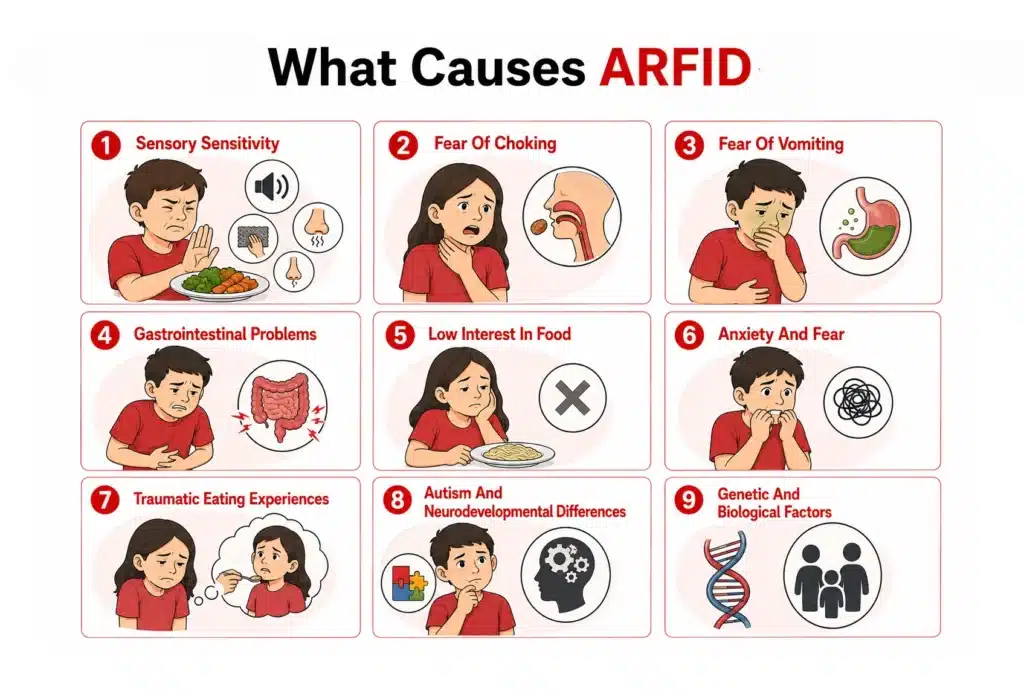
The exact cause of Avoidant/Restrictive Food Intake Disorder (ARFID) is not fully understood, and there is no single reason why someone develops it. ARFID can involve a combination of biological, psychological, sensory, and environmental factors. These factors can affect how a person experiences food, hunger, anxiety, or physical sensations, and they are not a sign that someone is simply being difficult or picky.
Sensory Sensitivity
Some people with ARFID have heightened sensitivity to the taste, smell, texture, temperature, color, or appearance of food. A texture that feels normal to one person may feel extremely unpleasant or overwhelming to another. This can cause someone to avoid specific foods or gradually limit the variety of foods they can tolerate.
Fear Of Choking
A previous choking experience can make eating feel frightening and unsafe. Afterward, a person may avoid foods they believe are difficult to chew, swallow, or eat without choking. This restriction can become increasingly severe and may eventually limit meals to only a few foods considered safe.
Fear Of Vomiting
Fear of vomiting can make a person anxious about eating, particularly if they have previously experienced severe nausea or vomiting. They may avoid foods associated with feeling sick or worry that eating itself will trigger vomiting. Over time, this fear can reinforce restrictive eating and make mealtimes increasingly stressful.
Gastrointestinal Problems
Digestive problems such as abdominal pain, nausea, reflux, bloating, or diarrhea can make eating physically uncomfortable. Someone who repeatedly experiences these symptoms may begin avoiding foods because they expect pain or illness afterward. Gastrointestinal discomfort can therefore contribute to restrictive eating in some people with ARFID.
Low Interest In Food
Some people with ARFID have little interest in food or consistently experience a low appetite. They may not recognize hunger easily, become full after eating small amounts, forget to eat, or find meals unrewarding. Persistent low intake can eventually contribute to weight changes, nutritional deficiencies, fatigue, and other health problems.
Anxiety And Fear
Anxiety can contribute to restrictive eating, particularly when a person worries about choking, vomiting, pain, or other unpleasant consequences of eating. Food avoidance may temporarily reduce anxiety, but repeated avoidance can strengthen the fear over time. Anxiety and ARFID can also occur together and may influence each other.
Traumatic Eating Experiences
A frightening experience involving food may contribute to ARFID in some people. Choking, severe vomiting, force-feeding, or significant pain during eating can cause someone to associate food with danger. Afterward, they may restrict their diet to foods that feel predictable, familiar, and safer.
Autism And Neurodevelopmental Differences
ARFID can occur alongside neurodevelopmental conditions such as autism, although having autism does not mean a person will develop ARFID. Sensory sensitivities, rigid routines, and strong preferences for specific foods can make eating a wider variety of foods difficult. These differences can become concerning when food restriction affects nutrition, growth, or daily functioning.
Genetic And Biological Factors
Research suggests that biological and genetic factors may influence a person’s susceptibility to ARFID, but no single gene has been identified as the cause. Differences involving appetite regulation, sensory processing, and fear responses are being investigated. Genetic vulnerability may interact with environmental and psychological factors rather than acting as a single cause.
Dangerous ARFID Symptoms You Should Never Ignore
ARFID can become medically serious when restricted eating causes severe dehydration, malnutrition, electrolyte abnormalities, or rapid physical decline. If you or someone you care for develops severe weakness, fainting, confusion, or cannot eat or drink, seek immediate medical attention at the nearest emergency room.
- Rapid or significant weight loss.
- Fainting or repeated episodes of dizziness.
- Severe weakness or extreme fatigue.
- Inability to eat or drink enough to maintain hydration.
- Signs of severe dehydration, such as very little urination, dry mouth, or worsening weakness.
- Confusion, difficulty staying alert, or unusual changes in mental status.
- Seizures or seizure-like activity.
- Very slow or irregular heartbeat.
- Severe abdominal pain or persistent vomiting.
- Difficulty standing, walking, or performing normal daily activities.
- Signs of serious nutritional deficiencies, such as marked weakness or anemia-related symptoms.
- Sudden or severe worsening of food or fluid restriction.
Risk Factors For Avoidant/Restrictive Food Intake Disorder (ARFID)
Certain experiences, health conditions, and individual characteristics may increase the risk of developing ARFID. Having a risk factor does not mean someone will develop the disorder, but recognizing them can help identify restrictive eating early.
- Sensory Processing Differences: Strong sensitivity to food textures, smells, tastes, or temperatures may make certain foods feel unpleasant. This can gradually narrow the range of foods a person accepts.
- History Of Choking Or Vomiting: A frightening choking episode or repeated vomiting can make eating feel unsafe. A person may avoid foods they associate with these experiences.
- Gastrointestinal Conditions: Nausea, abdominal pain, reflux, bloating, or constipation can make eating uncomfortable. Repeated symptoms may lead to food avoidance.
- Anxiety Disorders: Anxiety about choking, vomiting, illness, or discomfort can contribute to food restriction. Avoiding food may temporarily reduce anxiety but reinforce the fear.
- Autism Spectrum Disorder: ARFID can occur more often in people with autism. Sensory sensitivities, strong food preferences, and difficulty with routine changes may affect eating.
- ADHD: Distraction, forgotten meals, inconsistent appetite, or difficulty maintaining routines may contribute to inadequate food intake in some people.
- Early Childhood Feeding Difficulties: Persistent food refusal, difficulty trying new foods, or prolonged mealtimes may increase the risk of restrictive eating patterns.
- Family History Of Eating Disorders: A family history may increase vulnerability through genetic and environmental factors. However, it does not mean someone will develop ARFID.
- Low Appetite Or Limited Interest In Eating: Rarely feeling hungry or having little interest in food can lead to consistently low intake. Over time, this may cause nutritional deficiencies or unintended weight loss.
How Is Avoidant/Restrictive Food Intake Disorder (ARFID) Diagnosed?
ARFID is diagnosed through a detailed medical and psychological evaluation rather than one specific test. Providers assess eating habits, food avoidance, nutritional health, physical symptoms, and the impact of restricted eating on daily life.
- Medical History: Reviews eating habits, appetite, food restrictions, and digestive symptoms.
- Eating Behavior: Identifies whether restriction is linked to sensory issues, fear, or low interest in food.
- Physical Exam: Checks for dehydration, weakness, nutritional problems, and other complications.
- Weight And Growth: Tracks weight, height, growth patterns, and significant changes over time.
- Nutritional Assessment: Determines whether the diet provides enough calories and essential nutrients.
- Lab Tests: May check for anemia, electrolyte problems, nutritional deficiencies, or other conditions.
- Mental Health Evaluation: Assesses anxiety, food-related fears, sensory concerns, and other psychological factors.
- Ruling Out Conditions: Providers may check for digestive disorders, swallowing problems, or medication effects.
- Diagnostic Criteria: Confirms that food restriction causes significant health or daily-life problems without being driven by body-image concerns.
When To Go To The ER
ARFID can become a medical emergency when severe food or fluid restriction causes dehydration, malnutrition, or dangerous electrolyte changes. Seek emergency care if symptoms become severe or you cannot safely eat or drink.
- Severe dehydration with very little urination, extreme thirst, or dry mouth.
- Fainting or repeated episodes of near-fainting.
- New confusion, extreme drowsiness, or difficulty staying awake.
- Severe weakness that makes standing or walking difficult.
- Persistent vomiting that prevents you from keeping fluids down.
- Rapid or significant unintended weight loss.
- Very fast, slow, or irregular heartbeat with dizziness or weakness.
- Any seizure or seizure-like activity.
- Severe or worsening abdominal pain, especially with vomiting or fever.
ARFID Treatment
ARFID treatment focuses on improving nutrition, reducing food-related fear or anxiety, and gradually expanding the range of foods a person can tolerate. Because ARFID affects people differently, treatment is often personalized and may involve several healthcare professionals.
- Cognitive Behavioral Therapy (CBT): Helps identify and change thoughts, fears, and behaviors that contribute to food avoidance. It may also include gradual exposure to feared foods or eating situations.
- Nutritional Counseling: A registered dietitian can help improve calorie and nutrient intake while developing a safe, balanced eating plan. Nutritional supplements may sometimes be recommended.
- Food Exposure: New foods may be introduced gradually and in a controlled way to reduce fear and sensory discomfort. The approach is adjusted to the person’s specific triggers and tolerance.
- Medical Monitoring: Healthcare providers may monitor weight, hydration, growth, vital signs, and nutritional deficiencies. Medical treatment may be needed when restricted eating has already caused complications.
- Treatment For Underlying Conditions: Digestive problems, anxiety, or other conditions contributing to food avoidance may need to be treated alongside ARFID. Addressing these problems can make eating easier and improve recovery.
- Medications: There is currently no medication specifically approved by the FDA to treat ARFID. However, a healthcare provider may consider medication for certain co-occurring symptoms or complications when appropriate.
- Hospital-Based Care: Severe malnutrition, dehydration, electrolyte abnormalities, or an inability to eat or drink may require hospital treatment. In serious cases, nutritional support through a feeding tube may be necessary.
Altus Emergency Centers For ARFID Care
If ARFID symptoms lead to severe dehydration, fainting, confusion, extreme weakness, persistent vomiting, or an inability to eat or drink, seek emergency care without delay. At Altus Emergency Centers, our 24/7 emergency room is staffed by experienced emergency physicians who can evaluate serious complications related to restrictive eating, with an average ER wait time of just 16 minutes.
From IV fluids and electrolyte management to urgent evaluation of dehydration, malnutrition-related complications, and other concerning symptoms, Altus Emergency Centers provides prompt, compassionate emergency care. If symptoms are severe or rapidly worsening, do not wait for them to improve on their own; seek immediate medical attention.
Key Takeaways
- ARFID is an eating disorder that causes significant food restriction without being driven by body-image concerns.
- Sensory sensitivity, fear of choking or vomiting, low appetite, anxiety, and digestive problems may contribute to ARFID.
- Severe restriction can lead to dehydration, nutritional deficiencies, weakness, weight loss, and other complications.
- Treatment may include therapy, nutritional support, gradual food exposure, and medical monitoring.
- Seek emergency care for fainting, confusion, severe dehydration, seizures, persistent vomiting, or inability to eat or drink.