

A high fever that comes on suddenly and climbs fast is one of the most telling signs that your body is dealing with a bacterial infection rather than a routine viral illness. Bacterial infections trigger a much more aggressive immune response than most viruses do, which is exactly why the fevers they produce tend to be higher, more persistent, and often accompanied by severe localized symptoms that do not improve on their own. When your temperature spikes above 102°F alongside pain, chills, or difficulty functioning normally, that combination deserves immediate medical attention rather than a wait-and-see approach at home.
The danger with bacterial infections is not just the fever itself but what happens when the infection spreads beyond its original site. Untreated bacterial infections can enter the bloodstream, affect major organs, and develop into sepsis, a life-threatening condition that requires emergency intervention. Visit our Lake Jackson ER for prompt evaluation and treatment when a bacterial infection may be worsening.
Why Does a Bacterial Infection Cause High Fever?
Bacterial infections cause high fever because the immune system detects harmful bacteria and releases chemical signals called pyrogens that travel to the brain and raise the body’s internal temperature set point. This elevated temperature creates a less hospitable environment for bacteria while simultaneously activating white blood cells and other immune defenses to fight the infection more aggressively.
What Is a Bacterial Infection?
A bacterial infection occurs when harmful bacteria invade body tissue, multiply rapidly, and trigger an inflammatory immune response that produces fever and localized symptoms depending on where the infection has taken hold. According to the National Institutes of Health, bacterial infections range widely in severity from manageable conditions like strep throat and ear infections to life-threatening illnesses like bacterial pneumonia, meningitis, and bloodstream infections that can become fatal without prompt treatment. Unlike viral infections, most bacterial infections respond directly to antibiotic therapy when identified and treated early.
What are The Symptoms of a Bacterial Infection Fever?
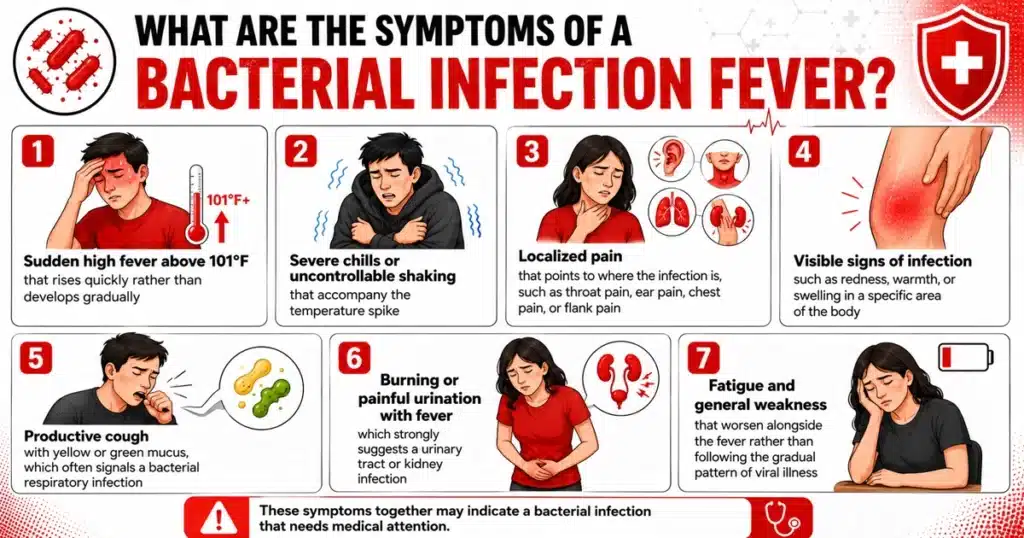
The symptoms of a bacterial infection fever differ from a typical viral fever in important ways, and recognizing those differences can help you act faster and get the right treatment.
- Sudden high fever above 101°F that rises quickly rather than develops gradually over several days
- Severe chills or uncontrollable shaking that accompany the temperature spike
- Localized pain that points to where the infection is, such as throat pain, ear pain, chest pain, or flank pain
- Visible signs of infection, such as redness, warmth, or swelling in a specific area of the body
- Productive cough with yellow or green mucus, which often signals a bacterial respiratory infection rather than a viral one
- Burning or painful urination with fever, which strongly suggests a urinary tract or kidney infection
- Fatigue and general weakness that worsen alongside the fever rather than following the gradual pattern of viral illness
If you experience these warning signs, seeking timely medical care is important to identify the cause of the fever and begin appropriate treatment. Urgent care for high fever can provide evaluation and support when symptoms require medical attention.
Common Bacterial Infections That Cause High Fever
Several bacterial infections are particularly known for producing high fevers that signal the body is under serious attack and needs targeted treatment.
Strep Throat and Tonsillitis
Group A streptococcal infections produce a sudden fever often reaching 101°F to 104°F alongside severe throat pain, swollen lymph nodes, and difficulty swallowing. The absence of a cough is one of the key features that separates bacterial strep from a viral throat infection, making clinical evaluation essential. Untreated strep carries a real risk of complications, including rheumatic fever that antibiotic treatment almost entirely prevents.
Bacterial Pneumonia
Bacterial pneumonia produces some of the highest and most persistent fevers, with temperatures frequently reaching 103°F or beyond, alongside a productive cough, chest pain, and shortness of breath. According to the National Library of Medicine, Streptococcus pneumoniae is the most common cause of community-acquired bacterial pneumonia and requires prompt antibiotic treatment to prevent serious complications. Any combination of high fever and breathing difficulty should be treated as a medical emergency.
Kidney and Urinary Tract Infections
When bacteria ascend to the kidneys, the resulting infection triggers high fever with chills, severe flank pain, nausea, and vomiting that cannot be managed without urgent antibiotic therapy. A urinalysis and urine culture are the standard tools for identifying the infection and determining the most effective antibiotic. Any high fever combined with back pain and urinary symptoms requires same-day emergency evaluation.
Bacterial Sinus Infections
Bacterial sinus infections can produce persistent fever, severe facial pressure, thick, discolored discharge, and headache that do not resolve with over-the-counter medications. Unlike viral sinusitis, which typically improves within five to seven days, bacterial sinus infections continue to worsen after that window, signaling that antibiotics are needed. Fever with sinus symptoms lasting more than ten days without improvement should be evaluated promptly.
Bacterial Fever vs Viral Fever: What Is the Difference?
Knowing whether a fever is driven by bacteria or a virus matters enormously because antibiotics work only against bacterial infections and have no effect on viral illnesses.
- Onset Pattern: Bacterial fevers typically spike suddenly and climb high quickly, while viral fevers tend to develop gradually and peak more moderately
- Temperature Range: Bacterial infections commonly drive temperatures above 102°F, while viral fevers more often stay in the 100°F to 101°F range
- Duration Without Treatment: Viral fevers generally resolve on their own within three to five days, while bacterial fevers persist or worsen without appropriate antibiotic treatment
- Localized Symptoms: Bacterial infections almost always produce clear localized symptoms like throat pain, ear pain, chest pain, or urinary discomfort that point directly to the source of infection
- Response to Antibiotics: Only confirmed bacterial infections respond to antibiotics, which is why a proper diagnosis before starting treatment is critical to avoiding antibiotic resistance
How Long Does a Bacterial Infection Fever Last?
A bacterial infection fever typically begins to improve within 24 to 72 hours of starting the correct antibiotic, though the full infection may take 7 to 14 days to clear completely. Here is what to expect during recovery:
- Fever usually starts dropping within 24 to 72 hours of beginning the right antibiotic treatment
- The full antibiotic course of 7 to 14 days must be completed even after the fever subsides
- Without treatment, bacterial fevers do not resolve on their own and will continue to worsen
- Bacteria can spread to other areas of the body if the infection is left untreated for too long
- Recovery speed depends on the type of infection, its severity, and how quickly treatment is started
How to Treat a Bacterial Infection Fever
Treating a bacterial infection effectively requires targeting the bacteria directly while managing fever symptoms and preventing complications from developing.
- Prescription Antibiotics: The only effective treatment for bacterial infections, prescribed after confirming the infection is bacterial, and must be completed in full even after symptoms improve
- Fever Reducers: Acetaminophen or ibuprofen help manage high temperatures and relieve discomfort, while antibiotics eliminate the bacteria causing the fever
- Increased Fluid Intake: High fevers accelerate dehydration, making consistent fluid intake essential throughout the entire recovery period
- IV Antibiotics and Hospitalization: Severe infections, including bacterial pneumonia, kidney infections, and bloodstream infections, may require intravenous antibiotic therapy and close hospital monitoring
- Rest: Adequate rest supports immune function and allows the body to direct its energy toward fighting the infection alongside medical treatment
Note that antibiotics can sometimes cause digestive side effects during treatment, which is something to discuss with your treating physician before starting a course of medication.
When to Go to the ER?
A bacterial infection that is driving a high fever or not responding to treatment should not be managed at home. Visit Altus Emergency immediately if you experience any of the following:
- Fever above 103°F that does not come down with medication or keeps returning
- Fever symptoms that are worsening despite taking prescribed antibiotics
- Signs of sepsis include chills, confusion, rapid breathing, or low blood pressure
- Severe headache, stiff neck, or sensitivity to light alongside a high fever
- Difficulty breathing, chest pain, or rapid heart rate accompany the fever
- Any fever in an infant under 3 months or in someone with a weakened immune system
When fever symptoms become severe or continue to worsen, do not delay care. Visit an ER near me for prompt assessment and treatment to help prevent serious complications.
Bacterial Infection Care at Altus Emergency Centers
A bacterial infection causing a high fever is a medical situation that deserves prompt evaluation, accurate diagnosis, and targeted treatment rather than home management and delayed care. With our 24/7 emergency room at Altus Emergency Centers, patients receive fast diagnostic testing, including blood panels, cultures, and imaging, to identify the source and severity of the infection and initiate the right antibiotic treatment as quickly as possible. Our team is equipped to manage the full spectrum of bacterial infections, from early-stage presentations to serious complications like sepsis and bacterial pneumonia that require immediate emergency intervention.
Key Takeaways
- Yes, bacterial infections commonly cause high fevers above 101°F to 103°F as the immune system responds aggressively to harmful bacteria
- Common bacterial infections that cause high fever include strep throat, pneumonia, kidney infections, and bacterial sinusitis
- Bacterial fevers tend to spike suddenly, reach higher temperatures, and last longer than viral fevers without treatment
- Antibiotics are the only effective treatment for bacterial infections and must be taken for the full prescribed duration
- Warning signs like neck stiffness, confusion, difficulty breathing, or fever above 103°F require immediate ER evaluation
- Untreated bacterial infections can escalate to sepsis, which is a life-threatening emergency requiring urgent medical intervention