

Living with pain after a fall, sports injury, or accident can be frightening, especially when even simple movements become difficult. The uncertainty of not knowing how serious the injury is can add stress and make it harder to focus on everyday activities. Seeking answers quickly is often the first step toward feeling more in control.
While some injuries may seem minor at first, severe pain, swelling, deformity, or an inability to move the affected area could signal a fracture that requires prompt medical attention. Delaying evaluation may increase the risk of complications, making timely diagnosis and treatment essential for protecting your health and recovery. Visit our Altus ER Lumberton TX for prompt evaluation and care when a fracture is suspected.
What Is A Fracture?
A fracture is a partial or complete break in a bone that occurs when the force placed on the bone exceeds its strength. It can result from falls, sports injuries, accidents, repetitive stress, or conditions that weaken the bones. Common symptoms include pain, swelling, bruising, deformity, and difficulty moving the affected area.
Study Insight: According to a PubMed-published epidemiological study, the lifetime risk of experiencing a fracture exceeds 50% in middle-aged men and reaches approximately 38.2% across the general population, highlighting how common fractures are and the importance of early diagnosis and treatment.
Also Read: Everything You Should Know About Major and Minor Fractures
Bone Fracture Symptoms That Need Urgent Care
- Severe or worsening pain at the injury site.
- Visible deformity or an abnormal angle of the affected limb.
- Inability to move the injured area or bear weight.
- Significant swelling, bruising, or tenderness around the bone.
- A bone protruding through the skin (open fracture).
- Numbness, tingling, or loss of sensation below the injury.
- Pale, cold, or bluish skin near the affected area.
- Uncontrolled bleeding associated with the injury.
- A snapping or grinding sensation at the time of injury.
- Signs of shock, such as dizziness, confusion, rapid breathing, or fainting.
If you experience these warning signs after an injury, timely assessment can help determine the severity of the fracture and the appropriate treatment plan. Urgent care for fracture provides evaluation and medical support to help manage injuries and prevent complications.
Major Types Of Bone Fractures
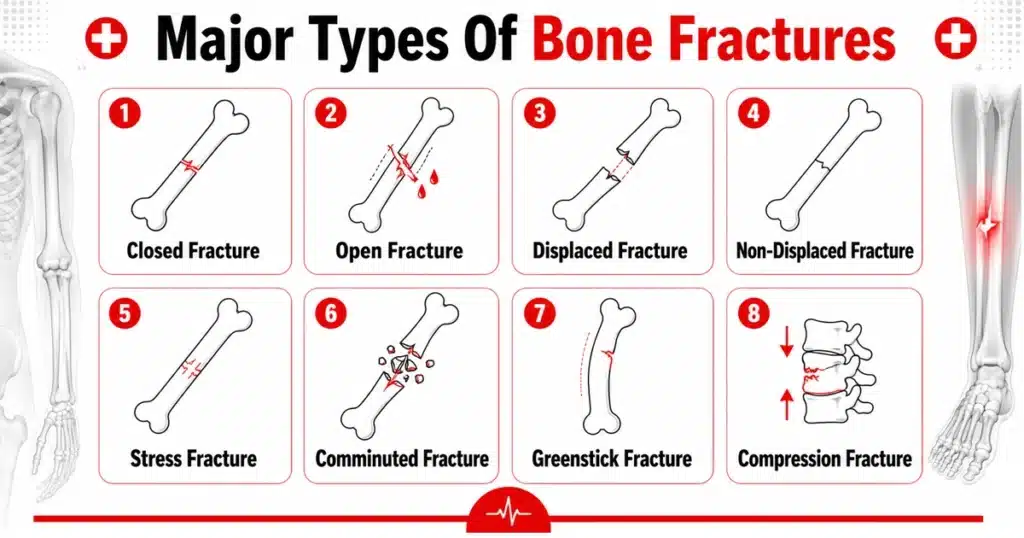
Hearing that you have a fracture can be overwhelming, especially when you’re dealing with pain, limited mobility, and uncertainty about recovery. Not all fractures are the same, and the type of break can influence symptoms, treatment options, healing time, and the risk of complications.
Closed Fracture
A closed fracture occurs when a bone breaks but does not pierce the skin. Although there is no visible wound, the injury can still cause significant pain, swelling, bruising, and difficulty using the affected area. These fractures may vary from simple cracks to complete breaks and often require imaging tests to confirm the extent of the injury.
Open Fracture
An open fracture, also called a compound fracture, occurs when the broken bone breaks through the skin or creates an open wound. This type of injury is considered a medical emergency because it increases the risk of infection and damage to surrounding tissues. Immediate treatment is often necessary to clean the wound, stabilize the bone, and reduce complications.
Displaced Fracture
A displaced fracture occurs when the broken pieces of bone move out of their normal alignment. Because the bone fragments are separated, these fractures may require manual realignment or surgical treatment to restore proper positioning. Symptoms often include severe pain, visible deformity, swelling, and limited function.
Non-Displaced Fracture
In a non-displaced fracture, the bone cracks or breaks but remains in its normal anatomical position. These fractures are generally more stable than displaced fractures and may heal with immobilization using a cast, splint, or brace. Even though the bone remains aligned, pain and swelling can still occur.
Stress Fracture
A stress fracture is a small crack in the bone caused by repetitive force or overuse rather than a single traumatic event. These injuries are common among athletes, runners, and individuals who suddenly increase physical activity levels. Symptoms often begin gradually and worsen with continued activity.
Comminuted Fracture
A comminuted fracture occurs when a bone breaks into three or more fragments. These fractures usually result from high-impact injuries such as motor vehicle accidents or significant falls. Because the bone is shattered into multiple pieces, treatment can be more complex and may require surgery.
Greenstick Fracture
A greenstick fracture is an incomplete break in which one side of the bone cracks while the other side bends. This type of fracture is most commonly seen in children because their bones are more flexible than adult bones. Although the break may not extend through the entire bone, treatment is still necessary to ensure proper healing.
Compression Fracture
A compression fracture occurs when a bone collapses or is crushed under pressure. These fractures commonly affect the vertebrae of the spine and are often associated with osteoporosis or traumatic injuries. Symptoms may include back pain, reduced mobility, and changes in posture.
When To Go To The ER
Some fractures can be treated with routine medical care, but others require immediate emergency attention. Delaying treatment for a serious fracture may increase the risk of complications, including infection, nerve damage, poor bone healing, or permanent loss of function. Seek emergency care right away if you experience any of the following signs:
- A bone is visible through the skin.
- Severe or uncontrolled bleeding is present.
- Intense pain that does not improve with rest or immobilization.
- A noticeable deformity or abnormal position of a limb.
- Inability to move the injured area or bear weight.
- Numbness, tingling, or loss of sensation below the injury.
- The affected area appears pale, blue, or unusually cold.
- Significant swelling that rapidly worsens.
- Suspected fracture of the head, neck, spine, hip, or pelvis.
- Signs of shock, such as dizziness, confusion, fainting, or rapid breathing.
- A fracture caused by a major trauma, such as a car accident or significant fall.
If you notice any of these serious fracture symptoms, do not delay medical care. Visit the nearest emergency room for prompt evaluation and treatment to protect function and support proper healing.
How To Treat A Fracture
A fracture can be painful and make everyday activities challenging. Treatment depends on the type, location, and severity of the injury. Early medical care is important to support proper bone healing, relieve symptoms, and reduce the risk of complications. Following your treatment plan can help promote a smoother recovery.
- Immobilization With A Cast Or Splint: Casts and splints keep the bone stable, prevent further injury, and support proper healing.
- Over-The-Counter Pain Relievers: Most doctors recommend acetaminophen or, when appropriate, NSAIDs such as ibuprofen to help manage pain. Always use medications as directed.
- Ice Therapy: Applying ice during the first 24 to 48 hours can help reduce swelling and discomfort. Wrap ice packs in a cloth before use.
- Elevation: Keeping the injured area elevated above heart level may help reduce swelling and improve comfort.
- Closed Reduction: A healthcare provider may manually realign displaced bones before applying a cast or splint.
- Surgical Repair: Severe or unstable fractures may require surgery using plates, screws, rods, or pins to stabilize the bone.
- Physical Therapy: Rehabilitation exercises can help restore strength, flexibility, and range of motion after healing begins.
- Adequate Nutrition: Calcium, vitamin D, and protein-rich foods help support bone repair and recovery.
- Rest And Activity Modification: Avoiding activities that stress the injured bone helps prevent further damage and promotes healing.
- Follow-Up Care: Regular medical visits help ensure the fracture is healing properly and allow treatment adjustments if needed.
Fracture Care At Altus Emergency Centers
Fractures can range from minor cracks to serious breaks that require immediate medical attention. Understanding the different types of fractures and recognizing warning signs can help you seek timely care, reduce complications, and support proper bone healing. With ER wait times near me of 11 minutes, patients can receive prompt evaluation when severe pain, deformity, swelling, or loss of function requires urgent attention.
At Altus Emergency Centers, we provide fast, compassionate care for fractures and other orthopedic injuries. Our experienced team uses advanced diagnostic imaging and evidence-based treatment to accurately assess injuries, stabilize broken bones, and help patients begin their recovery as quickly and safely as possible.
Key Takeaways
- A fracture is a partial or complete break in a bone caused by trauma, repetitive stress, or underlying bone weakness.
- Common fracture symptoms include pain, swelling, bruising, tenderness, deformity, and difficulty moving the affected area.
- Major types of fractures include closed, open, displaced, non-displaced, stress, comminuted, greenstick, and compression fractures.
- Open fractures, severe deformities, numbness, and loss of circulation require immediate emergency care.
- Treatment depends on the type and severity of the fracture and may include immobilization, pain management, reduction procedures, or surgery.
- Most doctors recommend prompt medical evaluation to ensure proper bone alignment and healing.
- Physical therapy, adequate nutrition, and follow-up care can support recovery and help restore function.
- Delaying treatment may increase the risk of complications, prolonged pain, and improper bone healing.
Frequently Asked Questions
How Long Can A Stress Fracture Take To Heal?
Most stress fractures heal within 6 to 8 weeks with rest and activity modification. However, recovery time can vary depending on the location of the fracture, its severity, and the individual’s overall health. Some stress fractures may take several months to heal completely.
Is A Fracture The Same As A Break?
Yes. The terms “fracture” and “break” both refer to a bone that has cracked or broken. “Fracture” is the medical term healthcare providers use, but there is no difference between the two.
How Long Does A Fractured Bone Take To Heal?
Most fractures heal within 6 to 12 weeks, although healing times vary based on the type of fracture, the affected bone, age, and overall health. More complex fractures may require a longer recovery period.
How Serious Is A Compression Fracture Of The Spine?
A compression fracture of the spine can range from mild to severe. While some cases cause manageable pain, others may lead to chronic pain, reduced mobility, changes in posture, or nerve-related complications. Medical evaluation is important to determine the severity and appropriate treatment.