
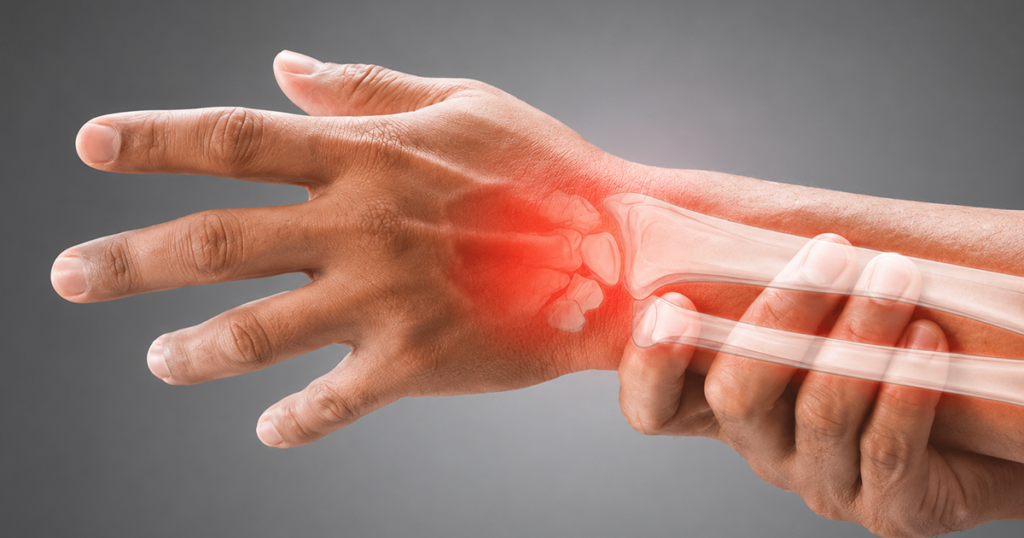
A bone fracture occurs when a bone cracks, breaks, or shatters due to excessive force, trauma, or underlying medical conditions that weaken the bone over time. Many people associate fractures only with severe accidents, but they can happen from something as simple as a fall, a sports injury, or even repetitive stress on a specific bone. If you are dealing with sudden pain, swelling, or an inability to move a limb after an injury, your body may already be showing warning signs of a fracture that should not be ignored.
In some cases, bone fractures can lead to serious complications, including nerve damage, internal bleeding, or infection if not evaluated and treated promptly by a medical professional. Severe symptoms such as visible bone deformity, intense pain, numbness, or an open wound near the injury site may require immediate evaluation at an ER or urgent care for fractures to prevent long term complications and support proper healing.
What Is a Fractured Bone?
A fractured bone is any bone in the body that has been partially or completely broken as a result of trauma, overuse, or a condition that reduces bone strength, such as osteoporosis. Fractures range in severity from hairline cracks that are barely visible on an X-ray to complete breaks where the bone separates into two or more pieces. According to the National Institutes of Health, fractures are among the most common orthopedic injuries in the United States, with millions of cases diagnosed every year across all age groups.
Signs of a Bone Fracture You Should Never Ignore
- Sudden and severe pain at the site of injury that worsens with movement or pressure
- Visible swelling, bruising, or tenderness around the affected area
- Deformity or an unusual angle of the limb or joint near the injury
- Numbness or tingling near the fracture site indicates possible nerve involvement
- Inability to bear weight or move the affected limb normally
- A snapping or cracking sound is heard at the moment of injury
- Open wounds near the injury site where bone may be visible through the skin
Types of Bone Fractures
Not all bone fractures are the same, and understanding the different types helps determine the severity of the injury and the most appropriate treatment approach. Each type varies in how the bone breaks, what caused it, and how it needs to be managed medically at an Altus emergency room lumberton tx.
- Hairline Fracture: A thin, partial crack in the bone that is often caused by repetitive stress or overuse and may not be immediately visible on a standard X-ray without specialized imaging.
- Stress Fracture: A small crack that develops gradually over time due to repeated force or overuse, commonly seen in athletes and military personnel who perform high-impact activities.
- Transverse Fracture: A clean break that runs horizontally straight across the bone, typically caused by a direct blow or significant trauma to the affected area.
- Oblique Fracture: A diagonal break that runs at an angle across the bone, often caused by a twisting force or impact applied at an angle to the limb.
- Comminuted Fracture: A severe fracture where the bone shatters into three or more fragments, usually the result of high-impact trauma such as a car accident or serious fall.
- Open Fracture: Also known as a compound fracture, this occurs when the broken bone pierces through the skin and is exposed to the outside environment, creating a serious infection risk.
- Greenstick Fracture: A partial fracture where the bone bends and cracks on one side without breaking completely through, most commonly seen in young children whose bones are still flexible.
Causes of Bone Fracture
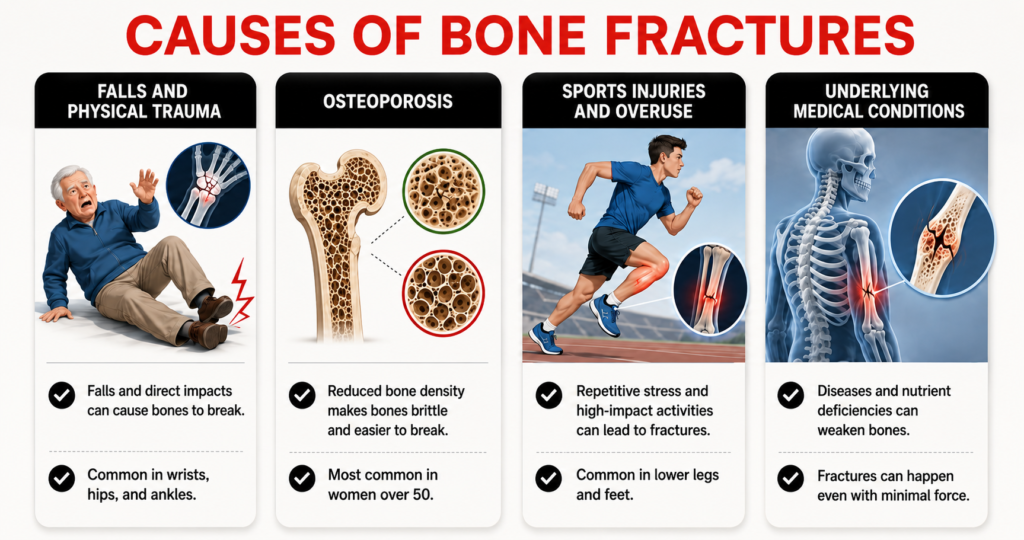
A bone fracture can result from a wide range of causes, from sudden traumatic events to gradual weakening of bone tissue over time. Understanding the causes helps identify risk factors and take preventive steps before a serious injury occurs.
1. Traumatic Injury
Falls, car accidents, sports collisions, and direct blows to the body are the most common causes of bone fractures across all age groups. The force applied during these events exceeds the bone’s natural strength, causing it to crack, break, or shatter. High-energy trauma, like motor vehicle accidents, can cause multiple fractures and often requires immediate emergency care.
2. Osteoporosis and Bone Weakness
Osteoporosis causes bones to become weaker and more brittle, making them susceptible to fractures from minor falls or everyday activities. According to the National Institutes of Health, it affects approximately 10 million Americans and causes more than 2 million fractures each year. Older adults, particularly postmenopausal women, face the highest risk of fractures in the hip, spine, and wrist.
3. Repetitive Stress and Overuse
Stress fractures develop when bones are subjected to repeated mechanical stress without adequate rest and recovery time. They are most common in athletes, runners, and military personnel who engage in high-impact activities regularly. The feet, shins, and lower legs are the most frequently affected areas due to the impact absorbed during running and jumping.
4. Underlying Medical Conditions
Conditions such as bone cancer, osteogenesis imperfecta, and severe vitamin D or calcium deficiencies weaken bone structure and make fractures more likely, even from minor trauma. These pathological fractures occur because the underlying disease has already compromised bone integrity before any injury takes place. Treating the underlying condition alongside the fracture is essential to prevent recurrence and support long-term healing.
Bone Fracture Symptoms You Should Not Ignore!
Bone fracture symptoms can vary significantly depending on the location and severity of the break, but certain warning signs are consistent across most types of fractures. Recognizing these symptoms early and seeking prompt medical evaluation is critical to preventing complications and ensuring proper healing.
- Sudden Severe Pain: Intense pain at the site of injury that worsens significantly with any movement, pressure, or attempt to use the affected limb.
- Swelling and Bruising: Rapid swelling and discoloration around the injured area are among the earliest and most visible signs of a fracture.
- Deformity: An abnormal shape, angle, or position of the limb or joint near the injury strongly suggests a significant fracture requiring immediate evaluation.
- Numbness or Tingling: Sensations of numbness, tingling, or weakness near the fracture site may indicate that nerves or blood vessels have been affected by the injury.
- Inability to Move: Difficulty or complete inability to move the injured area or bear weight on the affected limb is a key indicator of a fracture.
- Audible Snap or Crack: Many people hear or feel a distinct snapping or cracking sound at the moment the fracture occurs during the injury.
How Long Does a Fractured Bone Take to Heal?
The healing time for a bone fracture depends on several factors, including the type and location of the fracture, the age and overall health of the patient, and how quickly treatment was started after the injury occurred. Minor fractures, such as hairline or stress fractures in otherwise healthy individuals, may heal within 6 to 8 weeks with proper rest and immobilization. However, according to the National Library of Medicine, complex fractures involving multiple fragments, open wounds, or compromised blood supply can take 3 to 6 months or longer to heal fully and may require surgical intervention and extensive rehabilitation to restore normal function.
How to Treat Bone Fractures
Bone fracture treatment focuses on realigning the broken bone, immobilizing it to allow proper healing, relieving pain, and preventing complications such as infection or improper bone union. The right treatment approach depends entirely on the type, location, and severity of the fracture as well as the overall health of the patient.
- Immobilization: Casts, splints, or braces are used to hold the broken bone in proper alignment while it heals and prevent further movement that could disrupt the healing process.
- Pain Management: Pain relievers and anti-inflammatory medications prescribed by a doctor help manage discomfort and reduce swelling during the early stages of recovery.
- Surgery: Severe or complex fractures may require surgical procedures such as open reduction and internal fixation using metal plates, screws, or rods to hold bone fragments in place.
- Traction: In some cases, traction is used to gently pull and align the bone before casting or surgery, particularly for fractures of the femur or pelvis.
- Physical Therapy: Rehabilitation exercises prescribed after immobilization help restore strength, flexibility, and range of motion to the affected limb following a fracture.
- Bone Stimulation: For fractures that are slow to heal, electrical or ultrasound bone stimulation devices may be recommended to encourage faster bone tissue regeneration.
- Treatment of Underlying Conditions: Managing conditions like osteoporosis or vitamin deficiencies that contributed to the fracture is essential to prevent future breaks and support long-term bone health.
When to Go to the ER?
A bone fracture can become a medical emergency if it involves severe deformity, open wounds, significant blood loss, or signs of nerve or vascular damage. Mild fractures may be evaluated at an urgent care clinic, but certain symptoms demand immediate emergency care to prevent permanent damage and serious complications.
- Visible bone deformity or a limb that appears bent at an unnatural angle
- An open fracture where bone is visible through the skin, creating an immediate infection risk
- Severe swelling, intense pain, or complete inability to move the injured area
- Numbness, tingling, or loss of sensation near the fracture site
- Signs of significant blood loss, such as pale skin, rapid heartbeat, or dizziness
- Head, neck, or spinal injuries accompanied by any fracture symptoms
- Fractures in elderly patients or those with osteoporosis that may involve the hip or spine
If you or a loved one experiences any of these symptoms, do not wait to seek care. Visit the ER near me immediately for a full evaluation and prompt treatment.
Bone Fracture Care at Altus Emergency Center
A bone fracture can become serious quickly if symptoms are ignored or complications develop without proper medical attention. Understanding the types and causes of bone fractures helps, but prompt emergency evaluation is essential when pain, swelling, or deformity appear after an injury. At Altus Emergency Centers, patients receive fast evaluation and urgent treatment for bone fracture symptoms. The focus is on accurately diagnosing the fracture, stabilizing the injury, relieving pain, and preventing complications that could affect long-term recovery and function.