

Feeling sick with the flu can be frustrating, especially when fever, body aches, and exhaustion make even simple tasks difficult. Many people wonder “how long does the flu last?” and when they can expect to feel normal again. Recovery times can vary depending on age, health, and symptom severity.
In most cases, flu symptoms last about 5 to 7 days, although fatigue and cough may continue for two weeks or longer. While many people recover at home, worsening symptoms, breathing difficulties, chest pain, or signs of dehydration require prompt medical attention. If symptoms become severe, seek immediate care at our ER in Waxahachie, TX, for prompt evaluation and treatment.
What Is Flu?
The flu, or influenza, is a contagious viral infection that affects the nose, throat, and lungs. It often causes fever, chills, cough, sore throat, body aches, fatigue, headache, and congestion. Symptoms usually appear suddenly and can be more severe than a common cold.
A PubMed-reviewed study found that about 10.7% of unvaccinated adults and 22.5% of unvaccinated children get seasonal influenza each year. This highlights how common the flu is and why early recognition and proper care are important.
Dangerous Flu Symptoms You Should Never Ignore
- Difficulty breathing or shortness of breath.
- Chest pain or pressure.
- High fever that does not improve or keeps returning.
- Severe dehydration, including dizziness and very little urination.
- Confusion, disorientation, or difficulty staying awake.
- Blue, gray, or pale lips, skin, or fingernails.
- Persistent vomiting or inability to keep fluids down.
- Severe weakness that makes it difficult to walk or perform daily activities.
- Symptoms that improve but suddenly return with a worsening cough or fever.
- Signs of pneumonia, such as chest pain, rapid breathing, or coughing up mucus.
If your loved one has any of these symptoms, visit a hospital or seek flu treatment near me immediately for prompt medical care.
How Long Does The Flu Last Usually?
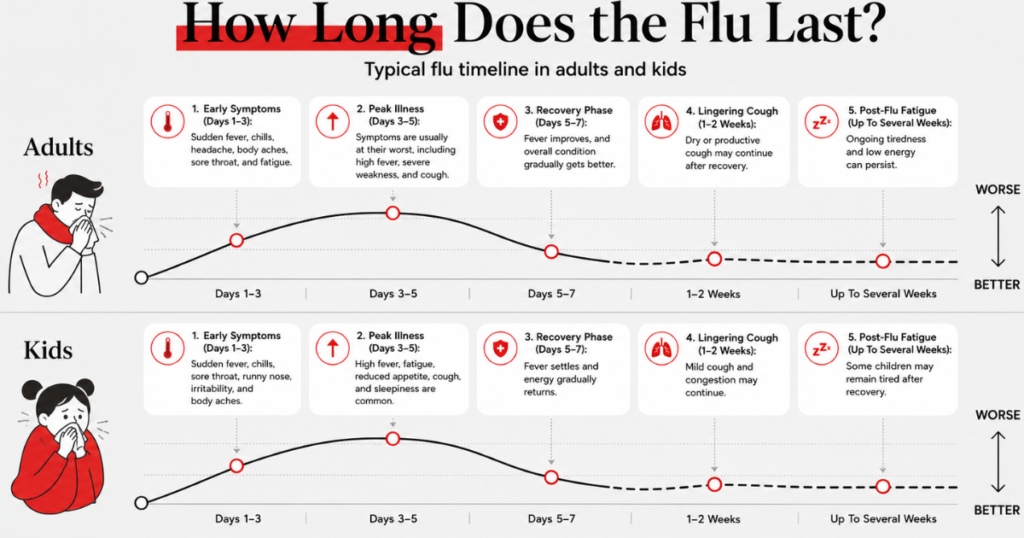
The flu usually lasts about 5 to 7 days in most people, but recovery can vary depending on age, immunity, and overall health. While fever and major symptoms often improve within a week, cough and fatigue may persist for up to two weeks. In some cases, recovery may take longer if complications develop or the immune system is weak.
How Long Does The Flu Last In Adults
- Early Symptoms (Days 1–3): Sudden fever, chills, headache, body aches, sore throat, and fatigue.
- Peak Illness (Days 3–5): Symptoms are usually at their worst, including high fever, severe weakness, and cough.
- Recovery Phase (Days 5–7): Fever improves, and overall condition gradually gets better.
- Lingering Cough (1–2 Weeks): Dry or productive cough may continue after recovery.
- Post-Flu Fatigue (Up To Several Weeks): Ongoing tiredness and low energy can persist.
How Long Does The Flu Last In Kids
- Early Symptoms (Days 1–3): Sudden fever, chills, sore throat, runny nose, irritability, and body aches.
- Peak Illness (Days 3–5): High fever, fatigue, reduced appetite, cough, and sleepiness are common.
- Recovery Phase (Days 5–7): Fever settles and energy gradually returns.
- Lingering Cough (1–2 Weeks): Mild cough and congestion may continue.
- Post-Flu Fatigue (Up To Several Weeks): Some children may remain tired after recovery.
How Do You Test For The Flu
Flu testing is usually done when symptoms are moderate to severe, appear suddenly, or occur in high-risk patients. A doctor may diagnose flu based on symptoms, but laboratory tests are used to confirm the infection and rule out other illnesses like COVID-19 or RSV. Early testing can help guide treatment decisions, especially for antiviral medicines.
- Rapid Influenza Diagnostic Test (RIDT): A quick test that uses a nasal or throat swab to detect flu antigens. Results are usually available within 15–30 minutes. However, accuracy can vary, and false negatives may occur.
- Molecular Tests (RT-PCR): A more accurate test that detects the genetic material of the influenza virus. It is commonly used in hospitals and gives highly reliable results. Results may take a few hours to a day.
- Respiratory Panel Testing: A broader test that checks for multiple respiratory viruses, including influenza, COVID-19, and RSV. It helps identify the exact cause of symptoms. This is often used in severe or unclear cases.
When To Go To The ER
Flu symptoms are usually manageable at home, but in some cases, the infection can become severe and life-threatening. You should not delay emergency care if symptoms worsen quickly or show signs of complications. Early treatment in the ER can prevent serious outcomes, especially in high-risk patients.
- Difficulty breathing or shortness of breath that worsens or occurs at rest.
- Chest pain or persistent pressure in the chest.
- Confusion, sudden dizziness, or difficulty waking up.
- Blue, pale, or gray-colored lips or face.
- Severe dehydration, including no urination, dry mouth, or extreme weakness.
- High fever that does not improve with medication or lasts more than 3–4 days.
- Seizures or sudden loss of consciousness.
- Symptoms that initially improve but then suddenly return worse than before.
If you or a loved one develops any of these symptoms, seek immediate care at an ER near me for prompt evaluation and treatment.
How To Treat The Flu
Most flu cases improve with rest and supportive care since it is a viral infection. Treatment of flu focuses on relieving symptoms, preventing dehydration, and supporting recovery. In some cases, doctors may prescribe antiviral medicines if needed.
- Rest and Sleep:
helps the body fight the infection and reduces fatigue. Adequate sleep supports immune recovery and speeds up healing. Avoid overexertion during illness. - Stay Hydrated: Drink plenty of fluids like water, soups, and oral rehydration solutions. This helps prevent dehydration caused by fever and sweating. It also supports overall recovery.
- Fever and Pain Relief Medicines: Medicines like acetaminophen (recommended by the doctor) or ibuprofen (recommended by the doctor) help reduce fever and body aches. They improve comfort during illness.
- Antiviral Medicines: Antiviral drugs like oseltamivir (recommended by the doctor) may be prescribed in early stages or high-risk cases. They can reduce symptom severity and duration. These are not needed for every flu case.
- Steam Inhalation and Humidifiers: Steam helps loosen nasal congestion and eases breathing. Humidifiers keep the air moist and reduce throat irritation. This provides symptomatic relief.
- Light Nutrition: Eat easy-to-digest, nutritious foods like soups, fruits, and soft meals. This supports energy levels during recovery. Avoid heavy or oily foods.
- Prevent Spreading Infection: Stay at home and avoid close contact with others. Wash hands regularly and wear a mask if needed. This helps prevent transmission of the virus.
Flu Care And When To Seek Emergency Help
The flu is usually self-limiting, but in some cases it can become severe and require urgent care. While most people recover with rest and fluids, warning signs like difficulty breathing, chest pain, or high fever should not be ignored. If you’re searching for er wait times near me, our ER offers an average wait time of just 10 minutes for quick evaluation and treatment.
At Altus Emergency Centers, patients experiencing severe flu symptoms receive fast evaluation and immediate medical care. Early treatment helps reduce complications, manage symptoms effectively, and ensure safer recovery outcomes when the illness becomes more serious.
Key Takeaways
- Flu is a contagious viral infection that affects the respiratory system and can spread quickly.
- Most flu cases last about 5 to 7 days, but fatigue and cough may continue longer.
- Symptoms can include fever, body aches, cough, sore throat, and severe tiredness.
- High-risk symptoms like breathing difficulty, chest pain, or confusion need emergency care.
- Early rest, hydration, and medical guidance help prevent complications and speed recovery.
Frequently Asked Questions
How Long Are You Contagious With The Flu?
You are usually contagious from about 1 day before symptoms start and up to 5–7 days after becoming sick. Children and people with weak immunity may stay contagious longer. This is why early isolation is important to prevent spread.
How Long Does A Flu Last?
The flu typically lasts around 5 to 7 days in most people. However, symptoms like cough and tiredness can continue for up to two weeks. Recovery time depends on overall health, age, and immune response.
How Long Does Flu B Last?
Influenza B usually lasts about 5 to 7 days, similar to other flu strains. In some cases, fatigue and cough may persist beyond a week. Severity can vary, especially in children and high-risk individuals.