

Seizures can be alarming to witness, whether they happen to you, a loved one, or someone in a public place. The sudden changes in awareness, movement, behavior, or consciousness often leave people feeling scared and uncertain about what happened. Understanding the Types of Seizures is an important step toward recognizing warning signs, seeking appropriate medical care, and knowing how to respond during a seizure event.
While some seizures are brief and resolve without lasting effects, others require immediate medical attention. A seizure that lasts longer than 5 minutes, occurs repeatedly without recovery between episodes, causes breathing difficulties, results in injury, or happens for the first time should be treated as a medical emergency. In these situations, seeking prompt care at Altus ER Lumberton, TX, can help prevent serious complications and ensure the best possible outcome.
What Is a Seizure?
A seizure is a sudden burst of abnormal electrical activity in the brain that temporarily affects movement, awareness, behavior, or sensations. Symptoms can range from brief staring spells and confusion to muscle jerking or full-body convulsions. Some seizures are short, while others require emergency medical care.
Study: According to the CDC, approximately 1.2% of the U.S. population has active epilepsy, including about 3 million adults and 470,000 children, highlighting how common seizure disorders are.
Seizure Symptoms You Should Never Ignore
- Loss of consciousness or unresponsiveness.
- Full-body shaking or convulsions.
- A seizure lasting longer than 5 minutes.
- Repeated seizures without recovery between episodes.
- Sudden confusion or disorientation after a seizure.
- Difficulty breathing or bluish lips and face.
- Loss of bladder or bowel control during a seizure.
- Sudden collapse resulting in a head injury or other trauma.
- Unusual staring spells with loss of awareness.
- Sudden muscle stiffness, jerking, or uncontrollable movements.
What Are The Main Seizure Types?
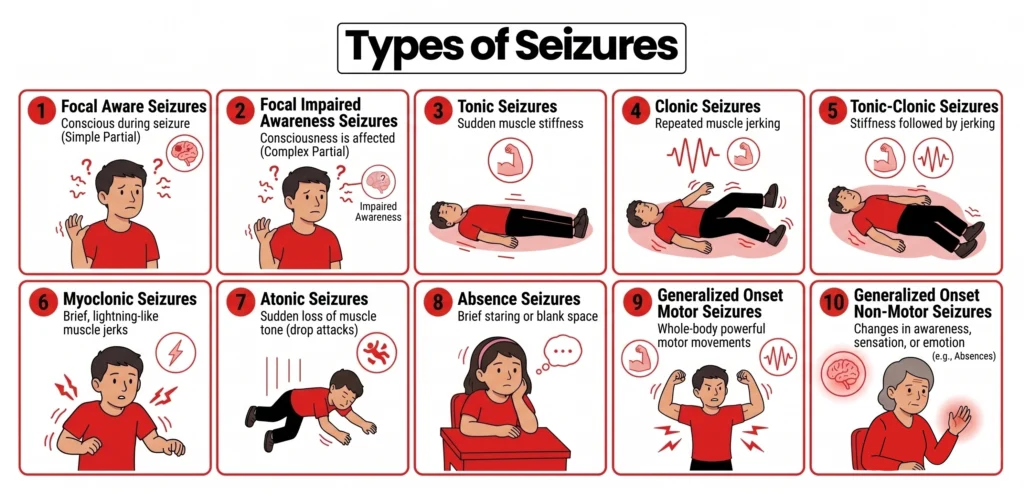
Seizures can affect people in different ways, which is why understanding their classification is important. Some seizures primarily affect awareness, while others cause noticeable physical symptoms such as jerking movements, stiffness, or loss of consciousness. Knowing the differences can help patients, caregivers, and loved ones recognize symptoms more quickly and determine when urgent care for seizure is necessary to reduce the risk of serious complications.
1. Focal Aware Seizures
Focal aware seizures begin in one area of the brain, but the person remains conscious and aware during the episode. Symptoms may include unusual sensations, sudden emotions, tingling, visual changes, or involuntary movements. These seizures are often brief but can be unsettling.
2. Focal Impaired Awareness Seizures
These seizures start in one part of the brain and affect awareness or responsiveness. A person may appear confused, stare blankly, make repetitive movements, or be unable to respond normally. Episodes often last a few minutes and may be followed by confusion or fatigue. Many people do not remember the seizure afterward.
3. Tonic Seizures
Tonic seizures cause sudden muscle stiffening, typically affecting the arms, legs, or trunk. The stiffness can lead to falls and injuries if the person is standing. These seizures are usually short but can be alarming to witness. They often occur during sleep but may happen while awake.
4. Clonic Seizures
Clonic seizures are characterized by repeated, rhythmic jerking movements of the muscles. The jerking usually affects the face, neck, arms, or legs and may occur on one or both sides of the body. These seizures are less common than other seizure types. Medical evaluation is important to determine the underlying cause.
5. Tonic-Clonic Seizures
Tonic-clonic seizures are among the most recognized seizure types. They typically begin with muscle stiffening followed by rhythmic jerking movements, loss of consciousness, and sometimes loss of bladder control. Recovery may involve confusion, headache, and extreme tiredness. Emergency care is needed if the seizure lasts longer than five minutes.
6. Myoclonic Seizures
Myoclonic seizures cause sudden, brief muscle jerks that can affect a single body part or the entire body. The movements are often described as shock-like and occur without warning. Although they may be brief, frequent episodes can interfere with daily activities. They are commonly associated with certain epilepsy syndromes.
7. Atonic Seizures
Atonic seizures cause a sudden loss of muscle tone, often resulting in head drops, falls, or collapse. Because they occur without warning, they carry a significant risk of injury. These seizures are usually very brief but can happen multiple times a day. Protective measures may be necessary for safety.
8. Absence Seizures
Absence seizures are brief episodes of impaired awareness that commonly affect children. During a seizure, the person may stare blankly, stop speaking, or appear disconnected from their surroundings for a few seconds. Because there are no dramatic movements, these seizures can be mistaken for daydreaming. Frequent episodes may affect learning and concentration.
9. Generalized Onset Motor Seizures
These seizures begin on both sides of the brain and involve noticeable muscle movements. Symptoms can include stiffening, jerking, repetitive motions, or sudden falls. The exact presentation varies depending on the brain regions involved. Medical evaluation helps identify the specific seizure pattern and treatment needs.
10. Generalized Onset Non-Motor Seizures
Previously known mainly as absence seizures, these episodes involve changes in awareness without significant body movements. A person may suddenly stop activity, stare, or appear briefly disconnected from their environment. Because symptoms can be subtle, these seizures are sometimes overlooked. Early diagnosis can help prevent complications and improve quality of life.
When To Go To The ER
Most seizures end on their own within a few minutes, but some can quickly become life-threatening emergencies. Immediate medical attention is important when a seizure is prolonged, causes breathing problems, results in injury, or occurs for the first time. If any of these warning signs occur, go to the nearest emergency room right away, as prompt treatment can help prevent serious complications and identify underlying medical conditions that require urgent care.
- A seizure lasts longer than 5 minutes.
- Multiple seizures occur without full recovery between episodes.
- The person has difficulty breathing or stops breathing.
- The lips, face, or skin turn blue or gray.
- The seizure occurs for the first time.
- The person remains unconscious or unresponsive after the seizure ends.
- A serious injury occurs during the seizure, such as a head injury.
- The seizure happens in water.
- The person is pregnant.
- The person has diabetes.
- The seizure is accompanied by a high fever.
- The person experiences severe confusion, weakness, or difficulty speaking afterward.
- The seizure occurs after a recent head injury.
- The person does not return to their normal level of alertness.
How To Treat Seizures
A seizure can be frightening for both the person experiencing it and those around them. Treatment depends on the type of seizure, its cause, how often it occurs, and the person’s overall health. Some people may need long-term management, while others require emergency treatment for sudden or prolonged seizures. In urgent situations, it’s important to seek immediate care rather than focusing on ER wait times near me, as prompt treatment can help prevent serious complications.
- Anti-Seizure Medications: Prescription medications are the main treatment for recurrent seizures. Most doctors recommend taking them exactly as prescribed.
- Emergency Rescue Medications: These prescription medicines can help stop prolonged seizures. Most doctors recommend them for people at risk of seizure emergencies.
- Treating The Underlying Cause: Managing conditions such as infections, low blood sugar, or head injuries may help prevent seizures.
- Epilepsy Surgery: Surgery may be considered when seizures cannot be controlled with medication.
- Vagus Nerve Stimulation (VNS): An implanted device sends signals to the brain to help reduce seizure frequency.
- Responsive Neurostimulation (RNS): This device detects abnormal brain activity and responds to help prevent seizures.
- Deep Brain Stimulation (DBS): Electrical stimulation of specific brain areas may help control severe epilepsy.
- Ketogenic Diet: A medically supervised ketogenic diet may reduce seizures in some patients.
- Adequate Sleep: Getting enough sleep can help lower the risk of seizure triggers.
- Stress Management: Reducing stress through relaxation techniques may help improve seizure control.
- Avoiding Triggers: Avoiding known triggers such as alcohol, flashing lights, or missed medications can help prevent seizures.
- Seizure First Aid: Protect the person from injury and call emergency services if the seizure lasts longer than 5 minutes.
Expert Seizure Care At Altus Emergency Centers
Seizures can happen without warning and may become life-threatening if they last too long or occur repeatedly. Understanding the types of seizures and recognizing emergency warning signs can help you seek prompt treatment and reduce the risk of serious complications. At Altus Emergency Centers, our experienced team provides rapid evaluation and emergency care for patients experiencing seizure symptoms.
If you or a loved one experiences a first-time seizure, a prolonged seizure, or repeated seizures without recovery, do not delay medical care. Altus Emergency Centers offers fast diagnosis, advanced emergency treatment, and timely stabilization to identify the underlying cause and help protect your long-term brain health.
Key Takeaways
- Seizures result from abnormal electrical activity in the brain.
- Symptoms range from staring spells to full-body convulsions.
- Different seizure types affect the brain in different ways.
- Focal seizures start in one area; generalized seizures affect both sides of the brain.
- Tonic-clonic, absence, myoclonic, and atonic seizures are common types.
- A seizure lasting more than 5 minutes is a medical emergency.
- First-time seizures require medical evaluation.
- Treatment may include medications, devices, surgery, or lifestyle changes.
- Early treatment can help prevent complications.
Frequently Asked Questions
What Causes Seizures?
Seizures can be caused by epilepsy, head injuries, brain infections, stroke, brain tumors, high fever, low blood sugar, electrolyte imbalances, or certain medications. In some cases, the exact cause cannot be identified.
What Does A Seizure Feel Like?
A seizure may feel different for each person. Some people experience unusual sensations, such as tingling, a strange smell or taste, dizziness, or déjà vu, while others may lose awareness, have muscle jerking, or become temporarily confused.
What To Do If Someone Has A Seizure?
Stay calm and move nearby objects away to prevent injury. Do not hold the person down or place anything in their mouth. Time the seizure, and once it ends, gently turn them onto their side. Call 911 if the seizure lasts longer than 5 minutes, repeats without recovery, or it is their first seizure.