
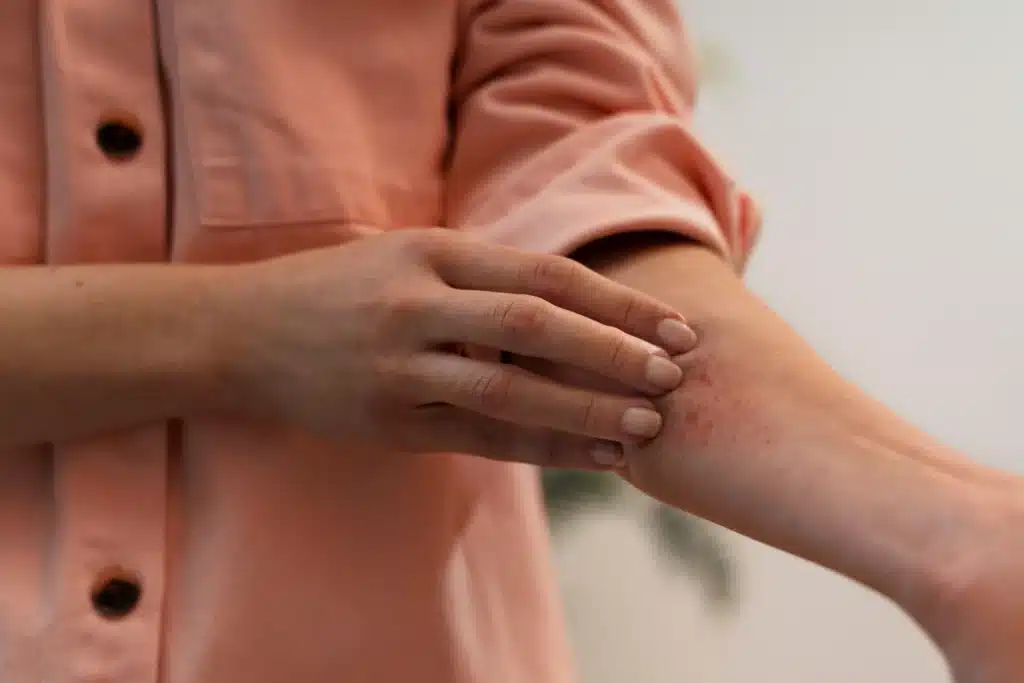
Have you ever noticed that your mosquito bite becomes much larger, itchier, or more painful than everyone else’s? If you’re wondering, can you be allergic to mosquito bites? The answer is yes. While most mosquito bites cause only mild irritation, some people experience an allergic reaction that can range from uncomfortable swelling to severe symptoms requiring prompt medical evaluation.
Although many allergic reactions remain mild, they should never be ignored if symptoms worsen quickly or affect your breathing or overall health. Seek emergency medical care immediately if a mosquito bite is followed by severe swelling, difficulty breathing, dizziness, widespread hives, or swelling of the face, lips, or throat, as these may be signs of a life-threatening allergic reaction that requires urgent treatment. Visit Lake Jackson ER for prompt evaluation of severe mosquito bite allergy symptoms.
What Is Mosquito Bite Allergy?
A mosquito bite allergy is an exaggerated immune system response to proteins in mosquito saliva that enter the skin during a bite. Instead of causing only a small itchy bump, the bite may become significantly swollen, red, painful, warm, or blistered. In rare cases, the allergic reaction can spread beyond the bite site and trigger widespread hives or even a severe allergic reaction (anaphylaxis). Prompt medical evaluation is important if symptoms rapidly worsen or involve difficulty breathing or swelling of the face or throat.
NIH Study: A review published by the National Institutes of Health (NIH) reports that large local allergic reactions to mosquito bites are more common in children and people with limited previous exposure to local mosquito species, while severe systemic reactions remain rare but can occur.
Dangerous Symptoms Of Mosquito Bite Allergy
- Severe swelling that spreads far beyond the bite site.
- Swelling of the lips, tongue, face, or throat.
- Difficulty breathing, wheezing, or shortness of breath.
- Widespread hives or an itchy rash across the body.
- Dizziness, fainting, or confusion.
- Rapid heartbeat or a weak pulse.
- Persistent vomiting or severe abdominal cramps.
- Fever accompanied by extensive redness, warmth, or worsening pain around the bite.
- Large blisters or skin breakdown at the bite site.
- Symptoms that develop rapidly after a mosquito bite and continue to worsen.
For severe or worsening reactions, timely allergy care can help identify the cause of symptoms and prevent serious complications.
What Causes A Mosquito Bite Allergy?
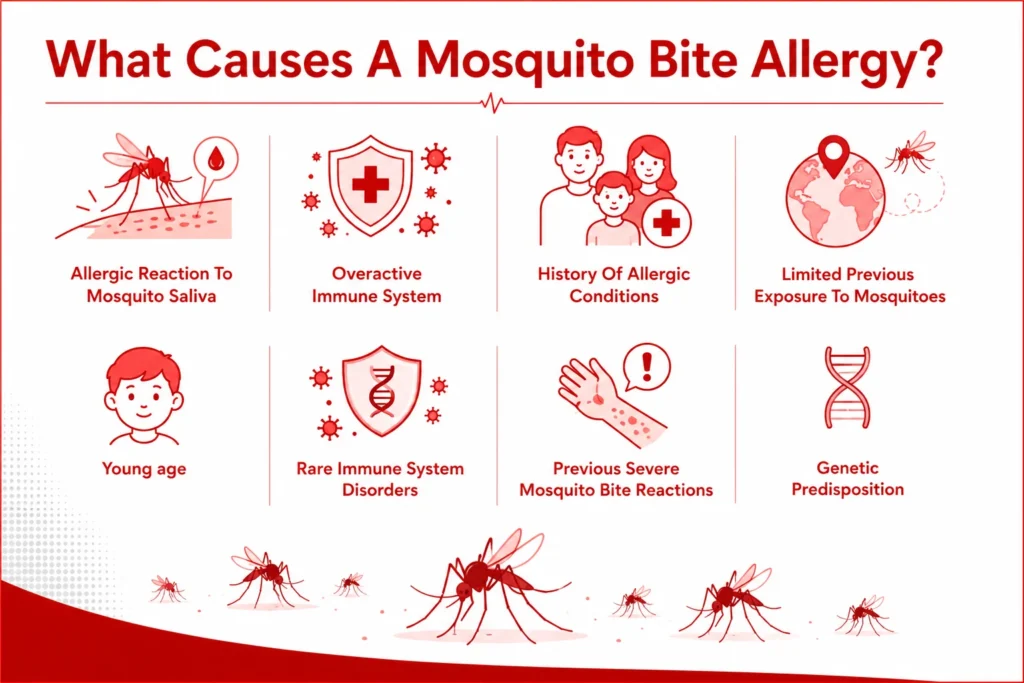
A mosquito bite allergy develops when the body’s immune system reacts more strongly than normal to substances introduced during a mosquito bite. While many people experience only mild itching, others develop pronounced swelling, redness, or more serious allergic symptoms because their immune system is unusually sensitive.
Allergic Reaction To Mosquito Saliva
The primary trigger of a mosquito bite allergy is an immune response to proteins found in mosquito saliva. These proteins are injected into the skin while the mosquito feeds, and the immune system mistakenly identifies them as harmful. This causes the release of histamine and other inflammatory chemicals, leading to redness, swelling, and itching. In highly sensitive individuals, the reaction can become much more severe.
Also Read: Allergy Triggers to Avoid
Overactive Immune System
Some people naturally have an immune system that reacts more intensely to allergens. Even a small amount of mosquito saliva can trigger excessive inflammation, resulting in large swollen areas, severe itching, or prolonged discomfort. This heightened immune response is one reason allergic reactions vary greatly between individuals.
History Of Allergic Conditions
People with allergies such as allergic rhinitis, eczema, or food allergies may be more likely to experience stronger reactions to mosquito bites. Their immune systems are already predisposed to reacting to harmless substances. Although not everyone with allergies develops a mosquito bite allergy, the risk of exaggerated skin reactions may be higher.
Limited Previous Exposure To Mosquitoes
Individuals who have had little exposure to certain mosquito species may develop stronger reactions when bitten for the first time. This is commonly seen in travelers visiting new geographic regions or people who have recently moved to an area with different mosquito species. The immune system may react more aggressively because it has not previously encountered those salivary proteins.
Young Age
Children often experience larger and more noticeable reactions to mosquito bites than adults. Their immune systems are still developing and may respond more vigorously to mosquito saliva. Although many children gradually become less sensitive over time, some continue to have significant allergic reactions that require medical attention.
Rare Immune System Disorders
Certain uncommon immune system disorders can increase sensitivity to mosquito bites. In these individuals, bites may cause unusually severe swelling, blistering, or prolonged skin inflammation. Because these reactions can resemble infections or other skin conditions, medical evaluation is often necessary to determine the underlying cause.
Previous Severe Mosquito Bite Reactions
A person who has experienced a significant allergic reaction to mosquito bites in the past may be more likely to develop another severe reaction after future bites. Prior sensitization allows the immune system to recognize mosquito saliva more quickly, which can result in a faster and stronger allergic response.
Genetic Predisposition
Genetics may influence how the immune system responds to environmental allergens, including mosquito saliva. People with a family history of allergies or allergic diseases may have an inherited tendency toward exaggerated immune responses. While genetics alone do not guarantee a mosquito bite allergy, they can increase susceptibility when combined with other risk factors.
When To Go To The ER
Most mosquito bites can be treated at home, but a severe allergic reaction should never be ignored. If symptoms spread beyond the bite site, worsen rapidly, or affect your breathing or circulation, seek emergency medical care immediately. Prompt treatment can help prevent life-threatening complications such as anaphylaxis and reduce the risk of serious infection if the bite becomes severely inflamed.
- Difficulty breathing, wheezing, or shortness of breath.
- Swelling of the face, lips, tongue, or throat.
- Widespread hives or a rapidly spreading rash.
- Dizziness, fainting, confusion, or loss of consciousness.
- A rapid heartbeat or signs of shock.
- Severe swelling that continues to expand quickly beyond the bite area.
- High fever, chills, or increasing redness and warmth that may indicate a serious skin infection.
- Large blisters, skin discoloration, or tissue damage around the bite.
- Persistent vomiting or severe abdominal pain after the bite.
- Any symptoms of a severe allergic reaction in someone with a history of anaphylaxis.
If you experience signs of a severe reaction, visit the emergency room near me immediately for fast evaluation and treatment.
How To Treat Mosquito Bites Caused By An Allergy
An allergic reaction to a mosquito bite can be uncomfortable, but early treatment often helps reduce itching, swelling, and inflammation before symptoms worsen. The right treatment depends on how severe the reaction is, ranging from simple home care to prescription medications or emergency treatment.
- Cold Compress: Apply a cold pack or cool, damp cloth to the bite for 10–15 minutes at a time. This helps reduce swelling, itching, and discomfort.
- Oral Antihistamines: Most doctors recommend over-the-counter antihistamines such as cetirizine or loratadine to help relieve itching and decrease the allergic response.
- Hydrocortisone Cream: Most doctors recommend applying an over-the-counter 1% hydrocortisone cream to reduce redness, inflammation, and itching. Use only as directed.
- Calamine Lotion: Applying calamine lotion can soothe irritated skin and provide temporary relief from itching.
- Avoid Scratching: Keeping the area clean and avoiding scratching helps prevent skin damage and lowers the risk of a bacterial skin infection.
- Keep The Bite Clean: Wash the affected area gently with mild soap and water to reduce irritation and help prevent infection.
- Prescription Medications: For large or severe local allergic reactions, a healthcare provider may prescribe stronger corticosteroid creams, oral corticosteroids, or other medications when appropriate.
- Epinephrine For Severe Allergic Reactions: If anaphylaxis develops, immediate treatment with epinephrine is required. People with a history of severe allergic reactions should use a prescribed epinephrine auto-injector if instructed by their doctor and seek emergency medical care immediately.
Mosquito Bite Allergy Care At Altus Emergency Centers
While many mosquito bites cause only mild irritation, a severe allergic reaction can become a medical emergency. If you’re asking, can you be allergic to mosquito bites, and are experiencing difficulty breathing, swelling of the face or throat, widespread hives, or rapidly worsening symptoms, don’t delay emergency care. Altus Emergency Centers provides care through our 24/7 emergency room with fast evaluation and treatment for severe allergic reactions.
At Altus Emergency Centers, our experienced emergency physicians quickly evaluate allergic reactions and provide prompt treatment, including medications, IV therapy when needed, airway support, and continuous monitoring for severe symptoms. We’re committed to delivering compassionate, timely care to relieve your symptoms, prevent complications, and help you recover safely.
Key Takeaways
- Yes, you can be allergic to mosquito bites, and reactions can range from mild swelling to life-threatening anaphylaxis.
- Large swelling, widespread hives, blistering, or symptoms that spread beyond the bite may indicate a more serious allergic reaction.
- Most mild allergic reactions improve with cold compresses, over-the-counter antihistamines, and hydrocortisone cream, as recommended by most doctors.
- Seek emergency medical care immediately if you develop difficulty breathing, swelling of the face or throat, dizziness, or other signs of anaphylaxis.
- Prompt diagnosis and treatment can relieve symptoms, prevent complications, and ensure a safe recovery from severe mosquito bite allergies.
Frequently Asked Questions
How Long Do Mosquito Bites Last?
Most mosquito bites improve within 3 to 7 days, with itching and swelling gradually fading. If you have a mosquito bite allergy, the reaction may last longer, cause significant swelling, or require medical treatment, especially if symptoms continue to worsen.
Can Mosquitoes Bite Through Clothes?
Yes. Mosquitoes can bite through thin, lightweight, or tight-fitting clothing because their mouthparts can reach the skin through certain fabrics. Wearing loose-fitting clothing made from thicker materials helps reduce the risk of bites.
What Does A Mosquito Bite Allergy Look Like?
A mosquito bite allergy typically appears as a large, swollen, red, and intensely itchy area that extends well beyond the bite. In more severe cases, blisters, warmth, pain, widespread hives, or swelling of the face, lips, or eyes may also occur.
How To Make Mosquito Bites Stop Itching?
A cold compress can help relieve itching and reduce swelling. Most doctors recommend using an over-the-counter antihistamine, 1% hydrocortisone cream, or calamine lotion for symptom relief, while avoiding scratching to prevent skin damage and infection.