
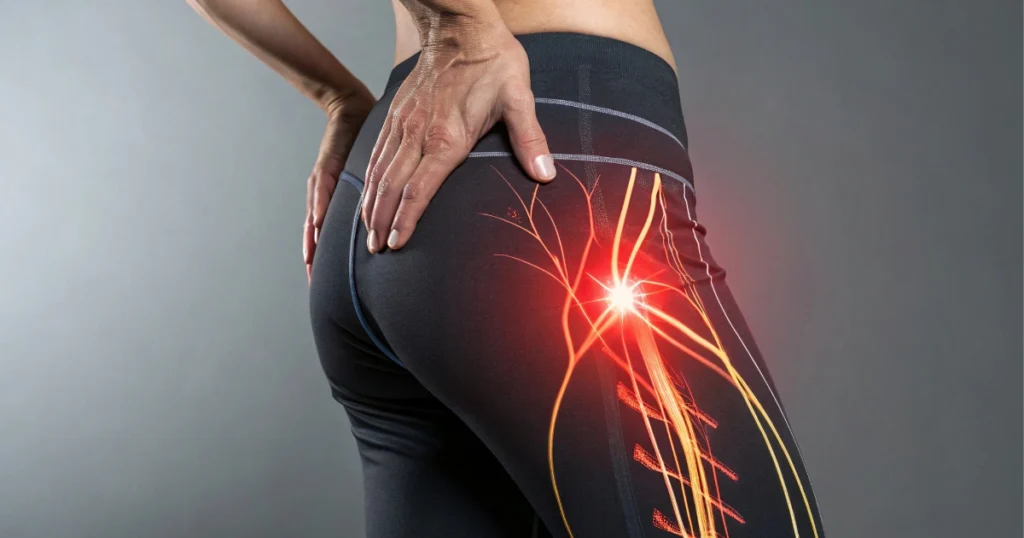
What is causing it and whether it could be something serious. Sciatica is a term used to describe pain related to the sciatic nerve, the largest nerve in the body, which extends from the lower back through the buttocks and down the legs.
Sciatica is not a disease itself but a symptom of a problem affecting the sciatic nerve or the spinal nerve roots that contribute to it. For urgent evaluation of severe or concerning symptoms, Altus ER Lake Jackson, TX provides emergency care. While many cases are not an emergency, severe, sudden, or rapidly worsening symptoms can indicate significant nerve involvement and should not be ignored.
What Causes Sciatica?
If you are experiencing pain that starts in your lower back and extends into your buttock or leg, finding the cause can help determine what kind of care may be needed. Sciatica occurs when the sciatic nerve or the spinal nerve roots that contribute to it are irritated or affected by an underlying condition. Problems involving the spine, pelvis, or nearby muscles can all produce similar symptoms. Persistent lower back pain with pain extending into the leg should be evaluated if it is severe, worsening, or interfering with normal activities.
Herniated Or Slipped Disc
A herniated disc is one of the most frequent causes of sciatica. Spinal discs act as cushions between the vertebrae, but their inner material can push through a weakened outer layer and affect a nearby nerve root. This can lead to pain that travels from the lower back through the buttock and into the leg. Depending on the severity and underlying problem, back pain treatment may include conservative care or further medical evaluation.
Spinal Stenosis
Spinal stenosis develops when the spinal canal or the openings where nerves pass become narrower. It is more common with aging and may occur alongside arthritis, disc changes, or other degenerative changes in the spine. Pressure on the lower spinal nerves can cause sciatica, particularly during standing or walking. Some people also experience leg discomfort that improves when sitting or leaning forward.
Bone Spurs
Bone spurs are abnormal areas of extra bone that can develop as the joints and bones of the spine undergo degenerative changes. They may grow near the spaces where spinal nerves travel and reduce the room available for those nerves. When this affects a nerve root associated with the sciatic nerve, radiating leg pain can occur.
Spondylolisthesis
Spondylolisthesis occurs when one vertebra slips forward relative to another vertebra. This displacement can change the normal alignment of the spine and affect the spaces surrounding nearby nerves. Some people have no symptoms, while others develop lower back pain, stiffness, or pain that extends into the legs. The condition can result from age-related degeneration, a stress injury, or other structural changes in the spine.
Piriformis Syndrome
Piriformis syndrome involves irritation of the sciatic nerve near the piriformis muscle, which is located deep in the buttock. Tightness, spasms, or inflammation involving this muscle can affect the nerve and produce symptoms that resemble sciatica from the spine. Pain may be concentrated around the buttock and can extend down the back of the leg. Because several conditions can cause similar hip and buttock discomfort, identifying the underlying hip pain causes is important.
Pelvic Injuries
Significant injuries involving the pelvis can affect tissues surrounding the sciatic nerve. A fracture, direct impact, or swelling following trauma may interfere with normal nerve function and produce radiating pain. Sciatica that begins after a serious accident, fall, or sports injury should not be assumed to be a simple muscle strain.
Spinal Injuries
Trauma to the spine can damage vertebrae, discs, ligaments, or other structures that protect and support the spinal nerves. Depending on the injury, nerve irritation may cause pain that travels from the lower back into the leg. A sudden onset of severe back or leg pain after a collision or fall requires medical attention.
Spinal Tumors
Tumors affecting the spine or nearby tissues are an uncommon cause of sciatica but can affect spinal nerves as they grow. Pain caused by a spinal tumor may persist or progressively worsen rather than following the usual pattern of temporary back discomfort. Other warning signs can include unexplained weight loss or progressive neurological changes. l
Age-Related Spinal Changes
The spine naturally changes with age, and the discs may lose height and flexibility while the joints can develop degenerative changes. These processes can contribute to conditions such as spinal stenosis, bone spurs, and disc problems that affect nearby nerves. Aging itself does not automatically mean a person will develop sciatica. However, the structural changes that become more common over time can increase the risk of nerve-related back and leg pain.
Sciatica Symptoms That Require Medical Attention
Most sciatica is not an emergency, but some sciatica symptoms may indicate serious nerve compression and need prompt medical attention. A 2020 systematic review found cauda equina syndrome in about 0.27% of patients with low back pain in secondary care, making it uncommon but important to recognize.
- Sudden or worsening leg weakness, especially if walking becomes difficult.
- Numbness in the inner thighs, buttocks, or genital area.
- Difficulty starting or controlling urination.
- Loss of bladder or bowel control.
- Sciatica affects both legs, especially with weakness or numbness.
- Severe or rapidly worsening back or leg pain.
- Fever or chills with severe back pain.
- Unexplained weight loss or a history of cancer with new sciatica.
How To Diagnose Sciatica
If you have persistent pain that travels from your lower back into your leg, getting the right diagnosis can help identify what is affecting the sciatic nerve. Doctors generally diagnose sciatica by reviewing your symptoms, medical history, and physical examination. The goal is to determine whether the symptoms are coming from nerve irritation and whether further evaluation is needed.
- Medical History: Your doctor may ask when the pain started, where it travels, what makes it better or worse, and whether you have experienced numbness, tingling, or weakness.
- Physical Examination: The examination may include checking your muscle strength, reflexes, sensation, walking ability, and how your back and legs move.
- Straight Leg Raise Test: You may lie on your back while the clinician carefully raises one leg. Reproduction of typical radiating leg pain can provide evidence of nerve irritation.
- Neurological Examination: Testing reflexes, sensation, and muscle strength can help identify whether a spinal nerve is being affected and how severely.
- MRI Scan: An MRI can provide detailed images of the spine and may show problems such as a herniated disc or spinal stenosis when imaging is medically appropriate.
- X-Ray: X-rays can show changes in the bones and alignment of the spine, but they do not directly show nerves or most disc problems.
- CT Scan: A CT scan can provide detailed images of the spinal bones and may be used when an MRI is not appropriate or additional information is needed.
- Electromyography (EMG): EMG and nerve conduction testing can assess how well nerves and muscles are functioning and may help confirm nerve involvement when the diagnosis is unclear.
Sciatica Treatment
Dealing with sciatica can make everyday activities such as sitting, walking, or sleeping uncomfortable, but many people improve with appropriate care. The right sciatica treatment depends on the underlying cause, severity of symptoms, and whether nerve function is affected.
Activity Modification
Staying active within your comfort level can help prevent stiffness and support recovery. Short periods of rest may be appropriate during severe pain, but prolonged bed rest is generally not recommended. Avoiding activities that clearly worsen your symptoms, while gradually returning to normal movement, can support healing and function.
Physical Therapy
Physical therapy can help improve flexibility, strength, posture, and movement patterns that may contribute to ongoing symptoms. A physical therapist can develop exercises based on your condition and functional limitations. Stretching and strengthening programs may also help reduce pressure on affected structures and lower the risk of recurring pain.
Medications
Depending on your symptoms and medical history, a healthcare professional may recommend medication to help control pain and inflammation. Options can include certain over-the-counter or prescription medicines when appropriate. Because medications can cause side effects or interact with other drugs, they should be used according to a healthcare professional’s guidance.
Epidural Steroid Injections
For some people with persistent sciatica, an epidural steroid injection may provide temporary relief by delivering anti-inflammatory medication near an irritated spinal nerve. These injections are generally considered when symptoms have not improved with other conservative measures. They do not correct the underlying structural problem and are typically used as part of a broader treatment plan.
Surgery
Surgery may be considered when sciatica results from significant nerve compression that does not improve with nonsurgical care. It may also be recommended when progressive muscle weakness or other serious neurological problems develop. The specific procedure depends on the underlying cause, such as a herniated disc or spinal stenosis. A spine specialist can determine whether the potential benefits outweigh the risks for an individual patient.
When To Go To The ER
Most sciatica is not an emergency, but sudden or severe changes can signal serious nerve problems. Seek emergency care when symptoms affect bladder, bowel, or leg function, or follow a major injury.
- Bladder or bowel changes: New loss of control or difficulty urinating needs immediate care.
- Saddle numbness: Numbness around the genitals, buttocks, or inner thighs requires urgent evaluation.
- Severe weakness: Sudden or worsening leg weakness needs prompt medical attention.
- Both-leg symptoms: Sciatica affecting both legs with numbness or weakness can be an emergency.
- Major injury: Severe symptoms after a serious fall or collision require evaluation.
- Fever: Fever with severe back pain may indicate a serious condition.
If severe sciatica has you worried, you do not have to face it alone. Find the closest emergency room to me for prompt evaluation.
Altus Emergency Centers For Sciatica Care
Severe sciatica can make everyday movement difficult, especially when pain suddenly worsens or is accompanied by weakness or numbness. At Altus Emergency Centers, our 24/7 emergency rooms provide prompt evaluation for serious back and nerve-related symptoms, with an average ER wait time of 15 minutes or less.
Our emergency teams can evaluate concerning symptoms and provide timely care when urgent treatment is needed. If your sciatica becomes severe or you develop serious nerve-related warning signs, do not delay seeking emergency medical attention.
Key Takeaways
- Nerve-related pain: Sciatica affects the sciatic nerve, often causing lower back and leg pain.
- Common causes: Herniated discs, spinal stenosis, bone spurs, and other conditions can trigger it.
- Diagnosis: Doctors use your symptoms and physical exam, with testing when necessary.
- Treatment: Options may include physical therapy, medication, injections, or surgery.
- Emergency signs: Bladder or bowel changes, saddle numbness, or severe weakness require urgent care.
Frequently Asked Questions
How To Alleviate Sciatic Nerve Pain?
Gentle movement, avoiding prolonged sitting, and using heat or cold packs may help ease sciatic nerve pain. Seek medical advice if symptoms persist or worsen.
How To Relieve Sciatica Pain?
Staying active within your comfort level, gentle stretching, and appropriate pain relief may reduce sciatica pain. Severe symptoms may require medical evaluation.
How Long Does Sciatica Last?
Many cases improve within a few weeks, but the duration depends on the underlying cause and severity. Persistent or worsening pain should be evaluated.
What Does Sciatica Feel Like?
Sciatica may feel like sharp, burning, or electric pain traveling from the lower back or buttock into the leg. Tingling, numbness, or weakness can also occur.