

A yeast infection is a common fungal infection that occurs when there is an overgrowth of Candida, a type of yeast that normally lives in small amounts on the skin and inside the body. When the natural balance of bacteria and yeast changes, Candida can multiply and cause uncomfortable symptoms.
Vaginal yeast infections are among the most common types of yeast infections in women. They can cause itching, burning, irritation, unusual discharge, and discomfort during urination or sexual activity. While yeast infections are usually not dangerous, symptoms can become severe or return frequently without proper treatment. Altus ER Lumberton TX provides prompt evaluation for severe or concerning symptoms that may require medical attention.
Also Read: Skin Infections
What Causes A Yeast Infection?
A yeast infection occurs when the normal balance between yeast and bacteria in the body becomes disrupted. Small amounts of Candida naturally exist in many parts of the body, but certain conditions can allow yeast to grow uncontrollably. Understanding the common causes and triggers can help reduce your risk and recognize when symptoms may require medical evaluation.
Overgrowth Of Candida Yeast
The most direct cause of a yeast infection is an increase in Candida growth. Normally, healthy bacteria help control yeast levels, but when this balance changes, Candida can multiply and lead to infection. Changes in the body’s natural environment, including hormonal shifts, medications, or immune system changes, can create conditions where yeast grows more easily.
Antibiotic Use
Antibiotics are designed to fight harmful bacteria, but they can also reduce the healthy bacteria that help maintain balance in the body. When beneficial bacteria decrease, Candida may grow without enough competition to keep it under control. This is why some people develop yeast infections after taking antibiotics.
Hormonal Changes
Changes in hormone levels can affect the vaginal environment and increase the risk of yeast overgrowth. Hormonal fluctuations may occur during pregnancy, menstrual cycles, or while using certain hormonal medications. Higher levels of estrogen can increase the amount of glycogen in vaginal tissues, which may provide an environment where Candida can grow more easily.
Weakened Immune System
A healthy immune system helps control Candida growth. When the immune system is weakened, the body may have more difficulty preventing yeast from multiplying. Conditions or medications that affect immune function can increase the risk of developing yeast infections or experiencing repeated infections.
High Blood Sugar Levels
Elevated blood sugar can increase the risk of yeast infections because Candida thrives in environments with higher sugar levels. People with poorly controlled diabetes may experience more frequent or severe yeast infections because excess glucose can affect the body’s ability to maintain a healthy balance of microorganisms.
Tight Or Non-Breathable Clothing
Yeast grows well in warm and moist environments. Wearing tight clothing or fabrics that trap moisture can create conditions that encourage Candida growth. Changing into dry clothing after sweating and choosing breathable fabrics can help reduce moisture buildup.
Poor Moisture Control
Excess moisture around the genital area can increase the chance of yeast overgrowth. Staying in wet clothing for long periods, including swimsuits or sweaty workout clothes, may create an environment where yeast can multiply. Keeping the area clean and dry can help maintain a healthy balance.
Use Of Scented Products
Certain scented products can irritate sensitive skin and disrupt the natural balance of bacteria and yeast. Products such as scented soaps, sprays, douches, and feminine hygiene products may increase irritation and make some people more likely to develop symptoms.
Sexual Activity
A yeast infection is not considered a sexually transmitted infection, but sexual activity may sometimes contribute to irritation or changes in the vaginal environment. Friction, certain lubricants, or exposure to new bacteria can affect the natural balance and may trigger symptoms in some people.
Everyday Habits That Help Prevent Yeast Infections
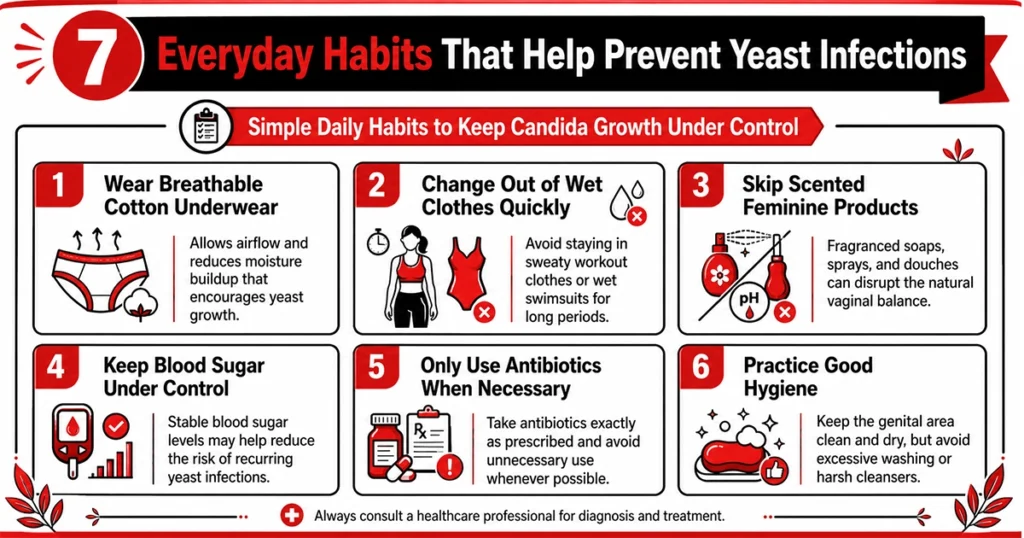
Preventing a yeast infection often starts with simple daily habits that support the body’s natural balance. While not every infection can be avoided, reducing moisture, avoiding irritants, and maintaining good hygiene may lower your risk of Candida overgrowth.
Wear Breathable Cotton Underwear
Cotton underwear allows better airflow and helps keep the genital area dry. Because Candida grows more easily in warm, moist environments, breathable fabrics may help reduce moisture buildup. Avoid wearing tight or non-breathable underwear for long periods whenever possible.
Change Out Of Wet Clothes Quickly
Remaining in wet swimsuits or sweaty workout clothes can create conditions that encourage yeast growth. Change into clean, dry clothing as soon as possible after swimming or exercising to help reduce excess moisture around the genital area.
Avoid Scented Feminine Products
Scented soaps, feminine sprays, douches, and other fragranced hygiene products may irritate sensitive skin and disrupt the natural balance of bacteria and yeast. Using mild, fragrance-free products for external cleansing is generally a better option for maintaining vaginal health.
Keep Blood Sugar Under Control
High blood sugar levels can increase the risk of yeast infections by creating an environment where Candida can grow more easily. People with diabetes should work with their healthcare provider to maintain healthy blood sugar levels and reduce the likelihood of recurring infections.
Only Use Antibiotics When Necessary
Antibiotics can reduce the healthy bacteria that normally help control Candida growth. Taking antibiotics only when prescribed and following the recommended treatment plan may help reduce the risk of developing a yeast infection after antibiotic use.
Practice Good Hygiene
Keeping the genital area clean and dry supports a healthy vaginal environment. Wash the external genital area gently with warm water or a mild cleanser, dry thoroughly after bathing, and avoid excessive washing or harsh cleansing products that may cause irritation.
Yeast Infection Symptoms You Should Never Ignore
Yeast infection symptoms can range from mild irritation to significant discomfort. Recognizing the signs early can help you receive appropriate treatment and prevent symptoms from worsening.
- Intense Itching And Irritation: Persistent itching around the vaginal area is one of the most common symptoms of a yeast infection. The irritation may become severe and interfere with daily activities.
- Burning Sensation: Many people experience burning, especially during urination or sexual activity. This occurs because inflamed tissues become sensitive and irritated.
- Thick White Discharge: A yeast infection may cause thick, white discharge that is often described as having a cottage cheese-like appearance. Unlike some other infections, it typically does not have a strong odor.
- Redness And Swelling: The affected area may become red, swollen, or tender due to inflammation caused by Candida overgrowth.
- Pain During Sexual Activity: Inflammation and irritation from a yeast infection can make sexual activity uncomfortable or painful.
- Skin Cracking Or Soreness: Severe irritation may cause small cracks or sores in the skin, increasing discomfort and sensitivity.
If symptoms become severe, involve difficulty urinating, significant swelling, or worsening pain, seek care for a urological emergency.
Also Read: What Causes Itching That Moves Around The Body
When To Seek Medical Care For A Yeast Infection
Many mild yeast infections improve with proper treatment, but certain symptoms require medical evaluation. Some symptoms may indicate a different infection or a more serious condition. Seek medical care if you experience:
- Symptoms that do not improve after treatment
- Frequent yeast infections that keep returning
- Severe itching, swelling, or pain
- Fever or chills
- Pelvic or lower abdominal pain
- Unusual discharge with a strong odor
- Bleeding unrelated to your menstrual cycle
- Symptoms during pregnancy
- A weakened immune system
Getting evaluated can help confirm the cause of symptoms and ensure you receive the correct treatment.
Yeast Infection Risk Factors
Certain factors can increase the likelihood of developing a yeast infection. Common risk factors include:
- Pregnancy: Hormonal changes can promote Candida overgrowth.
- Diabetes: Poorly controlled blood sugar raises the risk of recurring infections.
- Hormonal Birth Control: May alter hormone levels and affect vaginal balance.
- Frequent Antibiotic Use: Reduces healthy bacteria that keep yeast under control.
- Weakened Immune System: Makes it harder for the body to fight yeast overgrowth.
- Previous Yeast Infections: Past infections increase the chance of recurrence, especially if underlying triggers are not addressed.
If symptoms worsen and you are searching for the nearest emergency room, seek prompt medical evaluation for severe or unusual symptoms.
Yeast Infection Treatments
Treatment depends on symptom severity, recurrence, and the type of Candida causing the infection. Common treatment options include:
- Antifungal Medications: Available as creams, vaginal suppositories, or oral medications to eliminate yeast and relieve symptoms.
- Over-the-Counter Treatments: Mild infections may respond to OTC antifungal products. Seek medical care if symptoms persist or return.
- Prescription Medications: Severe or recurrent infections may require stronger or longer antifungal treatment prescribed by a healthcare provider.
- Treat Underlying Conditions: Managing diabetes, reviewing medications, and addressing immune health can reduce recurring infections.
- Lifestyle Changes: Wear breathable clothing, keep the area dry, avoid scented products, change out of wet clothes promptly, and practice good hygiene.
Yeast Infection Care
A yeast infection can cause significant discomfort, but early recognition and proper treatment can provide relief and help prevent complications. Symptoms such as itching, burning, irritation, and unusual discharge should not be ignored, especially when they are severe or recurring. With an average ER wait time of just 13 minutes, Altus Emergency Centers provides prompt evaluation and care for symptoms that require immediate attention.
Healthcare providers can evaluate symptoms, confirm the cause, and recommend the right treatment approach. Getting proper care can help restore comfort, reduce the chance of recurrence, and protect your overall health.
Key Takeaways
- A yeast infection occurs when Candida grows excessively and disrupts the body’s natural balance.
- Common causes include antibiotic use, hormonal changes, high blood sugar, weakened immunity, and moisture buildup.
- Symptoms may include itching, burning, redness, swelling, and thick white discharge.
- Yeast infections are usually treatable with antifungal medications.
- Frequent or severe infections may require medical evaluation to identify underlying causes.
- Avoiding irritation, controlling moisture, and maintaining healthy habits can reduce risk.
- Seek medical care for severe symptoms, recurring infections, pregnancy-related concerns, or symptoms that do not improve.
Frequently Asked Questions
What Is The Main Cause Of A Yeast Infection?
The main cause of a yeast infection is an overgrowth of Candida, a type of yeast that normally exists in small amounts in the body. When the balance between yeast and healthy bacteria changes, Candida can multiply and cause infection.
Can Stress Cause A Yeast Infection?
Stress does not directly cause yeast infections, but long-term stress may affect the immune system. A weakened immune response can make it harder for the body to control Candida growth.
Are Yeast Infections Contagious?
Yeast infections are not considered contagious and are not usually spread from person to person. However, sexual activity may sometimes contribute to irritation or changes that trigger symptoms.
How Long Does A Yeast Infection Last?
The duration of a yeast infection depends on the severity and treatment used. Many mild infections improve within a few days after starting treatment, while more severe infections may take longer to resolve.
Can A Yeast Infection Go Away On Its Own?
Some mild yeast infections may improve without treatment, but symptoms often require antifungal medication to fully clear. If symptoms persist or worsen, medical evaluation is recommended.
Why Do I Keep Getting Yeast Infections?
Recurring yeast infections may be linked to factors such as repeated antibiotic use, hormonal changes, diabetes, immune system problems, or other underlying conditions. A healthcare provider can help identify possible triggers and recommend prevention strategies.