

Dealing with something stuck in the back of your throat can be frustrating and uncomfortable, especially when tonsil stones cause bad breath, throat irritation, or an unpleasant taste. Fortunately, many small tonsil stones can be managed safely with gentle home care.
However, not every white or yellow spot in the throat is a tonsil stone. If you develop severe pain, swelling, fever, trouble swallowing, or difficulty breathing, seek prompt medical attention, including at an ER in Waxahachie, TX.
What Are Tonsil Stones?
Tonsil stones, medically called tonsilloliths, are small, hard formations that develop within the tiny pockets of the tonsils. They may appear white or yellow and can range from very small particles to larger, more noticeable stones. Some people have no symptoms, while others experience bad breath, throat discomfort, or the feeling that something is stuck in the throat.
A PubMed study of 2,873 patients found tonsilloliths in 39.9% of CT scans, although this does not represent the prevalence of symptomatic tonsil stones in the general population.
Dangerous Tonsil Stones Symptoms
Tonsil stones themselves are usually not dangerous, but certain symptoms may indicate a more serious throat problem or infection rather than a simple tonsil stone. Symptoms that should not be ignored include:
- Severe or rapidly worsening throat pain.
- Significant swelling of the throat or tonsils.
- Difficulty swallowing liquids or saliva.
- Trouble breathing or shortness of breath.
- Drooling or an inability to swallow saliva.
- Difficulty opening the mouth normally.
- A muffled or unusually altered voice.
- High fever or chills.
- Swelling of the face, jaw, or neck.
- Severe pain on one side of the throat.
Also Read: What Causes Tonsil Stones?
Ways To Get Rid Of Tonsil Stones
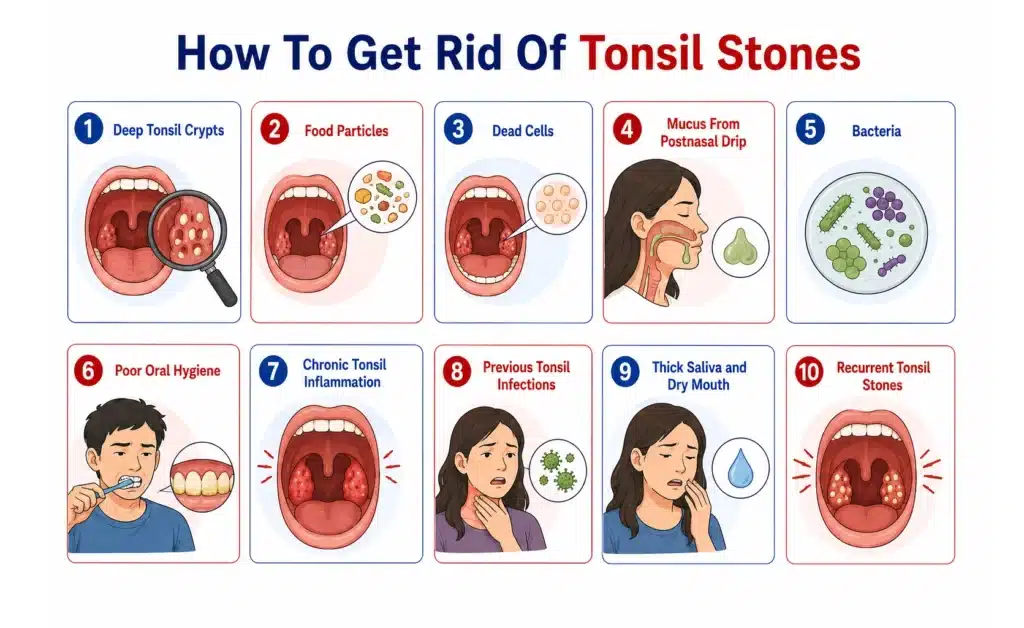
Tonsil stones can be uncomfortable and embarrassing, particularly when they cause persistent bad breath or the sensation that something is lodged in your throat. Small, visible stones may sometimes come out naturally or with gentle care, but it is important not to injure the tonsils by digging deeply or using sharp objects.
Deep Tonsil Crypts
Deep or enlarged tonsil crypts can make it easier for material to remain trapped within the folds of the tonsils. These pockets provide spaces where debris can collect instead of being naturally cleared away. People with more prominent crypts may therefore notice recurring tonsil stones. The structure of the tonsils varies from person to person.
Food Particles
Small food particles can sometimes remain lodged in the tiny crevices of the tonsils after eating. If they are not naturally cleared, they may contribute to the material that eventually forms a tonsil stone. Maintaining good oral hygiene and rinsing the mouth after meals may help reduce lingering debris. However, food particles alone do not always cause tonsil stones.
Dead Cells
Dead cells from the lining of the mouth and throat can become part of the material trapped within tonsil crypts. The body naturally sheds cells over time, and these particles may collect in areas that are difficult to clean. When they remain trapped with other material, they can contribute to stone formation. This process may occur repeatedly in people prone to tonsil stones.
Mucus From Postnasal Drip
Excess mucus draining from the nose toward the throat can leave additional material around the tonsils. This may happen with allergies, sinus problems, or other conditions that increase nasal drainage. Mucus can collect within tonsil crypts and combine with other trapped material. Managing persistent postnasal drip may help reduce this buildup in some people.
Bacteria
Bacteria naturally live in the mouth and throat, but some can become part of the material trapped inside tonsil crypts. Bacterial activity may contribute to the unpleasant odor associated with tonsil stones. The presence of bacteria does not necessarily mean a person has a serious infection. However, signs of an active throat infection should be evaluated by a healthcare professional.
Poor Oral Hygiene
Inadequate oral hygiene can allow more food debris, bacteria, and other material to remain in the mouth. Over time, this may increase the amount of material available to become trapped around the tonsils. Regular brushing, flossing, and tongue cleaning can support overall oral health. Good oral hygiene may also help reduce bad breath associated with tonsil stones.
Chronic Tonsil Inflammation
Repeated or long-term inflammation of the tonsils can affect their surface and crypts. In some people, ongoing inflammation may make the tonsils more likely to trap debris. This can contribute to recurrent tonsil stones and throat discomfort. Frequent sore throats or persistent tonsil swelling should be discussed with a healthcare professional.
Previous Tonsil Infections
A history of repeated tonsil infections may change the structure of the tonsils over time. Scarring or changes in the tonsil crypts may create spaces where material can collect more easily. Some people begin experiencing recurring tonsil stones after repeated episodes of tonsillitis. A medical evaluation may be helpful when infections occur frequently.
Thick Saliva and Dry Mouth
Reduced saliva flow or a dry mouth may make it harder for the mouth to naturally wash away debris. Thick saliva can also allow material to remain longer around the tonsils and other areas of the mouth. Staying adequately hydrated may support normal saliva production. Persistent dry mouth may need evaluation, particularly if it is caused by medication or an underlying condition.
Recurrent Tonsil Stones
Having tonsil stones in the past can increase the likelihood of experiencing them again, especially when the tonsil crypts continue to trap material. Recurrence does not necessarily indicate a dangerous condition. However, frequently recurring, large, or painful stones can significantly affect comfort and quality of life. An ear, nose, and throat specialist may discuss longer-term treatment options.
When To Go To The ER
Most tonsil stones do not require emergency treatment, but severe throat symptoms can sometimes signal a serious infection, abscess, or swelling that threatens the airway. Do not assume that severe symptoms are caused only by a tonsil stone. Seek emergency medical care immediately if you experience:
- Difficulty breathing or severe shortness of breath.
- Severe swelling that is getting worse quickly.
- An inability to swallow saliva or persistent drooling.
- Severe difficulty swallowing liquids.
- A feeling that your throat or airway is closing.
- A muffled voice combined with severe throat swelling.
- Difficulty opening your mouth because of severe pain or stiffness.
- Significant swelling of the neck or face.
- Confusion, severe weakness, or signs of serious illness.
- Blue or gray discoloration of the lips or skin.
If you experience these emergency warning signs, do not wait for the problem to improve. Search for an ER near me or call emergency services immediately for urgent evaluation.
Treatment For Tonsil Stones
Tonsil stones can be uncomfortable, especially when they cause bad breath or throat irritation. Many small stones can be managed with gentle home remedies, while large or recurring stones may require medical treatment. The best option depends on your symptoms and how often the stones return. Avoid sharp objects or forceful removal methods that may injure your tonsils.
- Warm Saltwater Gargle: Gargling may help loosen small stones and soothe throat discomfort.
- Gentle Coughing: A gentle cough may naturally dislodge a loose tonsil stone.
- Good Oral Hygiene: Regular brushing, flossing, and tongue cleaning may reduce debris and bad breath.
- Hydration: Drinking enough water helps keep the mouth moist and may wash away loose debris.
- Water Irrigation: Low-pressure water irrigation may help remove loose stones. Avoid high pressure that can injure the tonsils.
- Professional Removal: A healthcare professional can safely remove large or deeply embedded tonsil stones.
- Over-The-Counter Pain Relievers: Most doctors recommend medicines such as acetaminophen or ibuprofen for pain when medically appropriate. They relieve discomfort but do not remove the stones.
- Antibiotics: Most doctors recommend antibiotics only when a bacterial infection is diagnosed. They are not a routine treatment for tonsil stones.
- Laser Cryptolysis: An ENT specialist may use this procedure to reduce tonsil crypts and recurring stones.
- Tonsillectomy: Surgical removal of the tonsils may be considered for severe or frequently recurring tonsil stones.
Altus Emergency Centers For Tonsil Stone Care
If throat symptoms become severe or are accompanied by difficulty breathing, trouble swallowing saliva, significant swelling, severe pain, or persistent bleeding, seek emergency care without delay. At Altus Emergency Centers, our 24/7 emergency rooms are equipped to evaluate serious throat symptoms and provide prompt medical care.
From diagnostic evaluation and symptom management to treatment for dehydration, infections, or other concerning complications, Altus Emergency Centers provides compassionate emergency care. If severe symptoms develop suddenly or continue to worsen, do not wait for them to improve on their own. Seek immediate medical attention.
Key Takeaways
- Tonsil stones are usually harmless: Small stones often cause bad breath, throat irritation, or a feeling of something stuck.
- Gentle removal is safest: Saltwater gargles, good oral hygiene, hydration, and gentle coughing may help remove small stones.
- Medical treatment may be needed: Large, painful, or recurring stones can require professional removal or procedures.
- Know the warning signs: Severe swelling, difficulty swallowing saliva, breathing problems, or rapidly worsening symptoms require urgent medical care.
- Do not force removal: Avoid sharp objects or aggressive techniques that can damage the tonsils and cause bleeding.
Frequently Asked Questions About Tonsil Stones
Are Tonsil Stones Normal?
Yes, tonsil stones are relatively common and usually harmless. However, frequent, painful, or unusually large stones may need evaluation by a healthcare professional.
What Do Tonsil Stones Look Like?
Tonsil stones typically appear as small white or yellow lumps or spots in the crevices of the tonsils. Their size can range from tiny particles to larger visible stones.
How Do Tonsil Stones Form?
Tonsil stones form when material such as food debris, mucus, bacteria, and dead cells becomes trapped in tonsil crypts and gradually hardens.
Do Tonsil Stones Hurt?
Small tonsil stones often cause no pain, but larger stones can cause throat irritation, discomfort when swallowing, ear pain, or the sensation that something is stuck in the throat.