
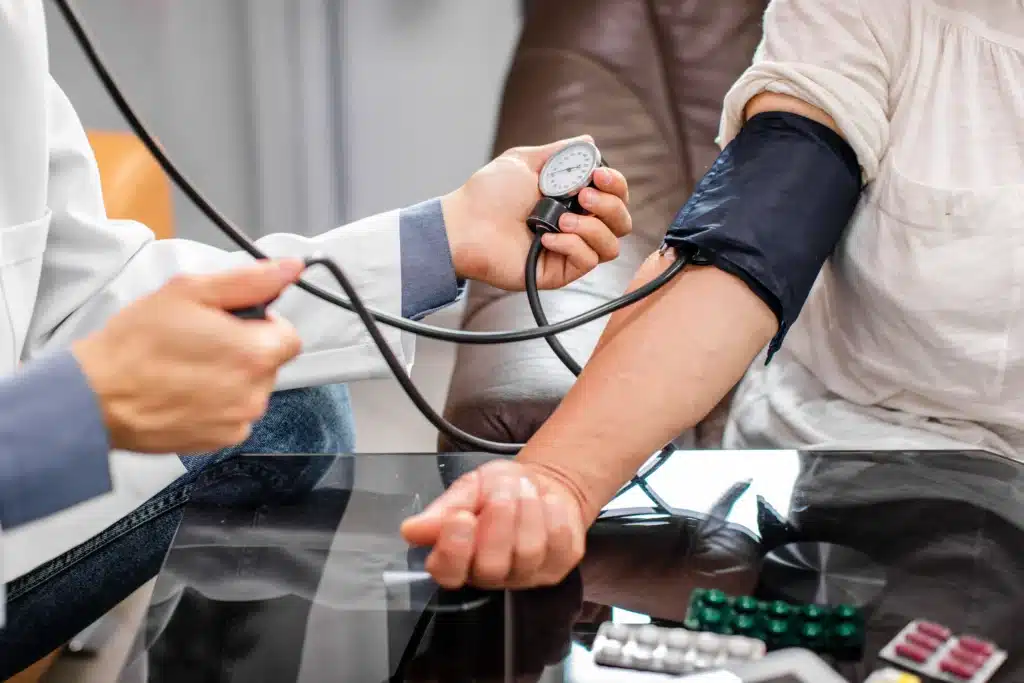
Yes, dehydration can cause high blood pressure, and the connection between the two is more direct than many people realize. When the body loses more fluid than it takes in, blood volume decreases, and the cardiovascular system compensates by narrowing blood vessels to maintain circulation to vital organs. This process, known as vasoconstriction, can temporarily increase blood pressure and should not be ignored. Altus ER Lumberton TX provides prompt evaluation for dehydration-related symptoms and blood pressure concerns.
Most people associate dehydration with low blood pressure, and while that can occur in some cases, the body’s compensatory hormonal response often pushes blood pressure in the opposite direction. Understanding how dehydration affects your cardiovascular system and knowing the warning signs can help you take action before the situation becomes a medical emergency. Learning how to tell if you’re dehydrated early is one of the most effective ways to prevent these complications from developing in the first place.
What Is Dehydration?
Dehydration occurs when the body loses more fluids than it is taking in, disrupting the balance of water and electrolytes needed to carry out normal bodily functions. According to MedlinePlus, dehydration can result from inadequate fluid intake, excessive sweating, vomiting, diarrhea, fever, or increased urination caused by medications or underlying health conditions. Even mild dehydration can begin affecting cardiovascular function and blood pressure regulation before most people notice any symptoms.
How Does Dehydration Affect Blood Pressure?
When fluid levels drop, the body activates a series of protective responses designed to maintain adequate circulation to the brain and vital organs. These responses involve hormonal changes and vascular adjustments that can directly elevate blood pressure.
- Reduced blood volume forces the heart to work harder to circulate blood throughout the body effectively
- The body releases vasopressin, also known as antidiuretic hormone, which signals blood vessels to constrict and narrow
- Aldosterone is released to help the kidneys retain sodium and water, further increasing vascular pressure
- Blood becomes thicker and more concentrated, making it harder for the heart to pump efficiently at normal pressure
- The combination of vessel constriction and increased cardiac effort raises arterial pressure significantly above normal resting levels
If dehydration symptoms become severe, such as dizziness, confusion, rapid heartbeat, or inability to keep fluids down, seek an ER for dehydration evaluation and treatment to prevent serious complications.
What Are the Symptoms of Dehydration?
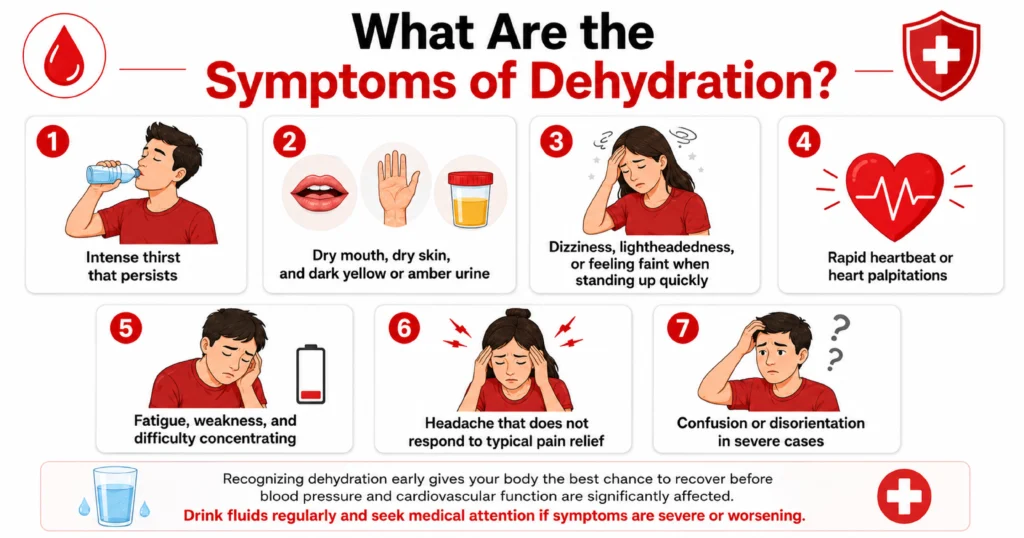
Recognizing dehydration early gives your body the best chance to recover before blood pressure and cardiovascular function are significantly affected. Symptoms can range from mild and easily dismissed to severe and requiring emergency care.
- Intense thirst that persists even after drinking small amounts of water
- Dry mouth, dry skin, and decreased urine output with dark yellow or amber colored urine
- Dizziness, lightheadedness, or a feeling of faintness when standing up quickly
- Rapid heartbeat or heart palpitations that develop alongside other dehydration symptoms
- Fatigue, weakness, and difficulty concentrating that worsen as fluid loss continues
- A headache that does not respond to typical pain relief, which may also be linked to dehydration, can cause headaches
- Confusion or disorientation in severe cases indicates a significant drop in fluid and electrolyte balance
Can Dehydration Cause High Blood Pressure Temporarily?
Yes, dehydration typically causes a temporary rise in blood pressure that resolves once proper hydration is restored. According to the CDC, adequate daily fluid intake is essential for maintaining cardiovascular health and normal blood pressure regulation. However, for people who already have chronic high blood pressure or underlying heart conditions, even a temporary dehydration-related spike can be dangerous and significantly harder to manage without medical intervention.
How to Prevent Dehydration-Related Blood Pressure Spikes?
Preventing dehydration is the most direct and effective way to avoid the cardiovascular stress that comes with it. Small, consistent habits throughout the day make a meaningful difference in keeping blood pressure stable.
- Drink water consistently throughout the day rather than waiting until you feel thirsty to start hydrating
- Increase fluid intake during hot weather, physical activity, illness, or any situation that accelerates fluid loss
- Include electrolyte-rich foods and beverages when recovering from illness involving vomiting, diarrhea, or fever
- Limit caffeine and alcohol, both of which act as diuretics and accelerate dehydration in active individuals
- Monitor urine color as a simple daily indicator of hydration status, aiming for pale yellow throughout the day
- People with high blood pressure should discuss their daily fluid intake goals with a healthcare provider directly
When to Go to the ER for Dehydration and High Blood Pressure?
Mild dehydration can often be managed at home with rest and increased fluid intake, but certain combinations of symptoms signal a medical emergency that requires immediate evaluation. Visit Altus Emergency Centers right away if you experience any of the following.
- Severe dizziness, confusion, or loss of consciousness alongside signs of dehydration
- A rapid or irregular heartbeat that does not improve after drinking water and resting
- Chest pain or significant shortness of breath occurring with dehydration symptoms
- Blood pressure reading above 180/120 that does not come down with rest and hydration
- Inability to keep fluids down due to persistent vomiting that is worsening dehydration rapidly
- Symptoms in elderly patients, young children, or anyone with a known heart or kidney condition
- High blood pressure accompanied by a severe headache, which you can learn more about at does high blood pressure cause headaches
If you are experiencing these warning signs and searching for an ER near me, seek immediate medical attention to prevent serious complications.
Dehydration and Blood Pressure Care at Altus Emergency Centers
Dehydration-related blood pressure spikes can escalate quickly, especially in individuals with existing cardiovascular conditions or those who are elderly, pregnant, or managing chronic illnesses. Our 24/7 emergency room at Altus Emergency Centers provides rapid evaluation, IV fluid therapy, electrolyte restoration, and blood pressure monitoring to stabilize your condition and identify underlying causes. Do not wait for symptoms to worsen on their own. Seek fast, expert care to protect your health and prevent complications.
Key Takeaways
- Dehydration can cause high blood pressure by reducing blood volume and triggering the body to constrict blood vessels to maintain circulation to vital organs
- The body releases hormones like vasopressin and aldosterone during dehydration, both of which raise blood pressure by narrowing vessels and retaining sodium
- Even mild dehydration can begin affecting blood pressure and cardiovascular function before obvious symptoms appear
- Common warning signs of dehydration include intense thirst, dark urine, rapid heartbeat, dizziness, fatigue, and persistent headache
- The blood pressure spike caused by dehydration is usually temporary and resolves once proper hydration is restored
- People with existing high blood pressure or heart conditions face a higher risk from even short-term dehydration-related spikes
- Drinking water consistently throughout the day, monitoring urine color, and increasing fluid intake during illness or physical activity are the most effective prevention strategies
- Visit the ER immediately if dehydration is accompanied by chest pain, confusion, a blood pressure reading above 180/120, or an inability to keep fluids down