

Living with sudden ear discomfort can be unsettling, especially when it interrupts your daily routine, sleep, or ability to focus. Many people feel anxious when ear problems appear without warning, leaving them unsure about what is happening or how serious it might be. Seeking answers quickly can help ease concerns and guide the next steps.
When ear pain is severe, hearing suddenly changes, or fluid begins draining from the ear, prompt medical attention becomes important. Delaying care may increase the risk of complications and prolonged discomfort. Visit Altus ER Lumberton TX for timely evaluation and treatment to protect your hearing and address potential eardrum concerns.
What Does A Ruptured Eardrum Feel Like?
A ruptured eardrum often feels like a sudden sharp pain in the ear, sometimes followed by an unexpected decrease in pain as pressure is released. Many people experience muffled hearing, ringing in the ear (tinnitus), a feeling of fullness, dizziness, or fluid draining from the ear. The severity of symptoms can vary depending on the size and cause of the tear.
Study Insight: A PubMed-indexed prospective study found that 88.6% of traumatic eardrum perforations healed spontaneously within 12 weeks, although healing was slower in larger perforations.
Eardrum Rupture Signs That Need Urgent Care
- Sudden, severe ear pain that may improve quickly after the eardrum tears.
- Hearing loss or muffled hearing in the affected ear.
- Fluid, pus, or bloody drainage coming from the ear.
- Ringing in the ear (tinnitus) that persists or worsens.
- Dizziness or a spinning sensation (vertigo) that affects balance.
- Nausea or vomiting associated with severe dizziness.
- A feeling of fullness or pressure inside the ear.
- Persistent ear pain or drainage lasting more than a few days.
- Fever or worsening symptoms, which may indicate an ear infection.
- Facial weakness or difficulty moving facial muscles, which requires immediate medical attention.
If you experience these symptoms, an earache emergency room can provide prompt evaluation and treatment to identify the cause and prevent further complications.
What Causes A Ruptured Eardrum?
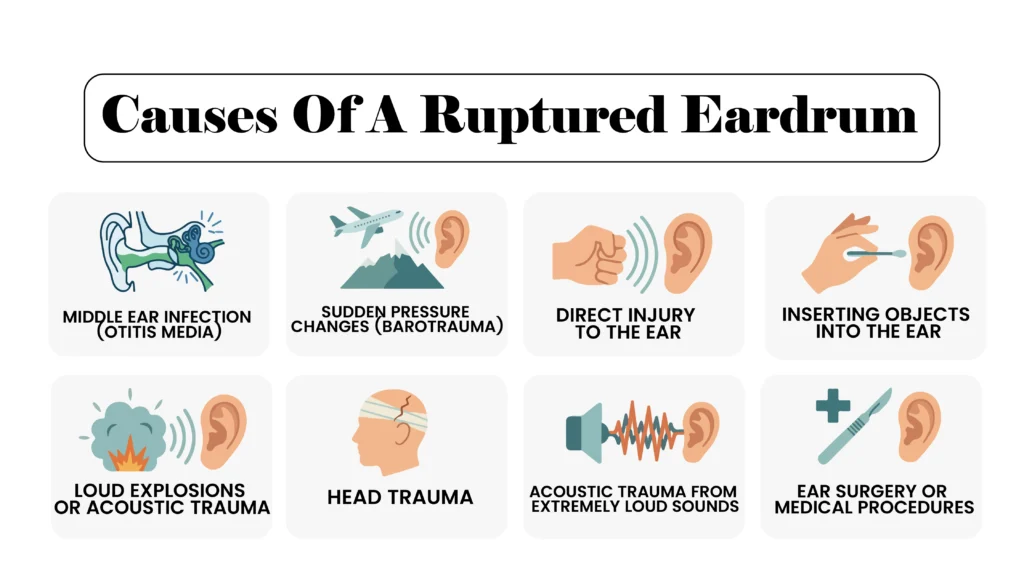
A ruptured eardrum can happen for several reasons, ranging from infections to accidental injuries or sudden pressure changes. Identifying the underlying cause is important because the appropriate treatment and recovery time often depend on what led to the tear. Some causes are minor and heal with conservative care, while others require urgent medical attention to prevent hearing loss or complications.
Middle Ear Infection (Otitis Media)
A middle ear infection is one of the most common causes of a ruptured eardrum. As fluid and pus build up behind the eardrum, pressure inside the middle ear increases until the membrane tears to relieve that pressure. Although the rupture may reduce pain temporarily, the infection still requires medical evaluation and treatment.
Symptoms
- Severe ear pain that suddenly improves.
- Fluid, pus, or bloody drainage from the ear.
- Temporary hearing loss.
- Fever.
- Ear fullness or pressure.
Sudden Pressure Changes (Barotrauma)
Rapid changes in air or water pressure can place excessive stress on the eardrum, causing it to tear. This may occur during airplane travel, scuba diving, or exposure to explosions. Equalizing ear pressure can sometimes prevent injury, but severe pressure changes may still result in a rupture.
Symptoms
- Sharp ear pain.
- Muffled hearing.
- Ear pressure or fullness.
- Ringing in the ear.
- Dizziness.
Direct Injury To The Ear
A blow to the side of the head or ear during sports, accidents, or physical trauma can rupture the eardrum. The force may damage the delicate membrane or surrounding ear structures. Medical assessment is important to determine whether additional injuries are present.
Symptoms
- Sudden ear pain.
- Hearing loss.
- Bleeding from the ear.
- Dizziness.
- Ringing in the ear.
Inserting Objects Into The Ear
Using cotton swabs, hairpins, earbuds, or other objects to clean the ear can accidentally puncture the eardrum. Even gentle pressure may cause injury if the object is inserted too deeply. The ear usually cleans itself naturally, making internal cleaning unnecessary.
Symptoms
- Immediate sharp pain.
- Bleeding from the ear.
- Hearing changes.
- Ringing in the ear.
- Ear sensitivity.
Also Read Our Guide on: Items Stuck in Ears or Noses
Loud Explosions Or Blast Injuries
Extremely loud noises, such as explosions or fireworks, create intense sound waves that can rupture the eardrum. Blast injuries may also damage the inner ear and affect balance or hearing permanently. Anyone exposed to a blast who develops ear symptoms should seek prompt medical evaluation.
Symptoms
- Sudden hearing loss.
- Loud ringing in the ear.
- Ear pain.
- Ear bleeding.
- Dizziness or imbalance.
Head Trauma
A significant head injury from falls, vehicle accidents, or sports can damage the eardrum directly or through fractures involving the skull. Because head trauma may also affect the brain or inner ear, immediate medical assessment is necessary. Delaying care can increase the risk of serious complications.
Symptoms
- Ear bleeding or fluid drainage.
- Hearing loss.
- Severe dizziness.
- Headache.
- Confusion or loss of consciousness.
Acoustic Trauma
Exposure to an extremely loud sound, such as gunfire or industrial machinery, can injure the eardrum and other parts of the hearing system. Even if the eardrum remains intact, loud noise can still damage hearing permanently. Wearing hearing protection significantly lowers the risk.
Symptoms
- Ringing in the ears.
- Reduced hearing.
- Ear discomfort.
- Ear fullness.
- Sensitivity to sound.
Medical Procedures Or Ear Surgery
Although uncommon, certain ear procedures or surgeries may accidentally injure the eardrum. These injuries are usually recognized quickly and managed by the treating healthcare provider. Following post-procedure instructions helps support healing and lowers the risk of infection.
Symptoms
- Ear pain after the procedure.
- Ear drainage.
- Hearing loss.
- Ringing in the ear.
- Mild dizziness.
When To Go To The ER
A ruptured eardrum is not always a medical emergency, but certain symptoms may indicate a more serious injury, infection, or damage to the inner ear. Seeking emergency care promptly can help protect your hearing and reduce the risk of complications.
- Sudden hearing loss in one or both ears.
- Severe or worsening ear pain.
- Bleeding from the ear.
- Pus-like or foul-smelling drainage from the ear.
- Severe dizziness or vertigo.
- Loss of balance or difficulty walking.
- Nausea or vomiting associated with ear symptoms.
- Symptoms following a head injury or trauma.
- Ear injury caused by an explosion or loud blast.
- Facial weakness or drooping on one side of the face.
- High fever along with ear pain or drainage.
- Persistent symptoms that do not improve or continue to worsen.
If these warning signs appear or symptoms continue to worsen, seek immediate medical care. Visit the nearest emergency room for proper evaluation and treatment to protect your ear health.
Ruptured Eardrum Treatment
Treatment for a ruptured eardrum depends on the cause, the size of the tear, and whether an infection is present. While many small perforations heal on their own, others require medication or medical procedures. Prompt evaluation helps reduce the risk of infection, hearing loss, and other complications while supporting a safe recovery.
- Observation And Natural Healing: Many small ruptured eardrums heal on their own within a few weeks to a couple of months. Your healthcare provider will recommend keeping the ear dry, avoiding swimming, and not inserting anything into the ear while it heals.
- Over-The-Counter Pain Relievers: Most doctors recommend acetaminophen or ibuprofen to relieve ear pain and reduce discomfort. Use these medications as directed and seek medical advice if pain is severe or persists.
- Prescription Antibiotic Ear Drops: Most doctors recommend prescription antibiotic ear drops if a bacterial infection is present or there is a high risk of infection. Only use ear drops prescribed by your healthcare provider, as some are unsafe for a perforated eardrum.
- Oral Antibiotics: Most doctors recommend oral antibiotics for severe or spreading ear infections. Be sure to complete the full course exactly as prescribed.
- Keeping The Ear Dry: Prevent water from entering the ear during recovery by using a waterproof ear covering while showering and avoiding swimming until your healthcare provider confirms healing.
- Activity And Pressure Precautions: Avoid forceful nose blowing, scuba diving, and unnecessary air travel, as sudden pressure changes can delay healing or worsen the tear.
- Eardrum Patch (Paper Patch): If the eardrum does not heal naturally, an ear specialist may place a paper patch over the tear to encourage tissue growth and closure.
- Tympanoplasty Surgery: Large or persistent perforations may require tympanoplasty, a surgical procedure that repairs the eardrum using a tissue graft to restore hearing and protect the middle ear.
Ruptured Eardrum Care At Altus Emergency Centers
A ruptured eardrum (perforated eardrum) can cause sudden pain, hearing loss, dizziness, or ear drainage. Prompt medical evaluation is important when symptoms are severe or do not improve, helping reduce the risk of complications and protect hearing. With ER wait times near me of 11 minutes, patients can receive timely care and evaluation when urgent ear symptoms require attention.
At Altus Emergency Centers, we provide fast, compassionate care for ear injuries and related concerns. Our team uses advanced diagnostics and evidence-based treatment to identify the cause of symptoms and support a safe recovery.
Key Takeaways
- A ruptured eardrum can affect hearing and balance.
- Common symptoms include pain, hearing loss, drainage, ringing, and dizziness.
- Ear infections, trauma, loud noises, and pressure changes are common causes.
- Many small eardrum perforations heal on their own.
- Keeping the ear dry helps support healing.
- Antibiotics prescribed by a doctor may be needed for infection.
- Larger tears may require repair procedures performed by a doctor.
- Seek emergency care for severe symptoms or head injuries.
- Early treatment helps prevent complications and protect hearing.
Frequently Asked Questions
What Side Should I Sleep On With A Ruptured Eardrum?
It is generally best to sleep with the affected ear facing upward to avoid additional pressure and allow any drainage to flow more easily. Keeping your head slightly elevated may also help reduce discomfort. Follow any specific instructions provided by your doctor.
Is A Ruptured Eardrum Painful?
Yes, a ruptured eardrum can be painful. Many people experience a sudden sharp ear pain at the time of the tear, followed by symptoms such as hearing loss, ringing in the ear, dizziness, or drainage. The level of pain varies depending on the cause and severity of the injury.
How Long Does A Ruptured Eardrum Take To Heal?
Many small ruptured eardrums heal within a few weeks, while larger perforations may take several months. Healing time depends on the size of the tear, the cause of the injury, and whether an infection is present. Regular follow-up with a doctor can help ensure proper recovery.
Can A Ruptured Eardrum Heal On Its Own?
Yes, many ruptured eardrums heal on their own without surgical treatment. Keeping the ear dry and following your doctor’s recommendations can support healing. However, larger tears or perforations that do not heal naturally may require treatment or repair by a doctor.
Do Ear Infections Go Away On Their Own?
Yes, some ear infections, especially viral or mild cases, can go away on their own within a few days. However, bacterial infections or severe symptoms may require medical treatment, so it’s important to see a healthcare provider if symptoms persist or worsen.