
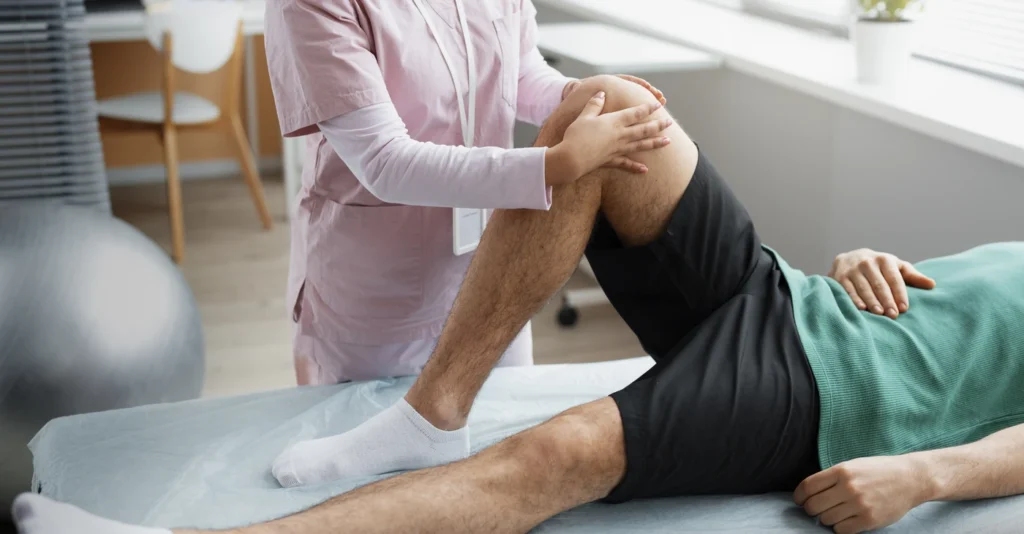
Knee pain is a common condition that affects people of all ages. The knee experiences constant stress from daily activities such as walking, running, and climbing stairs. According to the National Institute of Arthritis and Musculoskeletal and Skin Diseases (NIAMS), osteoarthritis is a leading cause of chronic knee pain in adults.
At the same time, injuries are more common in younger people. Other causes include arthritis, ligament injuries, and age-related wear and tear. Severe pain, swelling, or difficulty walking may require prompt evaluation at the emergency room Lake Jackson, TX.
Anatomy of the Knee
The knee is a complex joint that supports body weight and helps with everyday movements like walking, bending, standing, and climbing stairs. It contains several connected structures that work together to provide stability, flexibility, and shock absorption. When any of these parts become injured or inflamed, pain and limited movement can occur.
- Bones: The femur (thighbone), tibia (shinbone), and patella (kneecap) form the main structure of the knee and support body weight during movement.
- Cartilage: Acts as a smooth cushion between bones, reducing friction and absorbing shock during activities like walking and running.
- Ligaments: Including the ACL, MCL, PCL, and LCL, these strong bands of tissue stabilize the joint and control movement.
- Tendons: Connect muscles to bones and help the knee bend, straighten, and support motion.
- Bursae: Small fluid-filled sacs that reduce friction between tissues and allow smooth joint movement.
9 Most Common Causes of Knee Pain
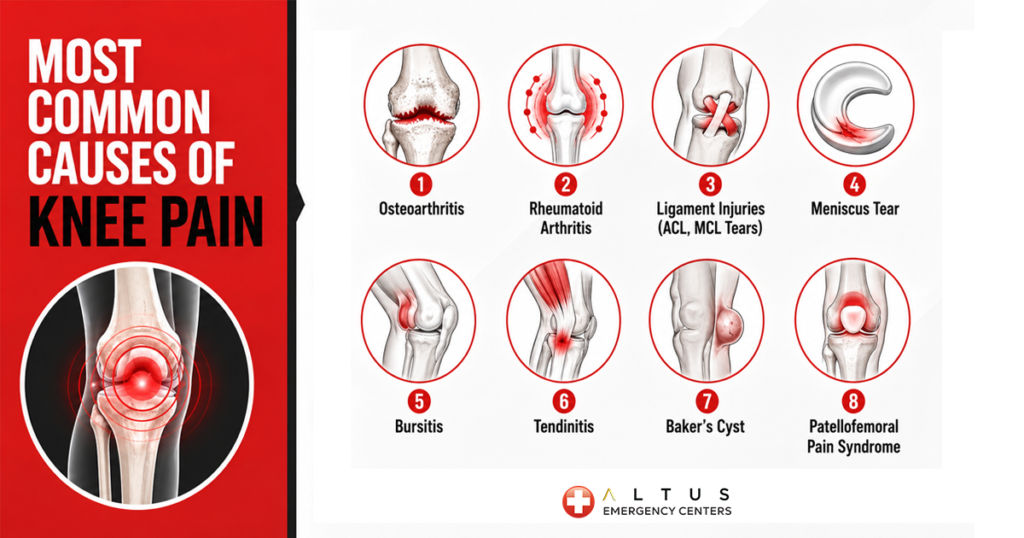
When understanding what causes knee pain, it’s important to look at the most common medical conditions and injuries that affect the knee joint. These conditions are often responsible for both sudden pain and long-term discomfort, depending on severity and progression.
1. Osteoarthritis
Osteoarthritis is one of the leading causes of knee pain, especially in older adults. It occurs when the protective cartilage in the knee gradually wears down over time. As the cartilage thins, bones begin to rub against each other, leading to pain, stiffness, swelling, and reduced mobility. This is often described as a “wear-and-tear” condition and is a major contributor to chronic knee discomfort.
2. Rheumatoid Arthritis
Rheumatoid arthritis is an autoimmune condition where the body’s immune system mistakenly attacks the joint lining. This leads to persistent inflammation, swelling, warmth, and progressive joint damage. Unlike wear-and-tear arthritis, this condition can affect both knees and may come in flare-ups.
3. Ligament Injuries (ACL, MCL Tears)
Ligament injuries are a common cause of acute knee pain, especially in sports involving sudden stops, jumps, or direction changes. Tears in the ACL or MCL can cause instability, severe pain, and difficulty bearing weight. These injuries are among the most serious causes of knee pain because they often require medical intervention or surgery.
4. Meniscus Tear
The meniscus is a piece of cartilage that cushions the knee joint. A tear usually happens due to twisting motions while bearing weight. This injury can cause sharp pain, swelling, and a “locking” sensation, making normal movement difficult.
5. Bursitis
Bursitis occurs when the small fluid-filled sacs (bursae) around the knee become inflamed. This is often due to repeated pressure, prolonged kneeling, or injury. It can lead to tenderness, swelling, and pain during movement.
6. Tendinitis
Tendinitis is an overuse injury affecting the tendons, especially the patellar tendon. It is commonly seen in runners, cyclists, and athletes who perform repetitive jumping or sprinting activities. It causes localized pain and tenderness, especially during physical activity.
7. Baker’s Cyst
A Baker’s cyst is a fluid-filled swelling that develops behind the knee. It is often linked to underlying conditions such as arthritis or meniscus tears. It can cause tightness, swelling, and discomfort, especially when bending the knee.
8. Patellofemoral Pain Syndrome
Also known as “runner’s knee,” this condition causes pain around or behind the kneecap. It is common in athletes and people with improper kneecap alignment or muscle imbalance. It is one of the most common causes of knee pain in younger individuals.
9. Gout or Infection
Gout occurs when uric acid crystals build up in the joint, leading to sudden and intense pain, swelling, and redness. In some cases, infections (septic arthritis) can also affect the knee, causing severe inflammation and requiring urgent medical treatment. Both are serious conditions among the causes of knee pain and should not be ignored.
What Causes Knee Pain Without Injury?
Not all knee pain results from trauma. Many people experience discomfort without any obvious accidents. Common knee pain causes without injury include:
- Age-related cartilage degeneration: As people age, the cartilage that cushions the knee naturally begins to thin and lose elasticity, leading to stiffness and discomfort even without any injury.
- Osteoarthritis progression: One of the most common causes of knee pain, osteoarthritis develops slowly over time and can cause pain, swelling, and reduced mobility even in the absence of trauma.
- Excess body weight increases joint stress: Extra body weight places continuous pressure on the knee joints, accelerating wear and tear and contributing significantly to chronic pain.
- Muscle weakness or imbalance: Weak quadriceps or hamstring muscles reduce knee stability, increasing strain on the joint and making pain more likely during daily movement.
- Poor posture or walking mechanics: Improper alignment while standing or walking can place uneven stress on the knee joint, gradually leading to discomfort.
- Sedentary lifestyle leading to stiffness: Lack of movement reduces joint flexibility and blood flow, which can cause stiffness and pain when the knee is eventually used.
What Causes Knee Pain in Females?
It is important to understand that women may experience knee discomfort due to a combination of biological, hormonal, and structural factors. These differences can influence joint stability, alignment, and injury risk, making certain knee pain causes more common in women compared to men.
- Hormonal fluctuations affecting ligament flexibility: Changes in estrogen levels throughout the menstrual cycle can affect ligament laxity, making the knee joint slightly more flexible and potentially less stable during certain phases.
- A wider hip structure increases knee alignment stress: Women naturally tend to have a wider pelvis, which can change the angle of the thigh bone and place additional stress on the knee joint, increasing the risk of pain and misalignment-related issues.
- Higher ACL injury risk in sports: Female athletes are statistically more prone to ACL injuries due to differences in muscle strength, landing mechanics, and joint alignment, making ligament tears one of the notable knee pain causes in active women.
- Pregnancy-related weight and posture changes: During pregnancy, increased body weight and shifting posture place extra pressure on the knees, often leading to discomfort, especially in later stages.
- Post-menopausal bone density loss increases joint vulnerability: After menopause, reduced bone density and hormonal changes can weaken joint support structures, increasing the likelihood of degenerative knee conditions and chronic pain.
Causes of Knee Pain Based on Location
Different areas of the knee are affected by specific structures such as ligaments, tendons, and cartilage, which is why knee pain often varies depending on whether the pain is behind, inside, or outside the joint.
What Causes Pain Behind the Knee?
Pain behind the knee can develop for several reasons, ranging from mild muscle strain to more serious medical conditions. In some cases, the discomfort may feel tight, swollen, or worsen when bending the knee.
- Baker’s cyst
- Hamstring tendon strain
- Meniscus injury
- Rare but serious blood clot (DVT)
What Causes Pain on the Inner Side of the Knee?
Inner knee pain is often linked to ligament strain, cartilage injuries, or gradual joint wear. This type of pain may become worse while walking, climbing stairs, or twisting the knee. These are common causes of knee pain in both active individuals and people with age-related joint changes.
- MCL injury
- Medial meniscus tear
- Osteoarthritis affects the joint lining
What Causes Pain on the Outside of the Knee?
Pain on the outside of the knee is commonly associated with overuse injuries or soft tissue irritation. It often affects runners, cyclists, and people involved in repetitive movement activities.
- Iliotibial (IT) band syndrome
- LCL ligament injury
- Overuse from running or cycling
How to Strengthen Knees
Strengthening the knees helps reduce stress on the joint, improve stability, and lower the risk of long-term causes of knee pain related to weakness or overuse. Strong muscles around the knee also help manage early symptoms and support better movement in daily activities.
While exercise and lifestyle changes can improve knee health, persistent or worsening symptoms may require evaluation through urgent care for knee pain.
Helpful strategies include:
- Strengthening quadriceps and hamstrings
- Low-impact exercises like swimming or cycling
- Stretching to improve flexibility
- Maintaining healthy body weight
- Wearing supportive footwear
When to Go to the ER
Knee pain is not always serious, but certain symptoms can indicate a medical emergency. Knowing what requires urgent attention is important because some conditions may lead to permanent joint damage, infection, or circulation problems if not treated quickly. If you are experiencing severe symptoms and searching for an ER near me, prompt medical evaluation is recommended.
You should go to the ER if you experience:
- You cannot bear weight on the leg
- The knee appears deformed
- Severe swelling develops suddenly
- You have a fever with joint pain
- There is suspicion of infection or a blood clot
- Pain follows a major injury
These warning signs should not be ignored, as timely treatment at a 24/7 emergency room can help prevent serious complications and protect long-term joint function.
Severe Knee Pain Care at Altus Emergency Centers
Understanding what causes knee pain is essential for early treatment and prevention of long-term joint problems. From arthritis and ligament injuries to overuse and mechanical issues, the causes of knee pain vary widely, but early diagnosis significantly improves outcomes.
If symptoms become severe or interfere with mobility, emergency evaluation is critical. Altus Emergency Centers, established in 2004 in Texas, provides rapid, high-quality emergency care for musculoskeletal injuries and joint pain. Their experienced medical team ensures timely diagnosis and treatment.
Key Takeaways
- Knee pain includes injury, arthritis, and wear-and-tear.
- Main knee pain causes involve ligaments, cartilage, and overuse.
- Pain can occur without injury due to aging, weight, or weak muscles.
- Women may face a higher risk due to hormonal and structural factors.
- Pain location helps identify causes of knee pain.
- Strengthening and weight control help prevent.
- Seek urgent care for severe swelling, deformity, or inability to walk.
FAQs
What Is The Fastest Way To Relieve Knee Pain?
Rest, ice application, compression, and elevation (RICE method) are the fastest ways to reduce pain and swelling.
Why Do My Knees Pain?
Knee pain usually happens due to injury, arthritis, overuse, or wear and tear of joint structures like cartilage, ligaments, or tendons.
What Is the Best Painkiller for Knee Pain?
Over-the-counter NSAIDs like ibuprofen or naproxen are commonly used, but the choice depends on individual health conditions and should be guided by a doctor.
Can Sciatica Cause Knee Pain?
Yes, sciatica can cause referred pain that travels down the nerve and may be felt around the knee area.