

Dealing with back pain, fever, or discomfort while urinating can feel alarming and uncomfortable. Many people often find themselves asking, What Causes Kidney Infections? especially when these symptoms appear suddenly and start affecting their daily routine. It is natural to feel concerned when your body is not functioning the way it normally does.
A kidney infection should never be ignored because it can become serious if not treated in time. What may begin as a mild urinary issue can quickly worsen and affect overall kidney function and health. If you or a loved one notice these warning signs, it is important to seek medical attention promptly at our Lake Jackson ER, as early care can help prevent complications and support a safer recovery.
What Is A Kidney Infection
A kidney infection, also known as pyelonephritis, is a serious type of urinary tract infection (UTI) that occurs when bacteria move from the lower urinary tract into one or both kidneys. This leads to inflammation that can affect kidney function and waste filtration. It requires prompt medical attention to prevent complications.
According to the NCBI Bookshelf (StatPearls), about 40% of women in the United States experience a urinary tract infection at least once in their lifetime, and some cases can progress to kidney infections if left untreated. This highlights the importance of early diagnosis and treatment. Delayed care can increase the risk of serious complications.
Dangerous Signs Of Kidney Infection
- Fever and chills.
- Pain in the back, side, or lower abdomen.
- Burning sensation or pain while urinating.
- Frequent and urgent need to urinate.
- Cloudy, foul-smelling, or bloody urine.
- Nausea and vomiting.
- Fatigue and weakness.
These symptoms are considered serious urological emergencies and require prompt medical attention.
Causes Of Kidney Infection In Women
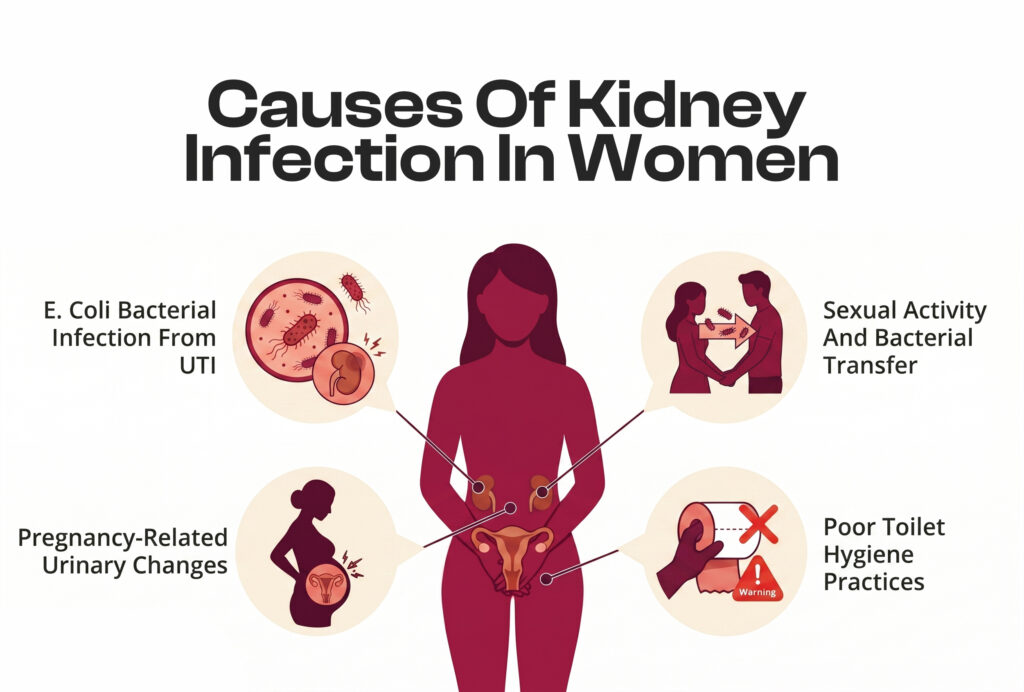
Kidney infections in women are more common due to anatomical and hormonal factors that make it easier for bacteria to enter and travel through the urinary tract. A shorter urethra and its proximity to the anus increase the risk of bacterial transfer. In many cases, infections start as simple UTIs that are left untreated or not fully resolved.
E. Coli Bacterial Infection From UTI
The most common cause of kidney infections in women is E. coli bacteria entering the urinary tract. These bacteria usually spread from the intestines to the urethra and bladder. If the infection is not treated, it can move upward to the kidneys. This is often the starting point of most kidney infections.
Sexual Activity And Bacterial Transfer
Sexual activity can increase the risk of bacteria entering the urinary tract in women. During intercourse, bacteria from the genital or anal area may move toward the urethra. Without proper hygiene, this can lead to infection. Repeated exposure increases the risk of UTIs progressing to kidney infections.
Pregnancy-Related Urinary Changes
During pregnancy, hormonal changes can slow urine flow and cause urinary stasis. This allows bacteria more time to grow and spread in the urinary tract. The growing uterus can also put pressure on the bladder. These changes increase the risk of kidney infections if not monitored.
Poor Toilet Hygiene Practices
Improper wiping techniques, especially wiping from back to front, can introduce bacteria into the urinary tract. This is a common but preventable cause in women. Lack of hygiene after using the toilet or sexual activity increases infection risk. Over time, bacteria can travel upward and reach the kidneys.
Causes Of Kidney Infection In Men
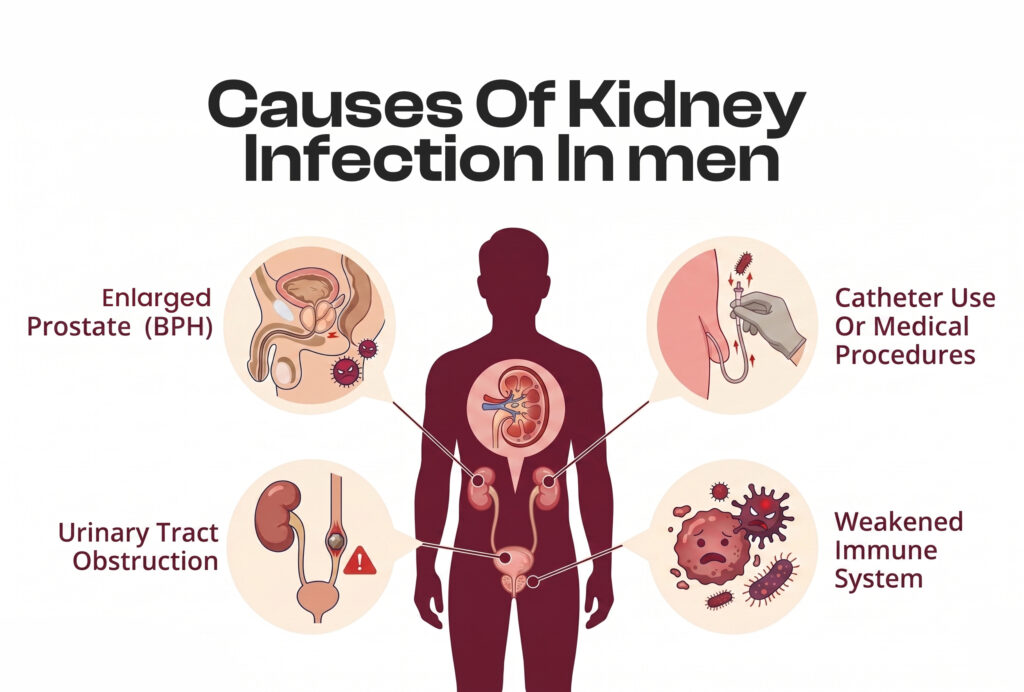
Kidney infections in men are less common but often linked to underlying urinary tract problems or prostate-related issues. When they do occur, they may be more complicated due to delayed diagnosis or structural urinary blockages. Conditions that affect urine flow or immune response play a major role.
Enlarged Prostate (BPH)
An enlarged prostate can block urine flow and prevent the bladder from emptying completely. This creates a buildup of urine where bacteria can grow. Over time, this increases the risk of infection spreading to the kidneys. It is one of the most common causes in older men.
Urinary Tract Obstruction
Blockages such as kidney stones or urethral narrowing can restrict urine flow in men. When urine is trapped, bacteria can multiply easily. This stagnant environment allows infection to spread upward. Severe cases may lead to kidney involvement.
Catheter Use Or Medical Procedures
Men who use urinary catheters or undergo urological procedures are at higher risk of infection. Bacteria can enter the urinary tract through medical instruments. If hygiene protocols are not strictly followed, infection risk increases. This can quickly progress to kidney infection in vulnerable patients.
Weakened Immune System
Conditions like diabetes or long-term illness can weaken the body’s ability to fight infections. This allows bacteria to spread more easily through the urinary tract. Even mild infections can become severe in such cases. Kidney involvement becomes more likely if not treated early.
How To Test For Kidney Infection
Kidney infections are diagnosed using a combination of clinical evaluation and laboratory testing to confirm the presence and severity of infection. Doctors check for bacteria in the urinary system and assess whether the infection has reached the kidneys. These tests also help rule out other conditions with similar symptoms and ensure timely treatment.
- Urine Test (Urinalysis): A urine sample is examined for bacteria, white blood cells, and blood. These markers help indicate infection in the urinary tract or kidneys.
- Urine Culture: This test grows bacteria from the urine sample in a lab to identify the exact organism. It also guides the selection of the most effective antibiotic.
- Blood Tests: Blood samples are analyzed to detect infection spread and assess kidney performance. Abnormal results may suggest a more serious or systemic infection.
- Imaging Tests (Ultrasound or CT Scan): These scans help visualize the kidneys and urinary tract. They are used to detect blockages, stones, or structural abnormalities contributing to infection.
When To Go To The ER
A kidney infection can become serious quickly if bacteria spread beyond the urinary tract or if the body shows signs of systemic infection. In such cases, delaying treatment can increase the risk of kidney damage or bloodstream infection. Knowing when to seek emergency care is important, especially if symptoms worsen or do not improve with initial treatment.
- High fever with chills.
- Severe pain in the back or side.
- Persistent nausea or vomiting.
- Confusion, dizziness, or weakness.
- Blood in urine or worsening urinary symptoms.
- Symptoms not improving after starting antibiotics.
If you or a loved one is experiencing any of these symptoms, seek immediate care at an ER near me.
Kidney Infection Treatment
Kidney infection treatment aims to eliminate the bacteria, reduce symptoms, and prevent complications that can affect kidney function. Because the condition can worsen quickly, early medical care is important. Treatment depends on severity and overall health, and most patients recover well with timely intervention.
- Antibiotic Therapy: Prescription antibiotics are the main treatment for kidney infections. Most doctors recommend choosing antibiotics based on urine culture results to target the exact bacteria.
- Over-The-Counter Pain Relief: Medicines like acetaminophen or ibuprofen may help reduce fever and pain. Most doctors recommend these only as supportive care along with prescribed antibiotics.
- Hospital Treatment (IV Antibiotics & Fluids): Severe cases may require hospital care with intravenous antibiotics and fluids. This is needed when symptoms include high fever, vomiting, or dehydration.
- Hydration Therapy: Drinking fluids helps flush bacteria from the urinary tract and supports recovery. In severe cases, fluids may be given through an IV.
- Procedural Treatment: If blockage like kidney stones is present, a procedure may be needed to remove it. Most doctors recommend this when infection does not improve with antibiotics alone.
Kidney Infection Care At Altus Emergency Centers
Understanding what causes kidney infections is important, but timely medical care becomes critical once symptoms appear. Kidney infections can progress quickly and lead to serious complications if left untreated. Warning signs like fever, back pain, or painful urination should never be ignored. If you’re concerned about our ER wait times, patients are typically seen within 10 minutes, ensuring quick evaluation and treatment.
At Altus Emergency Centers, patients receive fast and reliable emergency care for kidney infection symptoms. The focus is on quick diagnosis, infection control, and immediate symptom relief. Prompt treatment helps reduce the risk of kidney damage and other complications.
Key Takeaway
- Kidney infections are serious and need early treatment.
- They often start from untreated urinary tract infections (UTIs).
- Common signs include fever, back pain, and painful urination.
- Women are at higher risk due to a shorter urethra.
- Diagnosis is done through urine, blood, and imaging tests.
- Antibiotics are the main treatment prescribed by doctors.
- Severe cases may require emergency care to prevent sepsis.
FAQs
How Fast Can A Kidney Infection Become Life-Threatening?
A kidney infection can become life-threatening within 24–72 hours if it spreads to the bloodstream and causes sepsis. This is a medical emergency. Early treatment greatly reduces risk.
What Does A Kidney Infection Feel Like?
It usually causes back or side pain, fever, chills, fatigue, and burning during urination. Some people also feel nausea or vomiting.
How Do I Know If I Have A Kidney Infection?
Common signs include fever, back pain, frequent urination, burning urination, and cloudy urine. Diagnosis is confirmed with urine and blood tests.
Can Kidney Stones Cause A Bladder Infection?
Yes, kidney stones can block urine flow and allow bacteria to grow. This can lead to bladder infection and sometimes spread to the kidneys.