

Sometimes, a sudden ache or swelling in the leg can feel alarming and leave you worried about what might be happening inside your body. It’s natural to feel uneasy when discomfort appears without a clear reason and doesn’t seem to improve. Moments like these can quickly turn into stress and uncertainty. What Causes Blood Clots in Legs? becomes a question many people silently struggle with during these experiences.
At our Altus emergency room, Lumberton, TX, we understand how frightening these symptoms can be when they appear out of nowhere. Our team is available 24/7 to provide fast evaluation and compassionate emergency care when you need it most.
What Does a Blood Clot in the Leg Feel Like?
A blood clot in the leg (deep vein thrombosis or DVT) often presents as a deep, persistent pain or cramping sensation that does not improve with rest. It may worsen when walking or standing for long periods and is commonly mistaken for a muscle strain. Swelling, warmth, tenderness, and a feeling of heaviness are also common in the affected leg. In some cases, the skin may appear red, bluish, or discolored.
A clinical study published in JAMA Internal Medicine found that approximately 35% of patients with DVT had no noticeable symptoms, showing that blood clots can sometimes develop silently without clear warning signs.
Also Read: What Causes Blood Clots
Dangerous Signs of Blood Clots in Leg
- Sudden swelling in one leg, especially calf or thigh
- Persistent pain or cramping that worsens with walking or standing
- Warmth in the affected area compared to the other leg
- Red, bluish, or unusually discolored skin
- Tenderness or soreness that feels deep inside the muscle
- Visible swelling with a feeling of tightness or heaviness
- Veins that appear more prominent or swollen than usual
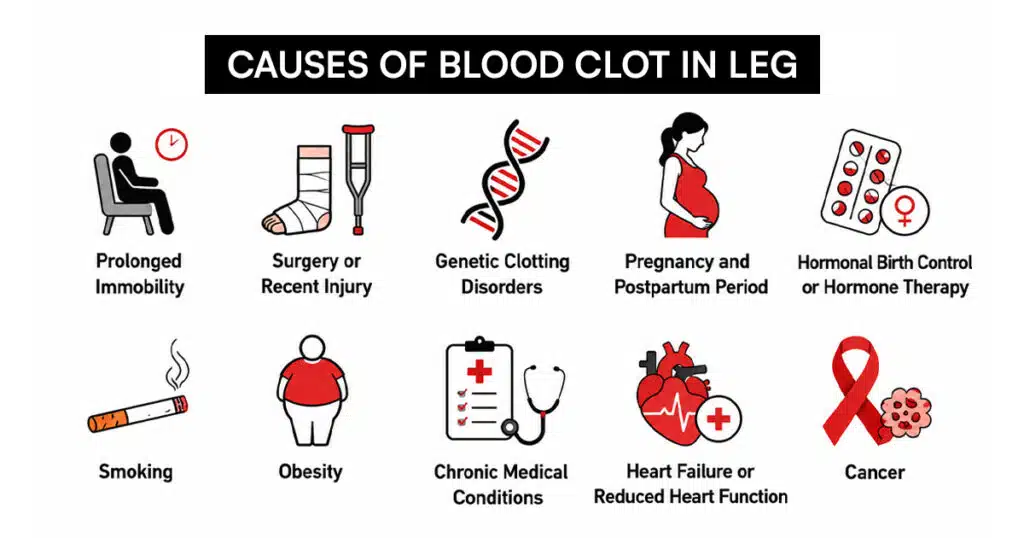
Causes of Blood Clots in Leg
It can be worrying when leg pain or swelling appears suddenly without a clear reason. In many cases, these symptoms are linked to changes in blood flow, vessel health, or clotting behavior in the body. Understanding these underlying risk factors is important for early detection and prevention.
1. Prolonged Immobility
Long periods of sitting or lying still can slow down blood circulation in the legs. This allows blood to pool and increases the risk of clot formation. It is commonly seen during long flights, bed rest, or recovery after illness. Staying inactive for too long is one of the most frequent contributing factors.
2. Surgery or Recent Injury
Recent surgeries, especially involving the hips, knees, or abdomen, can increase clot risk due to reduced movement and tissue trauma. Injuries that damage blood vessels may also trigger clotting as part of the healing process. The body naturally tries to prevent bleeding, which can sometimes lead to over-clotting. This risk is higher during the recovery period.
3. Genetic Clotting Disorders
Some people inherit conditions that make their blood clot more easily than normal. These genetic disorders affect the body’s natural balance between clotting and bleeding. Even minor triggers can lead to clot formation in such cases. Family history often plays an important role in identifying this risk.
4. Pregnancy and Postpartum Period
Pregnancy naturally increases clotting tendency to prevent excessive bleeding during delivery. However, this also raises the risk of developing clots in the legs. The risk remains higher for several weeks after childbirth. Hormonal changes and reduced mobility can further contribute.
5. Hormonal Birth Control or Hormone Therapy
Estrogen-containing medications can increase the likelihood of blood clot formation. These include certain birth control pills and hormone replacement therapies. They may affect how the blood naturally clots in some individuals. The risk is higher in people with additional underlying factors.
6. Smoking
Smoking damages blood vessels and affects normal blood circulation. It also increases the stickiness of blood cells, making clots more likely to form. Long-term smoking significantly raises the risk of vascular problems. Combined with other risk factors, the danger becomes even greater.
7. Obesity
Excess body weight puts added pressure on veins in the legs. This can slow blood flow and increase clot risk over time. Obesity is also linked with inflammation and changes in clotting factors. These combined effects make clot formation more likely.
8. Chronic Medical Conditions
Certain conditions, like heart disease, cancer, or inflammatory disorders, can increase clot risk. These illnesses may affect blood flow, vessel health, or clotting balance. Some treatments for these conditions can also contribute to the risk. Ongoing medical conditions often require careful monitoring.
9. Heart Failure or Reduced Heart Function
When the heart is not pumping blood efficiently, circulation throughout the body slows down, especially in the lower limbs. This sluggish blood flow can increase the chance of clot formation in the deep veins of the legs. People with heart failure may also experience swelling and fluid buildup, which further raises the risk. Careful medical management is important to reduce complications.
10. Cancer
Certain cancers can make the blood more likely to clot due to changes in clotting proteins in the body. In addition, treatments like chemotherapy or long-term bed rest during illness can further increase the risk. This combination of disease and reduced mobility makes clot formation more common in some patients. Regular monitoring is often necessary for early detection.
When to Go to the ER
It is important not to ignore symptoms that may suggest a blood clot in the leg, especially when they appear suddenly or worsen over time. While some discomfort can be caused by minor issues, certain warning signs require immediate medical attention to prevent serious complications and may require an ER for blood clot evaluation.
- Sudden swelling in one leg, calf, or thigh.
- Severe or worsening pain that does not improve with rest.
- Warmth and redness in the affected area.
- Skin discoloration, such as bluish or dark patches.
- Unexplained shortness of breath or chest pain.
- Rapid heart rate or dizziness along with leg symptoms.
- Tightness or heaviness in the leg that suddenly appears.
- Visible enlarged veins with tenderness in one leg.
Treatment for Blood Clot in Leg
Treatment for a blood clot in the leg focuses on preventing the clot from growing, reducing the risk of complications, and improving blood flow. The approach depends on the size, location, and severity of the clot. Early medical care is essential to avoid serious outcomes like the clot traveling to the lungs.
- Anticoagulant Medications (Blood Thinners): These medications help prevent the clot from growing and reduce new clot formation. Common drugs are prescribed by a doctor and allow the body to slowly dissolve the clot naturally.
- Direct Oral Anticoagulants (DOACs): Modern blood thinners that target specific clotting factors. They are often preferred due to ease of use and reduced monitoring requirements.
- Thrombolytic Therapy: Used in severe cases where the clot is life-threatening. These clot-dissolving drugs are given in a hospital under strict supervision due to bleeding risks.
- Compression Stockings: Help improve blood flow and reduce swelling in the legs. They support recovery but do not remove the clot.
- Surgical or Catheter Procedures: In rare cases, clots are physically removed when medications are not effective. These procedures are performed in a hospital setting.
- Lifestyle and Movement Management: Gradual movement improves circulation and reduces future risk. Patients are guided by doctors on safe activity levels during recovery.
Blood Clots Care at Altus Emergency Centers
Understanding What Causes Blood Clots in Legs is important because symptoms may seem mild at first, but can become serious quickly. Early evaluation plays a key role in preventing complications and ensuring timely treatment.
At Altus Emergency Centers, we provide 24/7 emergency care for patients experiencing possible blood clot symptoms. Our team offers rapid assessment, diagnostic testing, and immediate treatment options to ensure safe and effective care when every minute matters.
Key Takeaways
- Blood clots in the legs (DVT) can develop due to reduced circulation or medical conditions.
- Symptoms include swelling, pain, warmth, and discoloration in one leg.
- Some clots may occur without noticeable symptoms.
- Risk factors include immobility, surgery, pregnancy, smoking, and obesity.
- Early detection is critical to prevent life-threatening complications.
- Emergency care is required for sudden or severe symptoms.
- Treatment includes blood thinners, compression therapy, and hospital procedures.
- Timely diagnosis improves recovery outcomes significantly.
FAQs
How to check for a blood clot in your leg?
Look for one-sided swelling, pain, warmth, redness, or heaviness in the leg. A definite diagnosis requires medical tests like an ultrasound.
Can you feel a blood clot in your leg?
Yes, it may feel like deep pain, cramping, or tightness in one leg. However, some blood clots have no clear symptoms at all.