
COVID-19 is a viral infection caused by the SARS-CoV-2 virus. It spreads mainly through respiratory droplets when an infected person coughs, sneezes, talks, or breathes near others. One of the most important things to understand about COVID is when a person is contagious, because this determines how easily it can spread to others in households, workplaces, and communities.
In some cases, symptoms can become severe and require urgent medical attention at facilities such as an emergency room in Lumberton or emergency care centers like Altus emergency room Lumberton, TX.
What Is COVID?
COVID-19 is a respiratory illness that can range from mild symptoms to severe complications. It primarily affects the lungs and respiratory system but can also impact other organs.
Common symptoms include:
- Fever or chills
- Cough
- Sore throat
- Fatigue
- Loss of taste or smell
- Shortness of breath
- Body aches
Some people may experience only mild illness and recover at home without medical treatment. Others may develop more serious symptoms that affect breathing and overall oxygen levels. In severe cases, COVID-19 can lead to hospitalization and require close medical monitoring for recovery.
How Long Are You Contagious With COVID?
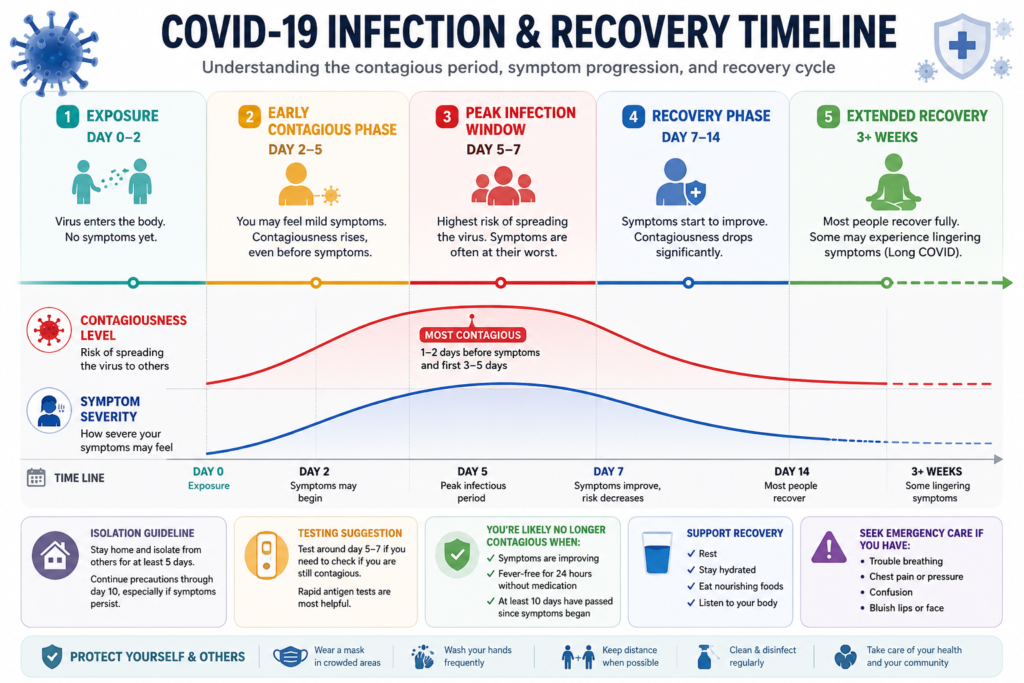
A person with COVID-19 is usually most contagious in the early stages of infection.
General contagious period:
- 1–2 days before symptoms start
- First 3–5 days after symptoms begin (peak contagious period)
- Can remain contagious for up to 10 days or longer, especially in severe cases
When Is COVID Most Contagious?
COVID-19 is typically most contagious:
- Just before symptoms appear
- During the first few days of illness
This is why people often spread the virus without knowing they are infected. According to health guidelines, isolation is usually recommended during this early period to prevent spreading the virus to others.
What Are COVID Symptoms?
COVID symptoms can vary from mild to severe and may appear 2–14 days after exposure.
Common symptoms include:
- Fever or chills
- Cough
- Fatigue
- Headache
- Sore throat
- Congestion or runny nose
- Shortness of breath
Severe symptoms may include:
- Difficulty breathing
- Chest pain or pressure
- Confusion
- Bluish lips or face
How Long Does COVID Last?
The duration of COVID depends on the severity of the infection and the individual’s overall health. In mild cases, most people begin to feel better within 5–10 days, although some symptoms like fatigue or cough may linger slightly longer. Moderate cases can take around 10–14 days for noticeable recovery, especially if respiratory symptoms are more persistent and require rest and monitoring. In severe cases, recovery may take several weeks or even longer, particularly if hospitalization or intensive medical care is needed. Factors such as age, underlying health conditions, and immune response also play an important role in how long the illness lasts and how quickly a person fully recovers.
How to Treat COVID?
Most mild COVID cases can be managed at home, while severe cases require medical care.
At-home care:
- Rest and hydration
- Fever reducers (acetaminophen or ibuprofen)
- Monitoring oxygen levels
- Isolation from others
Medical treatment (if needed):
- Oxygen therapy
- Antiviral medications (in some cases)
- IV fluids
- Hospital monitoring
COVID Testing Near Me
If you think you may have been exposed to COVID or are experiencing symptoms, searching for COVID testing near me is important to prevent spreading the virus to others.
Testing may be available at:
- Emergency rooms
- Urgent care centers
- Local clinics and pharmacies
When to Go to the ER for COVID?
COVID can become serious quickly in some patients. You should go to the emergency room if you experience:
- Difficulty breathing or shortness of breath
- Chest pain or pressure
- Confusion or difficulty staying awake
- Blue lips or face
- Oxygen levels dropping (if monitored at home)
- Severe dehydration or inability to keep fluids down
How to Avoid Spreading COVID?
To reduce transmission:
- Stay home when sick
- Wear a mask in crowded areas
- Wash hands frequently
- Avoid close contact with others during infection
- Disinfect commonly touched surfaces
Following these preventive steps significantly lowers the risk of spreading the virus to family members, coworkers, and the wider community. It is especially important to continue precautions even if symptoms are mild or improving. If symptoms become severe or breathing issues develop, timely medical attention should be sought. In such cases, facilities like Altus Emergency Centers can provide urgent evaluation and care when needed.
Key Takeaways
- COVID is most contagious 1–2 days before symptoms and during the first few days of illness
- Contagious period can last up to 10 days or longer
- Symptoms range from mild to severe
- Most people recover within 1–2 weeks
- Severe symptoms require emergency medical care
Frequently Asked Questions
What are COVID symptoms?
Common COVID-19 symptoms include fever, cough, fatigue, sore throat, loss of taste or smell, and shortness of breath. These symptoms may appear 2–14 days after exposure to the virus and can vary in intensity from mild to severe.
When should I test again after testing positive for COVID-19?
You should generally consider retesting about 5–7 days after your initial positive result if you are checking whether you are still contagious. Rapid antigen tests are more useful than PCR tests for this purpose because they better reflect current infectiousness.
How long are you contagious with COVID after testing positive?
After testing positive, most people are considered contagious for about 5–10 days. You are typically most contagious in the first few days after the positive result or symptom onset. In some cases, especially with severe illness or weakened immunity, contagiousness may last longer.
How do you know when you’re no longer contagious?
You are generally less likely to be contagious once symptoms have clearly improved and you have been fever-free for at least 24 hours without using fever-reducing medication. Rapid antigen tests can also help indicate whether the virus is still active in your system.