
Swimming is one of the most popular recreational activities, especially during the warmer months, but it also comes with serious safety risks. According to the Centers for Disease Control and Prevention (CDC), drowning is a leading cause of injury-related death among children, with thousands of drowning and near-drowning incidents occurring each year.
Understanding how to prevent drowning is essential for swimmers of all ages. By following swimming pool safety tips, using proper safety equipment, and following pool safety rules, families can greatly reduce risks. Recognizing drowning signs early is critical for a quick response that can save lives. Knowing what drowning looks like helps swimmers and bystanders act fast in emergencies. In serious cases, visit Altus Emergency Centers at our Lake Jackson ER, Altus ER Lumberton, TX, or Altus ER Waxahachie to ensure timely treatment and better outcomes.
Recognize the Signs of Drowning
A person who is drowning may be unable to call for help because they are focused on breathing. Their movements are often subtle and easy to miss.
Common warning signs include:
- Head low in the water
- Mouth at water level
- Gasping for air
- Glassy or unfocused eyes
- Little or no leg movement
- Inability to move toward safety
- Attempting to roll onto the back
- Arms pressing down on the water instead of waving for help
- Sudden silence after visible distress
Essential Swimming Safety Tips
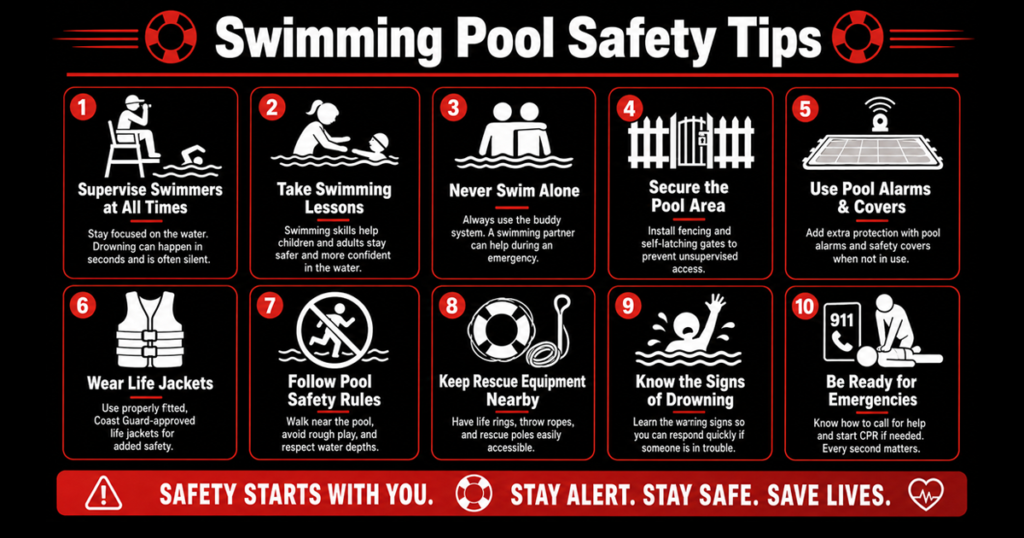
Preventing drowning requires a combination of awareness, swimming skills, supervision, and emergency preparedness. Following these fundamental safety measures can help protect swimmers of all ages. In case of a serious water emergency, searching for an ER near me and getting immediate medical help can be life-saving when every second counts.
Never Swim Alone
Swimming alone increases the risk of serious injury or drowning if an unexpected emergency occurs. Even experienced swimmers can face fatigue, cramps, or medical issues in the water. Always swim with a companion or in areas where lifeguards are present. Having someone nearby ensures help is available if an emergency arises.
Learn Basic Swimming Skills
Swimming lessons provide valuable skills that improve confidence and safety in the water. Knowing how to float, tread water, and safely exit a pool can help prevent panic during unexpected situations. Children and adults alike benefit from formal swim instruction. The earlier water safety skills are learned, the better prepared swimmers are to handle emergencies.
Understand Your Limits
Many water accidents occur when swimmers overestimate their abilities. Swimming in unfamiliar environments or challenging conditions can increase the risk of injury and drowning. Always choose activities that match your skill level and avoid taking unnecessary risks. Respect warning signs, designated swimming areas, and local safety recommendations.
Stay Alert Around Water
Water demands constant attention, especially when supervising children. Distractions such as phones, conversations, or alcohol can delay response times during emergencies. Remaining alert helps you recognize hazards early and react quickly if someone needs assistance.
Maintain Active Adult Supervision
Children should never be left unattended near water, regardless of their swimming ability. Active supervision means keeping constant visual contact and staying close enough to intervene immediately if necessary. Assigning a designated “water watcher” can help ensure that someone is always focused on swimmer safety.
Install Pool Barriers
Physical barriers help prevent unsupervised access to swimming pools. Properly installed safety features can greatly reduce the risk of accidental drownings involving young children.
Recommended barriers include:
- Four-sided pool fencing
- Self-closing gates
- Self-latching locks
- Pool alarms
- Safety covers
Establish Pool Safety Rules
Clear swimming pool safety rules help prevent risky behaviors and create consistent expectations for all swimmers. Everyone using the pool should understand and follow these guidelines.
Common pool safety rules include:
- No running near the pool
- No diving in shallow water
- No pushing or roughhousing
- Follow posted depth markers
- Listen to lifeguards and supervisors
- Keep toys away from pool edges when not in use
Swimming Pool Safety Equipment That Can Save Lives
Having the right swimming pool safety equipment readily available can improve response times during emergencies. Safety equipment should be regularly inspected and easily accessible.
Life Jackets and Personal Flotation Devices
Properly fitted life jackets provide critical protection for inexperienced swimmers and children. They help maintain buoyancy and reduce the risk of drowning during water activities. Choose flotation devices that are approved for water safety and appropriate for the user’s size and weight.
Rescue Equipment
Rescue tools allow bystanders to assist someone in distress without placing themselves in danger. Every pool area should have basic rescue equipment available.
Recommended rescue equipment includes:
- Life rings
- Rescue tubes
- Shepherd’s hooks
- Throw ropes
- Emergency flotation devices
First Aid and Emergency Supplies
Quick access to emergency supplies can make a significant difference during a water-related emergency. Preparation helps ensure a faster and more effective response.
Keep the following items nearby:
- First aid kit
- CPR mask
- Emergency contact information
- Fully charged phone
- Automated External Defibrillator (AED) if available
Important Rules of Swimming Pool Safety
Following the established rules of swimming pool safety helps minimize hazards and encourages responsible behavior around water.
Check Water Conditions Before Swimming
Before entering any body of water, take time to assess conditions and identify potential hazards. Awareness of your surroundings can prevent dangerous situations.
Pay attention to:
- Water depth
- Visibility
- Current conditions
- Weather forecasts
- Warning signs
Avoid Alcohol Around Water
Alcohol impairs judgment, balance, coordination, and reaction time. These effects can increase the likelihood of accidents and reduce a person’s ability to respond during emergencies.
Avoid consuming alcohol while swimming, supervising swimmers, or participating in water activities.
Learn CPR
CPR is one of the most valuable skills a person can learn. Immediate CPR can help maintain circulation and oxygen delivery while waiting for emergency responders.
Families who spend time around water should strongly consider completing CPR certification courses.
Swimming Safety Tips for Children
Children are among the most vulnerable groups when it comes to drowning incidents. Implementing child-focused safety measures can help reduce risks and provide greater peace of mind.
Introduce Water Safety Early
Teaching water safety concepts at a young age helps children develop healthy habits and respect for water environments. Early education can improve awareness and decision-making.
Children should learn the importance of asking permission before entering water and following safety instructions at all times.
Use Multiple Layers of Protection
No single safety measure can completely prevent drowning. Combining several protective strategies provides the strongest defense against accidents.
Effective layers of protection include:
- Adult supervision
- Pool fencing
- Swimming lessons
- Life jackets
- Emergency preparedness
Encourage Safe Swimming Habits
Children should understand basic water safety expectations before participating in swimming activities. Consistent reinforcement helps create lifelong safe behaviors.
Teach children to:
- Swim with a buddy
- Follow pool rules
- Stay away from drains
- Notify an adult if someone is struggling
How to Rescue Someone Drowning Safely
Knowing how to rescue someone drowning can save lives while reducing risks to rescuers. The goal is to help the victim without creating additional emergencies.
Whenever possible, use rescue techniques that keep you out of the water and at a safe distance.
Reach
If the victim is close enough, extend a pole, towel, branch, or other long object. This method allows you to help them without entering the water.
A stable position on land or the pool deck provides better control during the rescue.
Throw
If reaching is not possible, throw a flotation device to the person in distress. This can help them stay afloat until additional help arrives.
Useful flotation devices include:
- Life rings
- Rescue tubes
- Throw ropes
- Floating cushions
Do Not Enter the Water Unless Trained
Entering the water can be dangerous, particularly when assisting a panicked victim. Untrained rescuers may be pulled underwater or become victims themselves. Whenever possible, wait for trained rescue personnel or use equipment from a safe location.
Begin CPR if Necessary
Once the person is removed from the water, assess their responsiveness and breathing. CPR should be started immediately if they are unresponsive and not breathing normally. Continue providing care until emergency medical personnel arrive and take over treatment.
When to Go to the ER After a Water Emergency
Seek immediate emergency care if a swimmer experiences:
- Difficulty breathing or shortness of breath
- Persistent coughing after a submersion incident
- Loss of consciousness, even briefly
- Chest pain or chest tightness
- Blue or gray discoloration of the lips or skin
- Confusion, dizziness, or unusual behavior
- Extreme fatigue or difficulty staying awake
- Seizures or unresponsiveness
Children should be evaluated immediately if they develop any concerning symptoms after a near-drowning incident, even if they initially appear well. When in doubt, it is always safer to seek emergency medical attention. In urgent situations, visiting Altus Emergency Centers at our Lake Jackson ER, Altus ER Lumberton, TX, or Altus ER Waxahachie can ensure rapid evaluation and timely treatment before complications worsen.
Why Choose Altus Emergency Centers
When a water-related emergency occurs, receiving prompt medical attention can make a significant difference in recovery and overall outcomes. At Altus Emergency Centers, our experienced emergency physicians and healthcare professionals are available 24/7 to evaluate and treat drowning-related injuries, breathing difficulties, and other urgent medical concerns. We provide comprehensive emergency care in a comfortable environment, ensuring patients receive timely attention when they need it most.
Our state-of-the-art facilities are equipped with advanced diagnostic technology to help identify potential complications and guide appropriate treatment. With no appointment required and minimal wait times, Altus Emergency Centers is committed to delivering fast, compassionate, and high-quality emergency care for individuals and families throughout our community.