

A bladder infection can feel uncomfortable, disruptive, and worrying, especially when symptoms start suddenly and affect daily life. Many people try to wait it out, wondering if the discomfort will pass without treatment. Do Bladder Infections Heal on Their Own? In some mild cases, the body may clear a low-level infection, but most bladder infections require medical treatment to fully resolve and prevent complications.
Delaying care can allow bacteria to spread to the kidneys, leading to a more serious infection and worsening symptoms. Seek urgent medical attention at an ER in Waxahachie, TX, if you notice fever, back or flank pain, vomiting, blood in your urine, or worsening burning and frequent urination.
What Is A Bladder Infection?
A bladder infection (cystitis) is a common urinary tract infection (UTI) caused when bacteria, most often Escherichia coli, enter the urinary tract and infect the bladder lining, leading to inflammation. It commonly causes burning during urination, frequent urination, urgency, and lower abdominal discomfort. It is more common in women because their shorter urethra allows bacteria easier access to the bladder. If left untreated, the infection can spread to the kidneys and cause serious complications.
A PubMed-indexed review reports that E. coli is responsible for approximately 80% of uncomplicated community-acquired urinary tract infections, highlighting its dominant role in bladder infections.
Bladder Infection Symptoms That Are Dangerous
- High fever (above 100.4°F / 38°C) may indicate the infection is spreading.
- Pain in the lower back or side (flank pain), which can suggest kidney involvement.
- Blood in urine (hematuria), especially if it is persistent or worsening.
- Nausea or vomiting that prevents normal eating or drinking.
- Severe burning or pain during urination that rapidly worsens.
- Confusion or weakness, especially in older adults, which may signal a serious infection.
These symptoms may indicate urological emergencies that require immediate evaluation to prevent serious complications and protect kidney function.
Also read: What Causes Kidney Infections
Can A Bladder Infection Heal Itself?
In rare mild cases, the body’s immune system may clear a bladder infection without medical treatment, especially when bacterial growth is limited and overall health is strong. However, most bladder infections require antibiotics to fully eliminate the bacteria and prevent recurrence. Without treatment, the infection can persist or progress to more serious urinary tract complications, including kidney involvement. Because of this risk, medical evaluation is generally recommended rather than relying on spontaneous recovery.
What Causes Bladder Infections
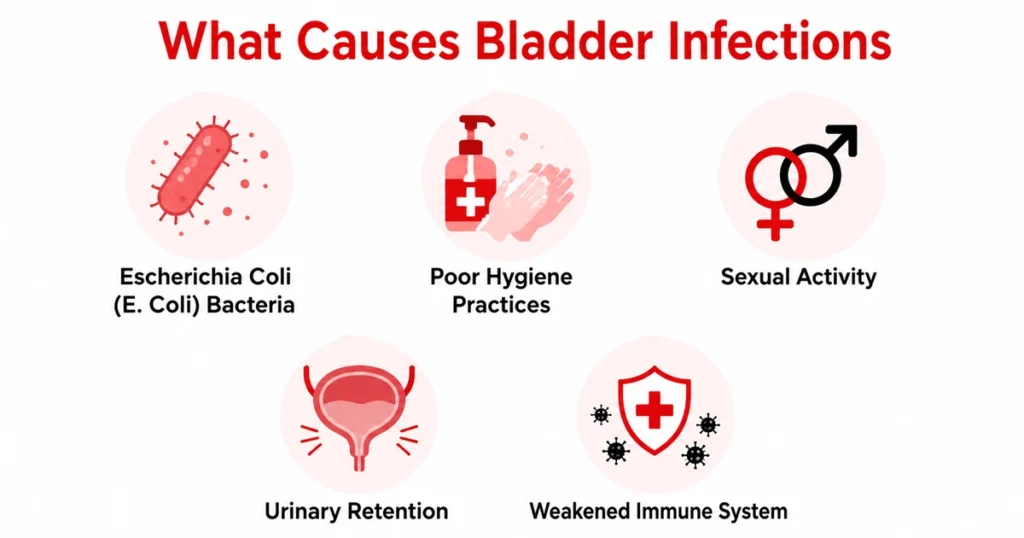
Bladder infections develop when bacteria enter the urinary tract and begin to multiply in the bladder, leading to inflammation. While this process is common and often treatable, it can happen for several everyday reasons that many people are not aware of. Certain habits, health conditions, and lifestyle factors can increase the likelihood of infection.
1. Escherichia Coli (E. Coli) Bacteria
Escherichia coli (E. coli) is the most common cause of bladder infections, responsible for the majority of cases worldwide. These bacteria normally live in the intestines but can enter the urinary tract and reach the bladder. Once inside, they attach to the bladder wall and begin to multiply, triggering infection. Their strong ability to adhere to urinary tract tissues makes them particularly difficult for the body to flush out naturally.
2. Poor Hygiene Practices
Improper hygiene can increase the risk of bacteria spreading from the anal or genital area into the urinary tract. This is especially common when wiping is not done correctly or when genital cleaning is inadequate. Such practices allow bacteria to move closer to the urethral opening. Over time, this increases the chance of infection developing in the bladder.
3. Sexual Activity
Sexual activity can introduce bacteria into the urinary tract, especially when proper hygiene is not maintained before and after intercourse. The movement involved can also help push bacteria toward the bladder. This is why bladder infections are sometimes referred to as “honeymoon cystitis.” Frequent sexual activity may increase the risk in susceptible individuals.
4. Urinary Retention
Holding urine for long periods allows bacteria more time to grow and multiply in the bladder. Normally, urination helps flush out bacteria before they can cause infection. When urine is not passed regularly, this natural cleansing process is reduced. This creates a favorable environment for bacterial infection to develop.
5. Weakened Immune System
A weakened immune system makes it harder for the body to fight off bacterial infections, including those in the urinary tract. Conditions such as diabetes, chronic illness, or stress can reduce immune defense. When immunity is low, even small amounts of bacteria can lead to infection. This increases both the frequency and severity of bladder infections.
When To Go To The ER
A bladder infection can usually be treated, but it becomes serious if the infection spreads or symptoms worsen quickly. In these cases, urgent medical care is needed to prevent complications like kidney infection or sepsis.
- High fever (above 100.4°F / 38°C) with chills that may indicate spreading infection.
- Severe pain in the lower back or side (flank pain) suggesting kidney involvement.
- Persistent nausea or vomiting that prevents fluid intake or medication use.
- Blood in urine that is heavy, persistent, or worsening over time.
- Confusion, extreme weakness, or altered mental state, especially in older adults.
- Symptoms that rapidly worsen or do not improve despite initial treatment.
In these cases, seeking care at an ER near me is important to prevent complications like kidney infection or sepsis.
How Can You Treat A Bladder Infection
Treating a bladder infection aims to eliminate bacteria, relieve discomfort, and prevent complications. Most cases require medical care, while supportive steps can help ease symptoms and speed recovery. Early treatment usually leads to better outcomes and reduces the risk of the infection spreading.
- Antibiotics (Prescription Treatment): These are the main treatments that kill the bacteria causing the infection. Most doctors recommend completing the full prescribed course even if symptoms improve early.
- Over-The-Counter Pain Relievers: Medications like ibuprofen or acetaminophen help reduce pain and inflammation. Most doctors recommend them for short-term relief alongside antibiotics.
- Urinary Analgesics: Drugs like phenazopyridine help reduce burning and discomfort during urination. Most doctors recommend short-term use only, as they do not treat the infection.
- Increased Fluid Intake: Drinking more water helps flush bacteria from the urinary tract. It supports recovery when used along with medical treatment.
- Warm Compress: Applying heat to the lower abdomen can help ease discomfort and pressure. It provides temporary relief but does not cure the infection.
If you have severe symptoms such as high fever, flank pain, vomiting, or blood in your urine, visit our 24/7 emergency room for prompt evaluation and treatment.
Care For Bladder Infections At Altus Emergency Centers
Bladder infections can sometimes seem mild at first, but they can quickly worsen if the underlying infection is not properly treated. While a few cases may improve on their own, most require medical evaluation to fully clear the bacteria and prevent complications. At Altus Emergency Centers, patients receive fast, accurate diagnosis and emergency care to identify the cause and start timely treatment.
If you are wondering, Do Bladder Infections Heal on Their Own, it is important not to delay care when symptoms persist or worsen. At Altus Emergency Centers, our medical team provides prompt testing, including urinalysis and imaging when needed, to ensure the infection is properly treated before it spreads or leads to more serious conditions.
Key Takeaways
- Bladder infections (cystitis) are commonly caused by bacteria entering the urinary tract, most often E. coli.
- Most cases do not fully resolve on their own and usually require antibiotics for complete treatment.
- Early symptoms should not be ignored, as untreated infections can spread to the kidneys and become serious.
- Risk factors include poor hygiene, urinary retention, sexual activity, and weakened immunity.
- Warning signs like fever, back pain, blood in urine, or vomiting require urgent medical care.
- Treatment typically includes prescription antibiotics, pain relief medications, and supportive care like fluids and rest.
Frequently Asked Questions
What Causes A Bladder Infection In Men?
Bladder infections in men usually occur when bacteria enter the urinary tract and multiply in the bladder. Common risk factors include an enlarged prostate, urinary retention, kidney stones, catheter use, or urinary tract abnormalities. A weakened immune system can also increase susceptibility by reducing the body’s ability to fight infection.
Is A Bladder Infection An STD?
No, a bladder infection is not a sexually transmitted disease. It is most commonly caused by bacteria from the digestive tract entering the urinary system. However, sexual activity can increase the risk by helping bacteria reach the urethra.
Will A Bladder Infection Cause Nausea?
Yes, nausea can occur in some cases, especially when the infection becomes more severe or spreads. It is more concerning when it appears along with fever, vomiting, or back pain. These symptoms may indicate a kidney infection that needs prompt medical attention.
Can A Bladder Infection Affect Your Period?
A bladder infection does not directly affect the menstrual cycle. However, it may cause pelvic discomfort that can feel similar to period pain. Stress on the body from infection may also temporarily affect cycle timing in some cases.
Can a UTI Cause Nausea?
Yes, a UTI can cause nausea, especially if the infection becomes severe or spreads to the kidneys. Nausea may occur along with fever, chills, vomiting, or back pain and should be evaluated by a healthcare provider.