

Dehydration occurs when the body loses more fluids than it takes in, preventing it from functioning normally. Water is essential for regulating body temperature, supporting organ function, and maintaining overall balance. When dehydration becomes severe, it can lead to dangerous complications including fever-like symptoms or even elevated body temperature.
In some cases, dehydration can become serious enough to require immediate medical attention at an ER for dehydration such as Altus Emergency Centers or an urgent care facility equipped to handle fever and fluid imbalance.
What Is Dehydration?
Dehydration is a condition that happens when the body does not have enough water and fluids to carry out normal functions. Since the human body is made up of about 60% water, even a small fluid imbalance can affect energy levels, blood pressure, and temperature regulation.
Water is needed for:
- Regulating body temperature
- Carrying nutrients and oxygen to cells
- Removing waste through urine and sweat
- Supporting organ function
How to Know If You’re Dehydrated?
Dehydration can range from mild to severe, and symptoms may worsen quickly if not treated. Severe dehydration can become a medical emergency, especially in children, older adults, and people with chronic illnesses. In more serious cases, you may need urgent care for fever and related dehydration symptoms to prevent complications.
Mild to moderate dehydration symptoms:
- Dry mouth and lips
- Thirst
- Fatigue or weakness
- Dark yellow urine
- Headache
- Dizziness
Severe dehydration symptoms:
- Very little or no urination
- Rapid heartbeat
- Confusion or irritability
- Sunken eyes
- Extreme fatigue
- Low blood pressure
Can Dehydration Cause Fever?
Yes, dehydration can lead to an increase in body temperature and may cause fever-like symptoms. This happens because the body depends on adequate fluids to regulate heat through sweating and circulation. When fluid levels drop, the cooling system becomes less effective, which can cause internal overheating and discomfort that may resemble a mild fever.
When dehydration worsens, the body struggles even more to maintain normal temperature balance. In some cases, this can also intensify symptoms caused by an underlying illness, making the fever feel higher than it actually is.
When dehydrated:
- The body produces less sweat, reducing its natural cooling ability
- Heat is not released efficiently through the skin
- Blood volume decreases, making temperature regulation harder
- Internal body temperature can rise above normal levels
- Fever-like symptoms such as chills, fatigue, and weakness may appear
If symptoms become severe or persistent, it is important to seek immediate medical care at a facility like altus emergency room lumberton tx for proper evaluation, IV fluids, and treatment to restore hydration and stabilize body temperature.
What Causes Dehydration?
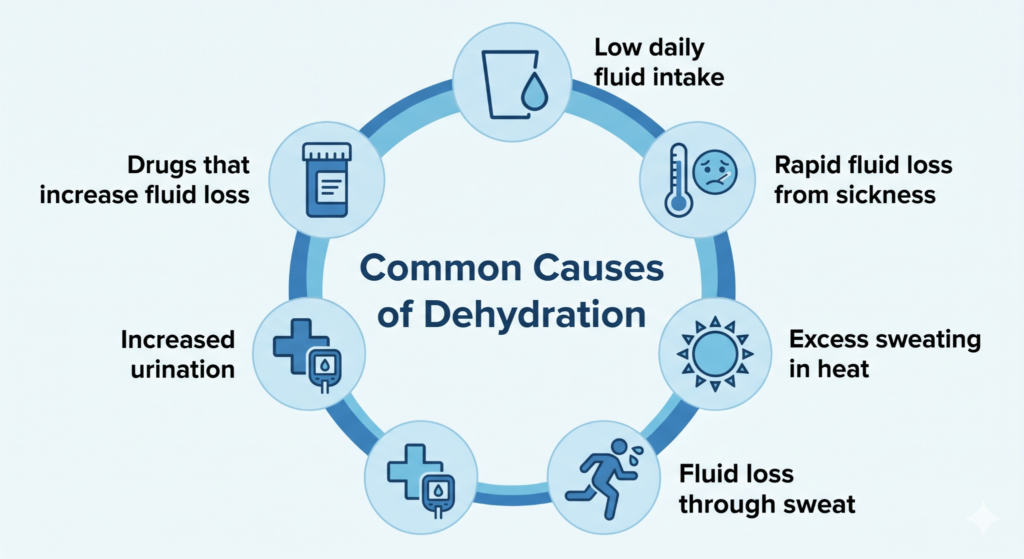
Dehydration can develop when the body loses more fluids than it takes in, and this imbalance can happen for many everyday reasons. Certain medical conditions and medications that increase urination can also contribute. Several factors can lead to dehydration, including:
How to Treat Dehydration
Treatment depends on the severity of the condition. Severe cases should always be treated in a medical facility to prevent complications.
Mild dehydration:
- Drink water frequently
- Consume electrolyte drinks
- Eat water-rich foods (fruits, soups)
- Rest in a cool environment
Moderate dehydration:
- Oral rehydration solutions
- Increased fluid intake with electrolytes
- Avoid caffeine and alcohol
Severe dehydration:
- IV fluids in a medical setting
- Monitoring of vital signs
- Treatment of underlying cause
When Dehydration Becomes Dangerous?
Dehydration can become life-threatening if not treated promptly. It affects blood pressure, kidney function, and body temperature regulation. Warning signs include:
- Confusion or fainting
- No urination for many hours
- Rapid heartbeat
- Very dry skin and mouth
- Severe weakness
When to Go to the ER for Dehydration?
In such cases, visiting an emergency facility like Altus Emergency Centers or an urgent care center for fever and dehydration can provide rapid IV fluids and stabilization. You should go to the emergency room if:
- You cannot keep fluids down due to vomiting
- You experience confusion or fainting
- There is no urination for 8+ hours
- You have severe diarrhea or persistent fever
- You show signs of heat stroke (very high body temperature, confusion, or rapid pulse)
Emergency Room for Dehydration
Quick treatment is especially important in children, elderly patients, and those with chronic conditions. The emergency room plays a critical role in treating moderate to severe dehydration, especially when symptoms worsen quickly or oral fluids are not enough. Facilities like Altus Emergency Centers provide fast evaluation and treatment to restore stability and prevent complications.
- Restore fluid balance with IV therapy
- Monitor electrolytes
- Treat underlying infections or illness
- Stabilize body temperature
- Prevent complications like kidney failure or heat stroke
Key Takeaways
- Dehydration occurs when the body loses more fluids than it takes in
- It can affect temperature regulation and may cause fever-like symptoms
- Severe dehydration can become life-threatening
- Common causes include illness, heat exposure, and low fluid intake
- IV fluids are often needed in severe cases
Frequently Asked Questions
What can be mistaken for dehydration?
Several conditions can look like dehydration because they share similar symptoms such as fatigue, dizziness, or dry mouth. Common examples include low blood sugar, heat exhaustion, viral infections, and certain medication side effects. A proper medical evaluation is important to confirm the exact cause.
What are the early signs of dehydration?
Early signs often include thirst, dry mouth, mild fatigue, and darker-than-normal urine. Some people may also feel lightheaded or have a mild headache. These symptoms usually improve quickly once fluids are replenished.
H3: Can dehydration cause dizziness and confusion?
Yes, dehydration can reduce blood flow and oxygen delivery to the brain, leading to dizziness or confusion. This is more common in moderate to severe cases or in older adults. Severe symptoms should be treated as a medical concern.
How long does it take to recover from dehydration?
Mild dehydration can improve within a few hours after drinking fluids and electrolytes. More severe cases may take longer and could require medical treatment like IV fluids. Recovery time depends on the cause and severity.