

If acid reflux keeps bringing burning chest pain, a sour taste, or uncomfortable regurgitation into your day, you deserve relief instead of another night of discomfort. These symptoms can interfere with eating, sleeping, and daily activities.
For occasional symptoms, simple measures may help, but persistent or severe reflux should not be ignored. If you develop chest pain, trouble swallowing, persistent vomiting, or other severe symptoms, seek prompt medical attention at Altus ER Lake Jackson TX rather than waiting for symptoms to worsen.
What Is Acid Reflux?
Acid reflux occurs when stomach contents flow backward into the esophagus, causing symptoms such as heartburn, a sour or bitter taste, regurgitation, chest discomfort, or throat irritation. Occasional reflux is common, but frequent symptoms may indicate gastroesophageal reflux disease (GERD), which can require medical evaluation.
A global meta-analysis found that 13.98% of the population had GERD, showing how common persistent reflux symptoms can be.
Dangerous Acid Reflux Symptoms You Should Never Ignore
Most acid reflux symptoms are not emergencies, but certain warning signs can indicate bleeding, complications, or another serious condition. Seek prompt medical attention if you experience:
- Severe or crushing chest pain, especially with shortness of breath, sweating, or pain spreading to the arm or jaw.
- Difficulty or pain when swallowing, or a feeling that food is stuck behind the breastbone.
- Persistent or repeated vomiting.
- Vomiting blood or material that looks like coffee grounds.
- Black, tarry, or bloody stools.
- Unexplained weight loss or loss of appetite.
- Shortness of breath, choking, persistent coughing, or worsening hoarseness.
Effective Acid Reflux Treatments
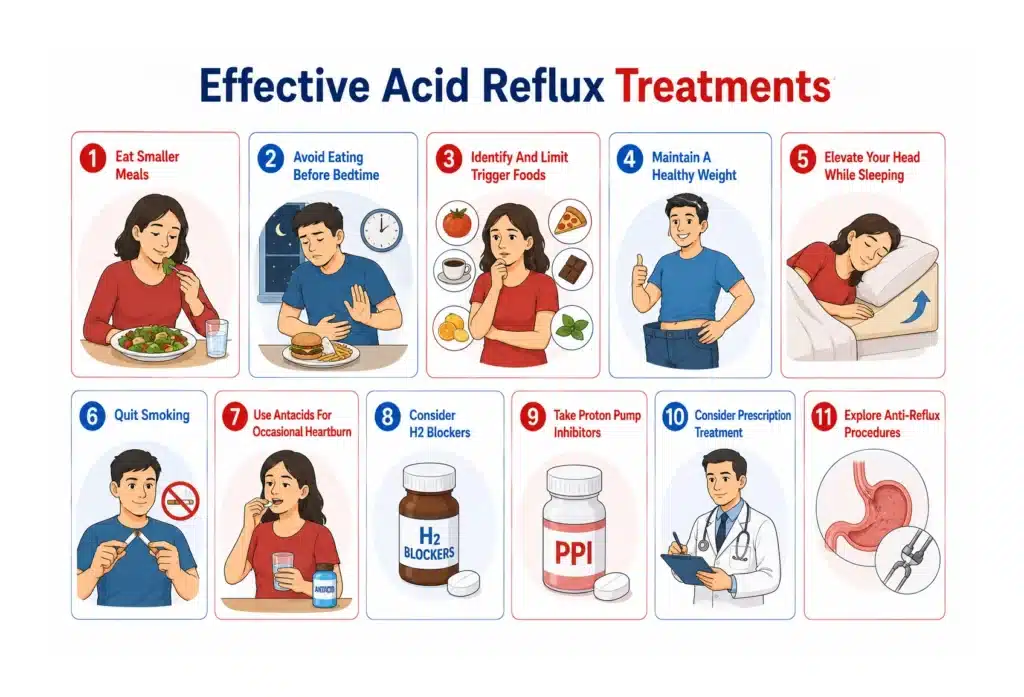
Finding the right acid reflux treatment can make a significant difference when heartburn, regurgitation, or throat irritation keeps disrupting your routine. Treatment depends on how often symptoms occur, how severe they are, and whether reflux has caused complications. Some approaches can be used for occasional symptoms, while persistent GERD may require medical evaluation and ongoing care.
Eat Smaller Meals
Large meals can increase pressure in the stomach and make reflux more likely. Choosing smaller portions throughout the day may help reduce symptoms after eating. Eating slowly can also prevent overeating and stomach discomfort. Pay attention to foods that consistently trigger your heartburn and limit them.
Avoid Eating Before Bedtime
Lying down soon after eating can make it easier for stomach contents to move back into the esophagus. Try to finish meals at least 2 to 3 hours before going to bed. This may be particularly helpful if you experience nighttime heartburn or regurgitation.
Identify And Limit Trigger Foods
Certain foods and drinks can worsen reflux symptoms, although triggers vary from person to person. Common triggers may include high-fat foods, spicy foods, chocolate, caffeine, carbonated beverages, or acidic foods. Rather than eliminating many foods unnecessarily, track your symptoms to identify your personal triggers.
Maintain A Healthy Weight
If you are overweight or have obesity, losing excess weight may reduce pressure on the stomach and improve GERD symptoms. Even modest weight loss may provide meaningful symptom relief for some people. A healthcare professional can help you choose a safe and sustainable approach.
Elevate Your Head While Sleeping
Nighttime reflux may improve when the upper body is elevated during sleep. A foam wedge that raises the head and upper torso can be more effective than simply adding pillows under your head. This approach is especially useful for people whose symptoms worsen when lying down.
Quit Smoking
Smoking can contribute to reflux symptoms and may interfere with the normal function of the lower esophageal sphincter. Stopping smoking can support digestive and overall health while potentially reducing reflux symptoms. If quitting is difficult, ask a healthcare professional about evidence-based cessation support.
Use Antacids For Occasional Heartburn
Antacids can provide short-term relief by neutralizing stomach acid and may be appropriate for mild, occasional heartburn. They are available over the counter, but they should not be used every day for persistent or severe symptoms without medical advice. Frequent reliance on antacids may indicate that your symptoms need evaluation.
Consider H2 Blockers
H2 blockers reduce the amount of acid produced by the stomach and can help control reflux symptoms. Some are available over the counter, while others may require a prescription depending on the medication and situation. Speak with your doctor if symptoms continue despite using an H2 blocker.
Take Proton Pump Inhibitors
Proton pump inhibitors (PPIs) significantly reduce stomach acid and are among the most effective medicines for treating GERD and healing acid-related damage to the esophagus. Some PPIs are available over the counter, while others are prescribed by a doctor. For persistent GERD, a healthcare professional should determine the appropriate dose and duration.
Consider Prescription Treatment
When symptoms remain troublesome despite appropriate lifestyle measures or over-the-counter medicines, a doctor may prescribe stronger or longer-term treatment. The medication and duration depend on your symptoms, medical history, and whether complications are present. Do not start, stop, or change prescription reflux medication without discussing it with your healthcare provider.
Explore Anti-Reflux Procedures
People with persistent GERD that does not respond adequately to medication may be evaluated for procedures or surgery. Fundoplication is one surgical option that strengthens the barrier between the stomach and esophagus to reduce reflux. These treatments require evaluation by a qualified specialist and are generally considered when appropriate medical treatment is unsuccessful or long-term medication is not suitable.
When To Go To The ER For Acid Reflux
Although occasional acid reflux is usually not an emergency, severe or unusual symptoms can signal a serious complication or another medical condition. Go to the ER immediately if you have:
- Severe, crushing, or persistent chest pain.
- Chest pain with shortness of breath, sweating, dizziness, or nausea.
- Pain spreads to your arm, shoulder, back, neck, or jaw.
- Vomiting blood or material that looks like coffee grounds.
- Black, tarry, or bloody stools.
- Severe difficulty swallowing or food becoming stuck.
- Persistent vomiting that prevents you from keeping fluids down.
- Fainting, severe weakness, or confusion.
- Sudden or worsening trouble breathing.
- Severe abdominal or upper chest pain that does not improve.
If your symptoms are severe, sudden, or worsening, do not wait for them to improve. Visit the nearest emergency room for prompt evaluation and treatment.
Altus Emergency Centers For Acid Reflux Care
If acid reflux symptoms become severe or are accompanied by intense chest pain, difficulty swallowing, persistent vomiting, vomiting blood, or trouble breathing, seek emergency care without delay. At Altus Emergency Centers, our 24/7 emergency rooms are equipped to evaluate serious symptoms and provide timely emergency care, with an average ER wait time of just 9 minutes.
From diagnostic evaluation and symptom management to treatment for dehydration, bleeding, or other concerning complications, Altus Emergency Centers provides prompt, compassionate emergency care. If severe symptoms develop suddenly or continue to worsen, do not wait for them to improve on their own. Seek immediate medical attention.
Key Takeaways
- Acid reflux can cause heartburn, regurgitation, chest discomfort, and throat irritation.
- Smaller meals and avoiding food before bedtime may help reduce reflux symptoms.
- Antacids, H2 blockers, and proton pump inhibitors can provide relief, but persistent symptoms may require medical guidance.
- Severe chest pain, vomiting blood, difficulty swallowing, or trouble breathing require urgent medical attention.
- Seek emergency care immediately if acid reflux symptoms are severe, sudden, or accompanied by concerning warning signs.
Frequently Asked Questions
What Causes Acid Reflux?
Acid reflux occurs when stomach contents flow backward into the esophagus. Common contributors include a weakened lower esophageal sphincter, obesity, pregnancy, large meals, certain foods, smoking, and lying down soon after eating.
Can You Die From Acid Reflux In Your Sleep?
Acid reflux itself is rarely fatal, but severe reflux can cause complications such as aspiration or damage to the esophagus. Seek emergency care for choking, severe breathing problems, vomiting blood, or intense chest pain.
What Does Acid Reflux Feel Like?
Acid reflux commonly feels like a burning sensation in the chest, often called heartburn. You may also experience a sour taste, regurgitation, chest discomfort, throat irritation, coughing, or a feeling of a lump in your throat.