

Dealing with diarrhea can be exhausting, uncomfortable, and frustrating, especially when it disrupts your daily routine or keeps you close to a bathroom. If you’re searching for how to stop diarrhea, you’re likely looking for fast, reliable answers and reassurance that you’ll feel better soon. Our ER in Waxahachie, TX provides prompt evaluation and treatment for severe diarrhea and related complications.
While many cases improve within a day or two, diarrhea can sometimes signal a more serious illness or lead to dangerous dehydration if ignored. Severe abdominal pain, bloody stools, persistent vomiting, high fever, or signs of dehydration require immediate medical attention to prevent potentially life-threatening complications.
Diarrhea Symptoms That Could Signal an Emergency
Most cases of diarrhea improve on their own, but severe or persistent symptoms may indicate dehydration, a serious infection, or another medical emergency. Prompt medical evaluation can identify the cause, prevent complications, and ensure you receive the right treatment before your condition worsens.
- Severe or worsening abdominal pain or persistent stomach cramps.
- Bloody diarrhea, black stools, or tar-colored stools.
- Diarrhea lasting longer than 48 hours in adults or not improving despite home care.
- Signs of severe dehydration, including extreme thirst, dry mouth, sunken eyes, dizziness, confusion, or little to no urination.
- High fever (102°F/38.9°C or higher) with persistent diarrhea.
- Nausea or frequent vomiting that prevents you from drinking or keeping fluids down.
- Severe weakness, fainting, confusion, or difficulty staying awake.
- Rapid heartbeat, low blood pressure, or difficulty breathing.
- Severe diarrhea after recent travel, contaminated food or water exposure, or antibiotic use.
- Diarrhea in infants, older adults, pregnant women, or people with weakened immune systems accompanied by dehydration or worsening symptoms.
If diarrhea is accompanied by severe stomach cramps or worsening abdominal pain, seek an ER for stomach pain evaluation.
How To Get Rid Of Diarrhea
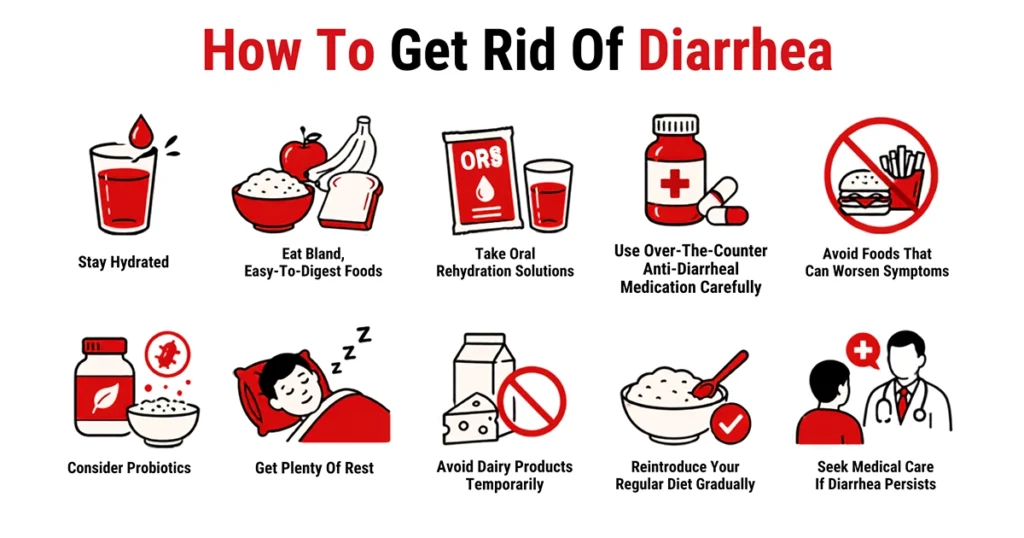
When you’re dealing with frequent, loose stools, it’s natural to want relief as quickly as possible. If you’re wondering how to get rid of diarrhea, the right approach depends on replacing lost fluids, giving your digestive system time to recover, and managing symptoms safely. Most mild cases improve within a few days with proper self-care.
Stay Hydrated
Diarrhea causes your body to lose large amounts of water and essential electrolytes, increasing the risk of dehydration. Drink plenty of water throughout the day, along with oral rehydration solutions, clear broths, or electrolyte drinks. Taking small, frequent sips is often easier if you also feel nauseated. Staying hydrated is one of the most effective ways to support recovery.
Eat Bland, Easy-To-Digest Foods
Once your appetite returns, choose foods that are gentle on your digestive system. Options such as bananas, white rice, applesauce, toast, plain crackers, boiled potatoes, and oatmeal are easy to digest and may help firm up stools. Eat small meals instead of large portions to avoid putting extra stress on your intestines. Gradually return to your normal diet as your symptoms improve.
Take Oral Rehydration Solutions
Oral rehydration solutions (ORS) replace the fluids and minerals lost during diarrhea more effectively than plain water alone. They contain the right balance of electrolytes and glucose to help your body absorb fluids efficiently. ORS is especially important for young children, older adults, and anyone experiencing frequent diarrhea. Follow the directions on the package for the best results.
Use Over-The-Counter Anti-Diarrheal Medication Carefully
Medications such as loperamide may provide short-term relief for adults with uncomplicated diarrhea. However, these medications are not appropriate for everyone and should be avoided if you have bloody diarrhea, a high fever, or a suspected bacterial infection unless directed by a healthcare provider. Always follow the recommended dosage instructions.
Avoid Foods That Can Worsen Symptoms
Your digestive system is more sensitive during diarrhea, so certain foods can make symptoms worse. Avoid greasy, fried, spicy, or highly processed foods until you have fully recovered. It’s also helpful to limit caffeine, alcohol, and sugary drinks because they may increase fluid loss or irritate the intestines. Choosing simple foods allows your gut to heal more comfortably.
Consider Probiotics
Probiotics may help restore the natural balance of healthy bacteria in your digestive tract, particularly after some types of diarrhea. They are available in certain yogurts and dietary supplements. While they may shorten the duration of symptoms for some people, they should not replace proper hydration or medical treatment when needed. Talk to your healthcare provider if you have a weakened immune system.
Get Plenty Of Rest
Your body needs energy to recover from illness, and adequate rest supports the healing process. Avoid strenuous physical activity while you’re experiencing diarrhea, especially if you feel weak or dehydrated. Resting also helps reduce your body’s overall stress and allows your digestive system to recover. Resume normal activities gradually as your strength returns.
Avoid Dairy Products Temporarily
Some people develop temporary lactose intolerance while recovering from diarrhea, making milk, cheese, and other dairy products harder to digest. Avoiding dairy for a few days may help reduce bloating, gas, and loose stools. Once your symptoms have resolved, you can gradually reintroduce dairy products to see how your body responds.
Reintroduce Your Regular Diet Gradually
As your diarrhea improves, slowly return to your normal eating habits instead of eating large or heavy meals right away. Start by adding lean proteins, cooked vegetables, and other easily digestible foods in small portions. A gradual transition helps your digestive system adjust without triggering a recurrence of symptoms.
Seek Medical Care If Diarrhea Persists
Home remedies can be effective for mild diarrhea, but symptoms that continue beyond 48 hours or become more severe should be evaluated by a healthcare provider. Persistent diarrhea may require prescription medications, diagnostic testing, or treatment for an underlying condition.
What To Eat When You Have Diarrhea
Eating the right foods while you have diarrhea can help reduce irritation, replace lost nutrients, and support your body’s recovery. Choose bland, easy-to-digest foods, eat smaller meals throughout the day, and drink plenty of fluids to stay hydrated.
- Bananas: Rich in potassium, bananas help replace lost electrolytes and may firm up loose stools.
- White Rice: Plain white rice is easy to digest and can help make stools firmer while being gentle on the stomach.
- Applesauce: Unsweetened applesauce contains pectin, which may improve stool consistency and support digestion.
- Plain Toast: Plain toast is low in fiber and easy to digest, making it a good choice while recovering.
- Boiled Potatoes: Plain boiled potatoes provide carbohydrates and potassium without irritating the digestive system.
- Boiled Chicken: Skinless, unseasoned chicken provides lean protein that’s easy on the stomach.
- Clear Broths: Clear chicken or vegetable broth helps replace fluids and electrolytes while providing light nourishment.
- Oral Rehydration Solutions (ORS): ORS replaces fluids and electrolytes more effectively than water alone, helping prevent dehydration.
When To Go To The ER For Diarrhea
Some symptoms require immediate emergency care rather than continued treatment at home. Go to the ER right away if you experience any of the following:
- Severe dehydration.
- Bloody or black stools.
- Severe abdominal pain.
- High fever (102°F/38.9°C or higher).
- Persistent vomiting.
- Diarrhea lasting more than 48 hours.
- Fainting or confusion.
- Rapid heartbeat or trouble breathing.
- Signs of dehydration in children or older adults.
- Diarrhea in people with weakened immune systems.
If you are experiencing these warning signs and searching for the nearest emergency room, seek immediate medical attention.
Diarrhea Treatment
The best diarrhea treatment depends on the underlying cause, the severity of your symptoms, and how long they have lasted. While many mild cases improve with home care, some require medications or medical treatment to prevent dehydration and other complications. Always follow your healthcare provider’s advice, especially if symptoms are severe or persistent.
- Oral Rehydration Solution (ORS): Most doctors recommend ORS to replace lost fluids and electrolytes, helping prevent and treat dehydration.
- Over-The-Counter Anti-Diarrheal Medicine: Most doctors may recommend medications such as loperamide for uncomplicated diarrhea. Avoid using them unless recommended by a doctor if you have bloody diarrhea or a high fever.
- Bismuth Subsalicylate: Most doctors may recommend bismuth subsalicylate to relieve diarrhea and stomach upset. Use only as directed or as recommended by a doctor.
- Dietary Modifications: Eating bland foods such as bananas, rice, applesauce, and toast can help your digestive system recover and reduce irritation.
- Probiotics: Most doctors may recommend probiotics to help restore healthy gut bacteria, particularly after antibiotic-associated diarrhea.
- Prescription Antibiotics: Doctors may prescribe antibiotics only if a bacterial or parasitic infection is confirmed. They are not effective for most viral diarrhea.
- IV Fluids: Severe dehydration or persistent vomiting may require IV fluids to quickly restore hydration and electrolyte balance.
Diarrhea Treatment At Altus Emergency Centers
Severe diarrhea can lead to dehydration and other serious complications. If you’re looking for how to stop diarrhea but have persistent symptoms, bloody stools, severe abdominal pain, or signs of dehydration, seek emergency care. Altus Emergency Centers provides a 24/7 emergency room with fast evaluation and treatment for diarrhea-related complications when you need immediate medical attention.
At Altus Emergency Centers, our experienced team provides rapid evaluation, IV fluids, electrolyte replacement, diagnostic testing, and medications when medically appropriate. We’re committed to delivering prompt, compassionate care to help you recover safely and prevent complications.
Key Takeaways
- Stay hydrated, eat bland foods, and give your digestive system time to recover to help relieve diarrhea safely.
- Most cases improve within a few days, but persistent diarrhea, bloody stools, severe abdominal pain, or signs of dehydration require immediate medical attention.
- Oral rehydration solutions, appropriate over-the-counter medications recommended by a doctor, and adequate rest can help relieve symptoms and prevent complications.
- Avoid greasy, spicy, high-fat foods, alcohol, and excessive caffeine until your digestive system has fully recovered.
Frequently Asked Questions
How Long Does Diarrhea Last?
Most cases of acute diarrhea last 1–3 days and improve with hydration, rest, and a bland diet. If diarrhea lasts longer than 48 hours with severe symptoms or continues for more than a week, seek medical evaluation.
Is Frequent Diarrhea A Sign Of Cancer?
Frequent diarrhea is usually caused by infections, food intolerances, medications, or digestive disorders, not cancer. However, persistent diarrhea accompanied by unexplained weight loss, blood in the stool, or ongoing abdominal pain should be evaluated by a healthcare provider.
Can Dehydration Cause Diarrhea?
No, dehydration does not usually cause diarrhea. Instead, diarrhea is a common cause of dehydration because it leads to significant fluid and electrolyte loss, making prompt hydration essential.
Is Diarrhea A Symptom Of Pregnancy?
Yes, diarrhea can occur during pregnancy due to hormonal changes, dietary changes, or viral infections. However, persistent diarrhea, severe abdominal pain, fever, or signs of dehydration during pregnancy require prompt medical evaluation.
Can Antibiotics Give You Diarrhea?
Yes. Antibiotics can cause diarrhea because they kill both harmful and beneficial bacteria in the gut, disrupting the natural balance. Symptoms usually improve after the medication is finished, but severe, bloody, or persistent diarrhea requires prompt medical attention.