
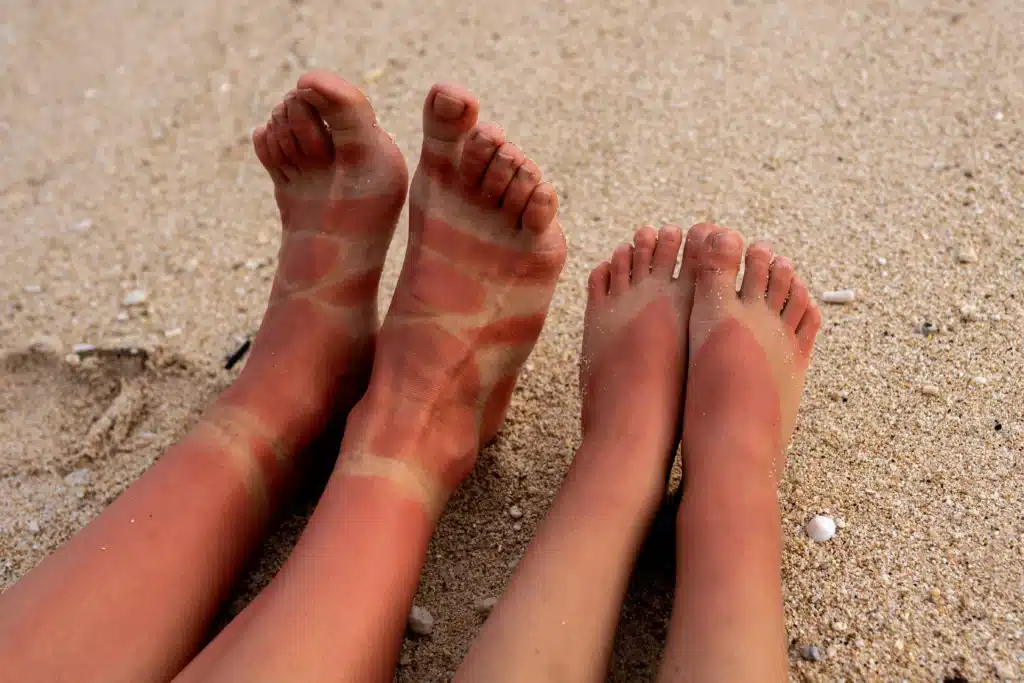
A painful sunburn can turn a relaxing day outdoors into an uncomfortable experience within hours. The burning sensation, redness, and tenderness can make sleeping, showering, or even wearing clothes difficult. If you’re searching for how to get rid of sunburn fast, you likely want quick relief while protecting your skin from further damage.
Although many sunburns improve with proper home care, some can become severe and lead to dehydration, blistering, intense pain, fever, or signs of heat-related illness. Ignoring worsening symptoms may increase the risk of complications, making it important to recognize when a sunburn needs prompt medical attention instead of home management. Our emergency room Waxahachie TX provides timely evaluation and treatment for severe sunburn symptoms.
Sunburn Symptoms You Should Never Ignore
While mild sunburn usually causes temporary discomfort, certain symptoms can signal a more serious skin injury or a heat-related illness that requires prompt medical attention. Paying close attention to worsening symptoms can help prevent complications such as severe dehydration, skin infection, or extensive skin damage.
- Severe redness that continues to spread or becomes increasingly painful.
- Large or widespread blisters, especially if they cover a significant area of the body.
- Swelling that makes it difficult to move the affected area or causes significant discomfort.
- Fever, chills, headache, dizziness, or confusion after sun exposure.
- Nausea, vomiting, or signs of dehydration, such as excessive thirst, dark urine, or reduced urination.
- Severe skin pain that interferes with sleeping or daily activities.
- Pus, increasing warmth, foul odor, or red streaks around blisters, which may indicate a skin infection.
- Sunburn affects the eyes, causing pain, blurred vision, excessive tearing, or sensitivity to light.
- Fainting, rapid heartbeat, or difficulty staying awake after prolonged sun exposure.
If sunburn symptoms include a high fever, chills, or worsening signs of heat-related illness, seek urgent care for high fever to prevent serious complications.
Best Ways To Get Rid Of Sunburn
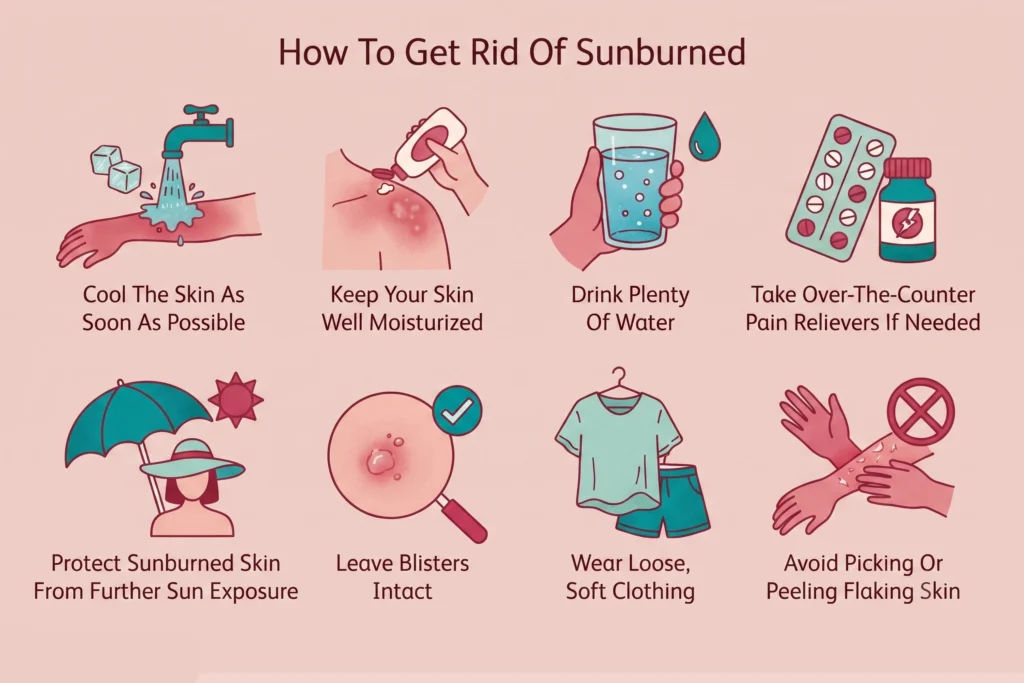
A sunburn can leave your skin feeling painful, hot, and sensitive, making even simple daily activities uncomfortable. The good news is that the right care can help reduce discomfort, support your skin’s natural healing process, and lower the risk of complications. Choosing safe, evidence-based treatments instead of harsh home remedies can help your skin recover more effectively.
Cool The Skin As Soon As Possible
Cooling the affected skin is one of the first steps after a sunburn because it helps reduce heat trapped within the skin and provides temporary relief from burning discomfort. Apply a cool, damp cloth or take a cool shower for several minutes. Avoid using ice or very cold water directly on the skin, as extreme temperatures can worsen skin damage and increase irritation.
Keep Your Skin Well Moisturized
Sunburn damages the skin’s protective barrier, allowing moisture to escape more easily. Applying a fragrance-free moisturizer or aloe vera gel while the skin is still slightly damp can help lock in moisture, reduce tightness, and improve comfort. Avoid products containing alcohol or strong fragrances, which may further irritate sensitive skin.
Drink Plenty Of Water
Sunburn can draw fluid toward the damaged skin, increasing the risk of dehydration, especially after prolonged sun exposure. Drinking plenty of water helps replace lost fluids and supports your body’s natural healing process. Continue hydrating throughout the day, particularly if you have been outdoors in hot weather.
Take Over-The-Counter Pain Relievers If Needed
If your sunburn is painful or swollen, over-the-counter anti-inflammatory medications such as ibuprofen or naproxen may help reduce pain and inflammation when taken as directed. These medications work best when started soon after the burn develops. Always follow the recommended dosage and speak with a healthcare provider if you have medical conditions that limit their use.
Protect Sunburned Skin From Further Sun Exposure
Recently sunburned skin is extremely vulnerable to additional UV damage. Stay indoors during peak sunlight hours whenever possible, and cover the affected area with lightweight, loose-fitting clothing if you must go outside. Allowing the skin to heal without further UV exposure can shorten recovery and reduce additional injury.
Leave Blisters Intact
Blisters are a sign of a deeper sunburn and act as a natural protective barrier over healing skin. Avoid popping or peeling them because doing so increases the risk of infection and delays healing. If a blister breaks on its own, gently clean the area with mild soap and water and keep it covered with a clean, non-stick dressing.
Wear Loose, Soft Clothing
Tight or rough fabrics can rub against sunburned skin, increasing pain and irritation. Choose loose-fitting, breathable clothing made from soft materials such as cotton to reduce friction and improve comfort. This also helps prevent additional irritation while your skin repairs itself.
Avoid Picking Or Peeling Flaking Skin
As your sunburn heals, peeling skin is a normal part of the recovery process. Resist the urge to peel it off because removing skin too early can expose sensitive new skin underneath, increase discomfort, and raise the risk of infection. Continue moisturizing the area to support healthy healing and reduce dryness.
When To Go To The ER
Most sunburns can be treated at home, but some require immediate medical attention because they can lead to serious complications such as severe dehydration, heat-related illness, or skin infection. If your symptoms are severe, rapidly worsening, or involve a large area of your body, do not delay emergency care. Prompt treatment can help prevent further complications and support a safer recovery.
- Large blisters covering a significant portion of your body.
- Severe pain that does not improve with home care or over-the-counter medication.
- Fever above 101°F (38.3°C), chills, or persistent shivering.
- Dizziness, fainting, confusion, or difficulty staying awake.
- Severe dehydration, including extreme thirst, dry mouth, dark urine, or little to no urination.
- Nausea or repeated vomiting after prolonged sun exposure.
- Signs of heat exhaustion or heat stroke, such as rapid heartbeat, hot dry skin, or altered mental status.
- Increasing redness, swelling, pus, or red streaks that may indicate a skin infection.
- Sunburn affects the eyes with severe pain, blurred vision, or sensitivity to light.
- Difficulty breathing or swelling of the face or lips after sun exposure.
If these warning signs appear, visit the nearest emergency room for immediate evaluation and treatment.
Sunburn Relief And Prevention Tips
Recovering from a sunburn is only part of protecting your skin. Adopting healthy UV safety habits can reduce your risk of future sunburns and help prevent long-term skin damage caused by ultraviolet (UV) radiation. Small changes to your daily routine can make a significant difference in keeping your skin healthy.
- Apply Broad-Spectrum Sunscreen: Use SPF 30 or higher and reapply every two hours when outdoors.
- Wear Protective Clothing: Cover exposed skin with long sleeves, a wide-brimmed hat, and UV-protective clothing.
- Wear UV-Blocking Sunglasses: Protect your eyes and the surrounding skin from harmful UV rays.
- Avoid Tanning Beds: Artificial UV exposure increases the risk of skin damage and skin cancer.
- Check The UV Index: Review the daily UV forecast before spending extended time outdoors.
- Protect Children And Older Adults: Ensure vulnerable individuals use sun protection and avoid prolonged UV exposure.
Fast Sunburn Care At Altus Emergency Centers
While most sunburns heal with proper home care, severe burns can quickly become a medical emergency. If you’re searching for how to get rid of sunburn fast and have extensive blistering, severe pain, dehydration, fever, dizziness, confusion, or signs of heat-related illness, don’t wait to seek treatment. With ER wait times near me of just 16 minutes, Altus Emergency Centers provides fast, 24/7 emergency care when you need it most.
At Altus Emergency Centers, our experienced emergency physicians promptly evaluate severe sunburns and related complications. We provide comprehensive treatment, including pain management, IV fluids for dehydration, wound care for blistering burns, and continuous monitoring for heat-related illnesses. Our team is committed to delivering compassionate, timely care to relieve your symptoms, prevent complications, and help you recover safely.
Key Takeaways
- Most mild sunburns improve with proper home care, including cooling the skin, moisturizing, and staying hydrated.
- Avoid popping blisters or peeling damaged skin, as this can delay healing and increase the risk of infection.
- Seek emergency medical care if you develop severe blistering, dehydration, fever, confusion, or signs of heat-related illness.
- Protect your skin from future sunburns by using broad-spectrum SPF 30+ sunscreen, wearing protective clothing, and limiting UV exposure.
- Altus Emergency Centers provides 24/7 emergency treatment for severe sunburns and heat-related complications with short ER wait times.
Frequently Asked Questions
How Long Do Sunburns Last?
Most mild sunburns improve within 3 to 7 days, while more severe sunburns with blistering can take up to two weeks or longer to heal. The recovery time depends on the depth of the burn, the amount of skin affected, and how well you care for your skin.
How Long Does It Take For A Sunburn To Heal?
A mild first-degree sunburn usually heals within 5 to 7 days, whereas a more severe second-degree sunburn may require 10 to 14 days or longer. Keeping your skin moisturized, hydrated, and protected from further sun exposure can support faster healing.
Do Sunburns Turn Into A Tan?
Sometimes. After the redness fades, your skin may produce more melanin, resulting in a tan. However, a tan is a sign that your skin has already been damaged by ultraviolet (UV) rays and should not be considered a healthy outcome.
Why Does My Sunburn Itch?
Sunburn can itch because the healing process triggers inflammation and activates nerve endings in the damaged skin. The itching often becomes more noticeable a few days after the burn and usually improves as the skin heals. Avoid scratching to reduce the risk of further irritation or infection.
Can Eyes Get Sunburned?
Yes. The eyes can develop photokeratitis, a painful condition caused by excessive UV exposure. Symptoms may include eye pain, redness, tearing, blurred vision, and sensitivity to light. If these symptoms are severe or do not improve, seek prompt medical evaluation.