

Living with ear pain or discomfort can be frustrating, especially when it starts interfering with everyday activities like sleeping, working, or enjoying time in the water. For many people, Swimmer’s ear (outer ear infections) can quickly turn a relaxing day into an uncomfortable and stressful experience that should not be ignored.
While some ear problems may seem minor at first, worsening pain, swelling, drainage, or hearing changes can signal a more serious infection that requires prompt medical attention. Recognizing when symptoms become urgent is important, as delaying treatment may increase the risk of complications and prolonged discomfort. Visit our Altus ER Lake Jackson for timely evaluation and care when ear symptoms require medical attention.
What Is Swimmer’s Ear?
Swimmer’s ear, medically known as acute otitis externa, is an infection or inflammation of the outer ear canal, the passage that connects the outside of the ear to the eardrum. It develops when the protective lining of the ear canal becomes irritated or damaged, allowing bacteria or fungi to grow. The condition can affect people of all ages, but it is especially common in individuals who swim frequently or have repeated moisture exposure in the ear.
Study Insight: A review published in the NIH’s NCBI Bookshelf reported that approximately 10% of people develop otitis externa (swimmer’s ear) during their lifetime, making it one of the most common ear infections.
Dangerous Swimmer’s Ear Symptoms
- Severe ear pain that worsens when the outer ear is touched or pulled.
- Redness, swelling, or warmth around the ear canal.
- Thick, yellow, green, or foul-smelling ear drainage.
- Reduced hearing or a feeling of fullness in the affected ear.
- Significant swelling that partially or completely blocks the ear canal.
- Fever or chills accompanying ear pain.
- Swelling of nearby lymph nodes in the neck.
- Persistent symptoms that continue to worsen despite treatment.
- Pain spreading to the face, jaw, or side of the head.
- Dizziness, balance problems, or severe discomfort affecting daily activities.
If these warning signs appear, timely evaluation can help prevent the infection from worsening and reduce discomfort. An earache emergency room can provide prompt assessment and treatment for severe ear pain, infections, and related complications.
What Causes Swimmer’s Ear?
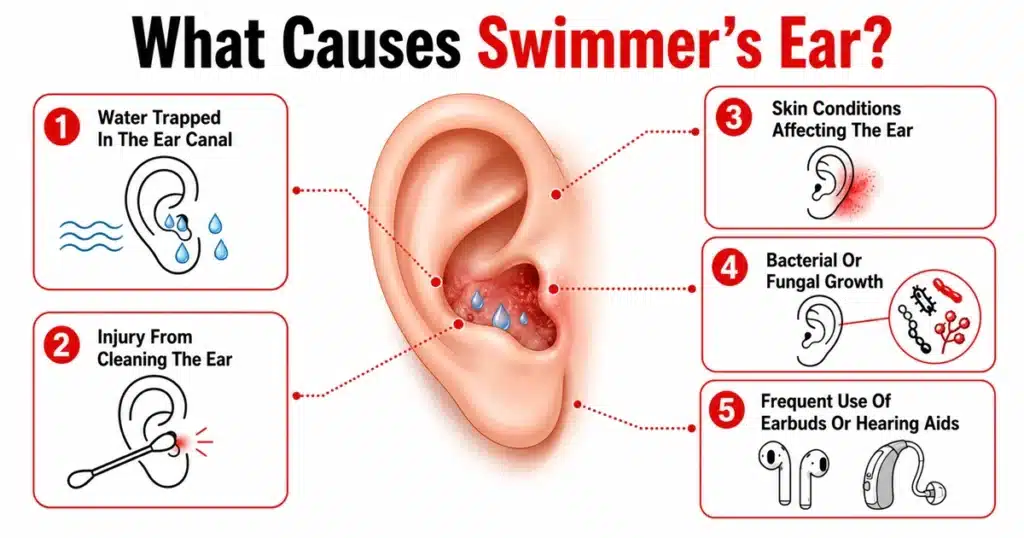
If you’ve developed a swimmer’s ear, it’s natural to wonder why it happened. This condition can occur for several reasons, and understanding the underlying cause is important for preventing future infections and receiving the right treatment. While some causes are linked to water exposure, others may be related to everyday habits or skin conditions. Below are the most common causes of swimmer’s ear.
1. Water Trapped In The Ear Canal
Water that remains in the ear after swimming, bathing, or showering creates a moist environment where bacteria can multiply. Excess moisture also weakens the ear canal’s natural protective barrier, making infection more likely. This is the most common cause of swimmer’s ear, especially during warmer months or after frequent water activities.
Symptoms
- Ear pain that worsens when the ear is touched.
- Itching inside the ear canal.
- A feeling of water or fullness in the ear.
- Mild hearing loss or muffled hearing.
- Clear or yellow ear drainage.
2. Injury From Cleaning The Ear
Using cotton swabs, fingernails, hairpins, or other objects can scratch the delicate skin inside the ear canal. Even small injuries allow bacteria or fungi to enter and cause infection. Cleaning too deeply may also remove the earwax that naturally protects the ear.
Symptoms
- Ear tenderness or pain.
- Redness inside the ear canal.
- Mild bleeding after cleaning.
- Itching or irritation.
- Ear discharge as the infection develops.
3. Skin Conditions Affecting The Ear
Skin disorders such as eczema, psoriasis, or seborrheic dermatitis can damage the skin lining the ear canal. Cracked or inflamed skin makes it easier for germs to enter and trigger an infection. Managing these conditions can help reduce the risk of recurrent swimmer’s ear.
Symptoms
- Dry, flaky skin around the ear.
- Persistent itching.
- Redness or irritation.
- Ear pain or discomfort.
- Drainage if an infection develops.
4. Bacterial Or Fungal Growth
Most cases of swimmer’s ear are caused by bacteria, while fungal infections are less common but can occur after prolonged moisture or repeated antibiotic use. These organisms multiply when the ear canal’s natural defenses are disrupted. Prompt treatment helps prevent the infection from spreading.
Symptoms
- Increasing ear pain.
- Thick, foul-smelling discharge.
- Swelling of the ear canal.
- Hearing difficulty.
- Severe itching, especially with fungal infections.
5. Frequent Use Of Earbuds Or Hearing Aids
Wearing earbuds, hearing aids, or earplugs for long periods can trap moisture and create friction inside the ear canal. This may irritate the skin and encourage bacterial growth, particularly if the devices are not cleaned regularly. Proper hygiene and allowing the ears to dry can lower the risk.
Symptoms
- Ear discomfort after wearing the device.
- Itching inside the ear.
- Redness or swelling.
- Muffled hearing.
- Mild ear drainage.
When To Go To The ER
While mild cases of swimmer’s ear can often be treated with medical care and prescription ear drops, certain symptoms may indicate a severe infection or complications that require immediate attention. Seeking emergency care promptly can help prevent the infection from spreading and reduce the risk of serious damage to the ear and surrounding tissues.
- Severe ear pain that becomes intense or unbearable despite treatment.
- High fever accompanying ear pain or ear drainage.
- Rapidly increasing redness, swelling, or warmth around the ear.
- Swelling that causes the ear canal to close completely.
- Pus-like, bloody, or foul-smelling discharge from the ear.
- Sudden or significant hearing loss in the affected ear.
- Severe dizziness, balance problems, or difficulty walking.
- Pain, swelling, or redness spreading to the face, jaw, or neck.
- Facial weakness, drooping, or difficulty moving facial muscles.
- Symptoms that worsen or fail to improve after starting treatment.
- Severe symptoms in individuals with diabetes, weakened immunity, or other high-risk medical conditions.
If your symptoms are severe or continue to worsen despite treatment, do not delay seeking medical care. Visit an ER near me for proper evaluation and treatment to protect your ear health.
Also read: What Will an ER Do for Severe Ear Pain?
How To Treat Swimmer’s Ear
A swimmer’s ear can be painful, but most cases improve with timely treatment and proper ear care. Early medical attention can help relieve symptoms faster and prevent the infection from worsening. Treatment depends on the severity of the infection and the individual’s overall health. Knowing the available options can help support a safe and effective recovery.
- Prescription Ear Drops: Most doctors recommend antibiotic, antifungal, or anti-inflammatory ear drops to treat the infection and reduce swelling.
- Over-The-Counter Pain Relievers: Most doctors recommend acetaminophen or ibuprofen to help manage pain and discomfort.
- Professional Ear Cleaning: A healthcare provider may remove debris or drainage to help medications reach the infected area.
- Ear Wick Placement: Severe swelling may require a small ear wick to improve delivery of ear drops.
- Keeping The Ear Dry: Avoid swimming and keep water out of the ear until the infection has healed.
- Warm Compresses: Applying a warm compress may provide temporary pain relief.
- Avoiding Ear Irritation: Do not use cotton swabs, earbuds, or other objects inside the ear during recovery.
- Treating Underlying Skin Conditions: Managing eczema or other skin disorders can help prevent recurrent infections.
- Oral Antibiotics: Most doctors recommend oral antibiotics only if the infection spreads beyond the ear canal.
- Emergency Care For Severe Symptoms: High fever, spreading redness, facial swelling, or sudden hearing loss require urgent medical attention.
Swimmer’s Ear Care At Altus Emergency Centers
Severe ear pain, swelling, drainage, or hearing changes should never be ignored, especially when symptoms worsen or are accompanied by fever. With a 24/7 emergency room at Altus Emergency Centers, our emergency physicians provide prompt evaluation and treatment for Swimmer’s Ear (Outer Ear Infections) to help relieve pain, control infection, and reduce the risk of complications.
Whether symptoms develop after swimming, water exposure, or unexpectedly, our team is equipped to provide timely care and appropriate treatment. Using advanced diagnostic tools and evidence-based medical practices, Altus Emergency Centers is committed to helping patients recover quickly and safely.
Key Takeaways
- Swimmer’s ear is an infection of the outer ear canal that can cause pain, swelling, drainage, and hearing changes.
- Trapped water, ear canal injuries, cotton swab use, and excessive moisture are among the most common causes.
- Early symptoms may include itching, discomfort, ear fullness, and tenderness when touching the ear.
- Most cases can be treated with prescription ear drops, pain relievers, and proper ear care.
- Keeping the ear dry and avoiding irritation can help speed recovery and prevent recurrence.
- Severe pain, high fever, spreading redness, facial swelling, or sudden hearing loss require immediate medical attention.
- Prompt treatment can help prevent complications and reduce the risk of the infection spreading.
Frequently Answered Questions
How Long Does Swimmer’s Ear Last?
With prompt treatment, most people notice symptom improvement within 2 to 3 days, and the infection typically clears within 7 to 10 days. More severe cases or delayed treatment may prolong recovery.
What Is The Best Antibiotic For Swimmer’s Ear?
Prescription antibiotic ear drops are the most effective treatment for most bacterial cases of swimmer’s ear. Your healthcare provider will choose the best medication based on the type and severity of the infection.
How Long Does Swimmer’s Ear Last Without Treatment?
Without proper treatment, a swimmer’s ear may persist for weeks and can become more severe over time. Untreated infections may lead to increased pain, swelling, hearing problems, or the spread of infection.
How To Prevent Swimmer’s Ear?
Reduce your risk by drying your ears thoroughly after water exposure, avoiding objects like cotton swabs in the ear canal, and keeping earbuds or hearing aids clean. Taking these steps helps protect the ear’s natural defenses and lowers the chance of infection.
Do Ear Infections Go Away On Their Own?
No, ear infections do not always go away on their own. While some mild cases may improve without treatment, many require medical care to prevent worsening symptoms, pain, hearing problems, or complications. If symptoms persist or become severe, seek medical attention.