

If you take Zyrtec for allergies and suddenly feel sleepy, tired, or less alert, you may wonder if the medication is causing it. Feeling drowsy can be frustrating, especially when you need to work, drive, or stay focused.
Yes, Zyrtec can make you drowsy, but it is generally considered less sedating than older antihistamines. Some people may still experience sleepiness or fatigue after taking it. If the drowsiness is severe or comes with concerning symptoms, visit Altus ER Waxahachie for prompt evaluation. Don’t ignore symptoms that suddenly worsen or affect your ability to stay awake safely.
How Zyrtec Works In The Body
Zyrtec can help relieve frustrating allergy symptoms such as sneezing, a runny nose, itchy eyes, and hives. If allergies are making you uncomfortable or interfering with your sleep and daily activities, knowing what to expect from your medication can make treatment easier. Cetirizine is generally considered a less-sedating antihistamine, although some people can still experience drowsiness or fatigue.
- Blocks Histamine: Cetirizine reduces the effects of histamine, a chemical involved in many allergy symptoms. This helps ease symptoms such as itching, sneezing, and a runny nose.
- Relieves Allergy Symptoms: By reducing histamine activity, Zyrtec can help control common symptoms caused by allergic reactions, including itchy or watery eyes, nasal congestion, and hives.
- Works Throughout The Day: Cetirizine is commonly taken once daily because its effects can last for about 24 hours, helping provide ongoing allergy symptom relief.
- May Cause Drowsiness: Although cetirizine is designed to cause less sedation than older antihistamines, it can still make some people sleepy, tired, or less alert.
- Does Not Treat The Underlying Allergy: Zyrtec controls allergy symptoms but does not eliminate the immune system’s sensitivity to an allergen. Symptoms may return when the medication wears off or exposure continues.
Comparing Zyrtec To Other Antihistamines
Not all antihistamines affect alertness in the same way. Zyrtec is generally less sedating than older options, but some people may still experience noticeable drowsiness.
| Antihistamine | Generic Name | Drowsiness Risk | Common Uses |
| Zyrtec | Cetirizine | Moderate | Allergies, hives |
| Claritin | Loratadine | Low | Allergic rhinitis, hives |
| Allegra | Fexofenadine | Low | Allergies, hives |
| Benadryl | Diphenhydramine | High | Allergies, itching, hives |
| Chlor-Trimeton | Chlorpheniramine | High | Allergy symptoms |
Note: Individual responses vary. Even antihistamines considered less sedating can cause sleepiness in some people, so use caution with driving or other activities requiring alertness.
How Common Is Drowsiness With Zyrtec?
Drowsiness is a recognized side effect of Zyrtec (cetirizine), although it does not affect everyone who takes it. The likelihood can vary depending on the person, dose, and other medications being used.
A 2016 meta-analysis of 13 randomized controlled trials found that cetirizine 10 mg was associated with a 6.51% higher rate of somnolence than placebo in trials without a placebo run-in period. This means sleepiness is possible even with a newer antihistamine, so take care if you feel less alert after taking it.
Factors That Influence Drowsiness
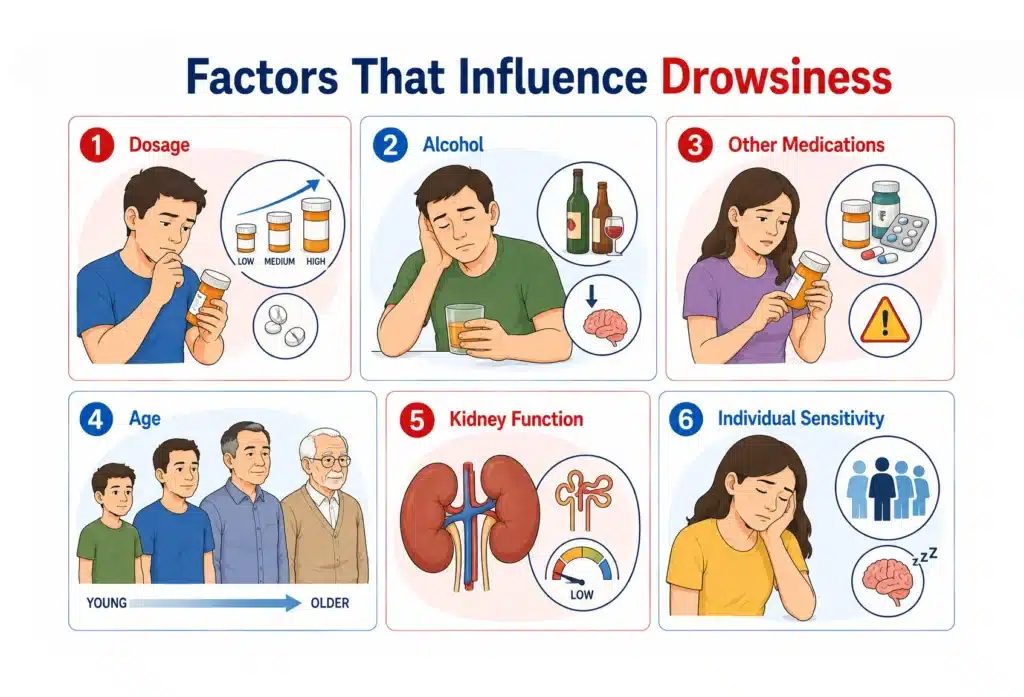
If Zyrtec makes you feel unusually sleepy, you may wonder why the effect seems stronger for you than for someone else. Drowsiness can vary from person to person, even when taking the same medication and dose. Certain personal, medical, and medication-related factors can increase the likelihood of feeling tired or less alert. Knowing what may influence this effect can help you use Zyrtec more safely.
Dosage
Taking more cetirizine than recommended may increase the risk or intensity of drowsiness. Always follow the dosage instructions on the package or those provided by your healthcare professional. Do not take an extra dose because your allergy symptoms have not improved. Higher exposure can also increase the risk of other side effects.
Alcohol
Alcohol can increase sleepiness and make you feel less alert when taken with cetirizine. The combination may also affect concentration and reaction time. If Zyrtec already makes you drowsy, drinking alcohol may make the effect more noticeable. It is safest to avoid alcohol if you experience significant sleepiness after taking cetirizine.
Other Medications
Some prescription and over-the-counter medicines can cause drowsiness on their own. Taking them with cetirizine may increase overall sedation or make it harder to stay alert. Sleep medicines, certain anxiety medications, opioid pain medicines, and other sedating drugs are examples. Tell your doctor or pharmacist about all medicines and supplements you take.
Age
Older adults may be more sensitive to medication side effects, including dizziness and drowsiness. Changes in kidney function that occur with aging can also affect how cetirizine is cleared from the body. This can potentially increase medication exposure and side effects. Older adults should discuss persistent or severe drowsiness with a healthcare professional.
Kidney Function
Cetirizine is primarily removed from the body through the kidneys. Reduced kidney function can cause cetirizine to stay in the body longer, potentially increasing its effects and side effects. People with kidney disease may need a different dose based on their kidney function. Do not change the dose without medical advice.
Individual Sensitivity
Everyone can respond differently to cetirizine, and some people are more sensitive to its sedating effects. You may experience noticeable sleepiness even when taking the recommended dose. Individual responses can also vary from one antihistamine to another. If Zyrtec makes you too drowsy to function safely, speak with a healthcare professional about your options.
When To Go To The ER
Mild sleepiness is a known Zyrtec side effect, but severe or worsening symptoms need urgent attention. If you need an ER near me, seek immediate care when drowsiness occurs with breathing problems, fainting, or other serious symptoms.
- Severe drowsiness or difficulty staying awake.
- Trouble breathing or shortness of breath.
- Swelling of the lips, tongue, or throat.
- Fainting or severe dizziness.
- Suspected Zyrtec overdose.
- Seizures or loss of consciousness.
Tips To Reduce Drowsiness While Using Zyrtec
If Zyrtec makes you sleepy, a few simple precautions may help you stay safer and more alert. Avoid activities that require full concentration until you know how the medicine affects you, and speak with a healthcare professional if drowsiness continues or interferes with your daily routine.
- Take Zyrtec as directed and never exceed the recommended dose.
- Avoid alcohol because it can worsen drowsiness.
- Avoid combining Zyrtec with other medicines that cause sleepiness unless advised by a healthcare professional.
- Do not drive or operate machinery if you feel drowsy.
- Ask your doctor or pharmacist whether another allergy medicine may be appropriate if sleepiness persists.
- Get adequate sleep to help reduce additional fatigue.
Altus Emergency Centers For Zyrtec-Related Concerns
If Zyrtec causes severe drowsiness, difficulty staying awake, trouble breathing, fainting, or other concerning symptoms, seek emergency care without delay. Our 24/7 emergency room at Altus Emergency Centers is staffed by board-certified emergency physicians who can evaluate serious medication-related symptoms and provide prompt treatment.
From immediate monitoring and supportive care to treatment for severe allergic reactions or suspected medication overdose, our team is equipped to respond to urgent situations. If symptoms are severe or rapidly worsening, do not wait for them to improve on their own; seek emergency medical attention promptly.
Frequently Asked Questions
Is Zyrtec An Antihistamine?
Yes, Zyrtec is an antihistamine. Its active ingredient, cetirizine, helps relieve allergy symptoms by blocking the effects of histamine.
Can You Take Zyrtec And Benadryl Together?
Generally, you should not take Zyrtec and Benadryl together unless a healthcare professional specifically recommends it. Both are antihistamines, and combining them may increase side effects such as drowsiness.