

A stuffy nose can make sleeping, eating, and breathing comfortably frustrating, especially when congestion refuses to ease. Fortunately, simple steps can often relieve nasal blockage and help you feel better.
Saline rinses, fluids, humidified air, and appropriate medications may provide relief; but severe congestion with trouble breathing, high fever, severe facial pain, or worsening symptoms needs prompt medical attention. Altus ER Lake Jackson TX is available when symptoms become urgent and should not be ignored.
How To Clear A Stuffy Nose Efficiently
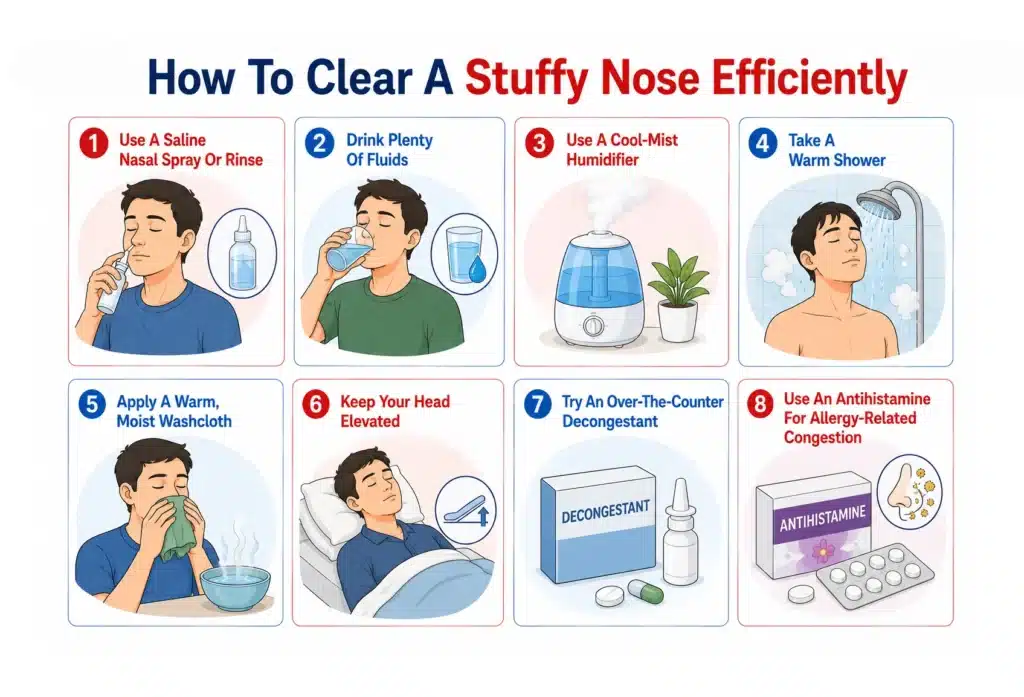
A blocked nose can make breathing, sleeping, and concentrating difficult; especially when congestion comes with a runny nose, postnasal drip, sneezing, or sinus pressure. The right approach depends on the cause, but several safe measures can reduce nasal swelling, loosen mucus, and improve airflow; persistent, severe, or recurring congestion should be evaluated to identify the underlying problem.
Use A Saline Nasal Spray Or Rinse
Saline sprays and nasal rinses can moisturize irritated nasal tissues while helping wash away excess mucus, pollen, dust, and other debris. A saline rinse may be especially useful when congestion is caused by allergies or thick mucus. If using a rinse, always use distilled, sterile, or previously boiled water to reduce the risk of infection.
Drink Plenty Of Fluids
Staying hydrated can help keep mucus thinner, making it easier to drain from your nose and sinuses. Water, clear broths, and other nonalcoholic fluids can be useful when congestion occurs with a cold or respiratory infection. Adequate fluid intake may also reduce the uncomfortable feeling of thick mucus and postnasal drainage.
Use A Cool-Mist Humidifier
Dry indoor air can irritate your nasal passages and make congestion feel worse. A cool-mist humidifier adds moisture to the air you breathe, which may soothe irritated tissues and make mucus easier to clear. Clean the humidifier regularly and change its water as directed to prevent the growth of microorganisms.
Take A Warm Shower
Warm, moist air from a shower can temporarily soothe irritated nasal passages and help loosen mucus. Sitting in a steamy bathroom may make breathing feel easier when your nose is blocked, particularly during a cold. Avoid extremely hot steam because it can burn your nose, skin, or airways.
Apply A Warm, Moist Washcloth
A warm, damp washcloth placed gently over your face may help relieve nasal and sinus discomfort. This can be particularly soothing when congestion is accompanied by facial pressure or tenderness around the nose and sinuses. Make sure the washcloth is comfortably warm rather than hot enough to irritate your skin.
Keep Your Head Elevated
Nasal congestion can become more noticeable when you lie flat because mucus may drain less effectively. Keeping your head elevated while resting or sleeping may help reduce the sensation of blockage and make breathing more comfortable. This can be especially helpful when congestion is disrupting sleep or causing nighttime mouth breathing.
Try An Over-The-Counter Decongestant
Decongestants can temporarily reduce swelling inside the nasal passages, making it easier to breathe through your nose. Oral and nasal forms are available, but they are not appropriate for everyone and may interact with certain medications or health conditions. Nasal decongestant sprays should be used only as directed because prolonged use can cause rebound congestion.
Use An Antihistamine For Allergy-Related Congestion
If your stuffy nose occurs with sneezing, itchy eyes, watery eyes, or clear nasal drainage, allergies may be contributing to the problem. Antihistamines can reduce the allergic response and help relieve symptoms triggered by pollen, dust mites, pet dander, and other allergens. The appropriate medication depends on your symptoms, age, medications, and health conditions.
Consider A Corticosteroid Nasal Spray
Nasal corticosteroid sprays reduce inflammation and swelling inside the nasal passages and are particularly useful for allergic rhinitis. They work by controlling inflammation rather than simply providing temporary nasal opening. These sprays generally work best with consistent use and may take several days to provide noticeable relief.
Avoid Smoke And Other Nasal Irritants
Cigarette smoke, strong fragrances, dust, chemical fumes, and other airborne irritants can trigger or worsen nasal inflammation. Reducing exposure can help prevent congestion from continuing or becoming more severe. If certain environments consistently cause a blocked or runny nose, avoiding those triggers can be an important part of symptom management.
Use Nasal Strips At Night
External nasal strips can gently widen the nostrils and may make nasal breathing feel easier, particularly while sleeping. They do not treat inflammation, infection, allergies, or excess mucus, so their benefit is mainly mechanical. They may be useful when mild congestion or narrow nasal passages make nighttime breathing uncomfortable.
What Causes A Stuffy Nose
A stuffy nose can be frustrating, especially when congestion makes it harder to breathe, sleep, or focus. Nasal swelling and excess mucus are common reasons, but the trigger can range from a temporary illness to allergies or ongoing nasal problems.
- Common Cold: Viral infections can inflame the nasal passages, causing congestion, runny nose, sneezing, and mucus buildup.
- Allergies: Pollen, dust, mold, and pet dander can trigger nasal swelling, congestion, sneezing, and itchy or watery eyes.
- Sinus Infection: Inflamed sinuses can block mucus drainage, causing congestion with facial pressure, headache, or thick nasal discharge.
- Nonallergic Rhinitis: Smoke, strong odors, weather changes, or spicy foods can trigger congestion without an infection or allergy.
- Dry Or Cold Air: Low humidity and cold temperatures can irritate nasal tissues, making your nose feel blocked or uncomfortable.
- Nasal Polyps: These noncancerous growths can narrow the nasal passages and cause persistent congestion, reduced smell, and sinus symptoms.
- Deviated Septum: A shifted nasal septum can narrow one side of the nose, causing ongoing or one-sided breathing difficulty.
- Airborne Irritants: Tobacco smoke, pollution, perfume, and chemical fumes can irritate the nose and worsen swelling.
- Hormonal Changes: Pregnancy and other hormonal changes can increase swelling inside the nasal passages and cause congestion.
- Certain Medications: Some medicines can cause nasal congestion as a side effect, making symptoms continue despite treating other causes.
- Decongestant Overuse: Using nasal decongestant sprays longer than recommended can cause rebound congestion and make your nose more blocked.
If your stuffy nose is severe, persistent, or accompanied by breathing problems, high fever, or severe facial pain, finding the nearest emergency room can help you get timely medical attention.
When To Go To The ER
A stuffy nose is usually not an emergency, but certain symptoms can signal a more serious problem. Seek emergency care if you experience:
- Severe difficulty breathing or sudden worsening of your breathing.
- Sudden swelling of your face, lips, tongue, or throat.
- High or persistent fever with worsening congestion.
- Severe headache, facial pain, or swelling around the eyes.
- Heavy or persistent nosebleeding, especially after a head injury.
- Congestion lasting more than 10 days or getting worse after initial improvement.
If congestion occurs with severe breathing problems, facial swelling, chest pain, or confusion, seek emergency medical care immediately.
Altus Emergency Centers For Stuffy Nose Care
A stuffy nose is usually manageable at home, but severe or worsening congestion can sometimes require medical attention. If you develop difficulty breathing, severe facial pain, swelling around the eyes, high fever, or symptoms that are not improving, seek prompt evaluation. Our 24/7 emergency room is staffed by board-certified emergency physicians who can evaluate persistent or severe nasal congestion, identify potential causes, and provide appropriate treatment. With an average ER wait time of just 9 minutes, you can receive timely emergency care when you need it.
At Altus Emergency Centers, our experienced team provides prompt, compassionate emergency care for children and adults. From evaluating sinus infections and severe allergic reactions to treating complications that may cause significant nasal congestion, our emergency physicians are equipped to address urgent symptoms and help you receive the appropriate care.
Key Takeaways
- A stuffy nose can result from colds, allergies, sinus infections, dry air, irritants, or structural nasal problems.
- Saline rinses, hydration, humidified air, and appropriate medications can help relieve nasal congestion.
- Avoid using decongestant nasal sprays longer than recommended, as overuse can cause rebound congestion.
- Persistent, severe, or worsening congestion may require medical evaluation to identify the underlying cause.
- Seek emergency care for severe breathing difficulty, facial swelling, severe facial pain, or other serious symptoms.
Frequently Asked Questions
How Long Does A Stuffy Nose Last?
A stuffy nose from a common cold often improves within 7 to 10 days. Allergy-related congestion may continue as long as you are exposed to the trigger, while persistent or worsening congestion should be evaluated.
Can A Humidifier Help With A Stuffy Nose?
Yes. A cool-mist humidifier can add moisture to dry air and may soothe irritated nasal passages. Keep it clean and change the water regularly to prevent mold and bacteria growth.
What Is The Best Sleeping Position For A Baby With A Stuffy Nose?
Babies should always sleep flat on their backs on a firm, flat sleep surface, even when congested. Do not use pillows, wedges, or positioners to elevate the baby, as these can increase the risk of suffocation.