

Urinary problems can be stressful, especially when you feel the need to urinate but cannot fully empty your bladder. Urinary retention occurs when the bladder does not empty completely or at all, often causing discomfort, pressure, and difficulty urinating.
Although it may start gradually, urinary retention can become a medical emergency. Left untreated, it can lead to severe pain, urinary tract infections, bladder damage, and kidney complications, making prompt evaluation at Altus ER Lumberton, TX, important when symptoms appear and worsen.
What Causes Urinary Retention?
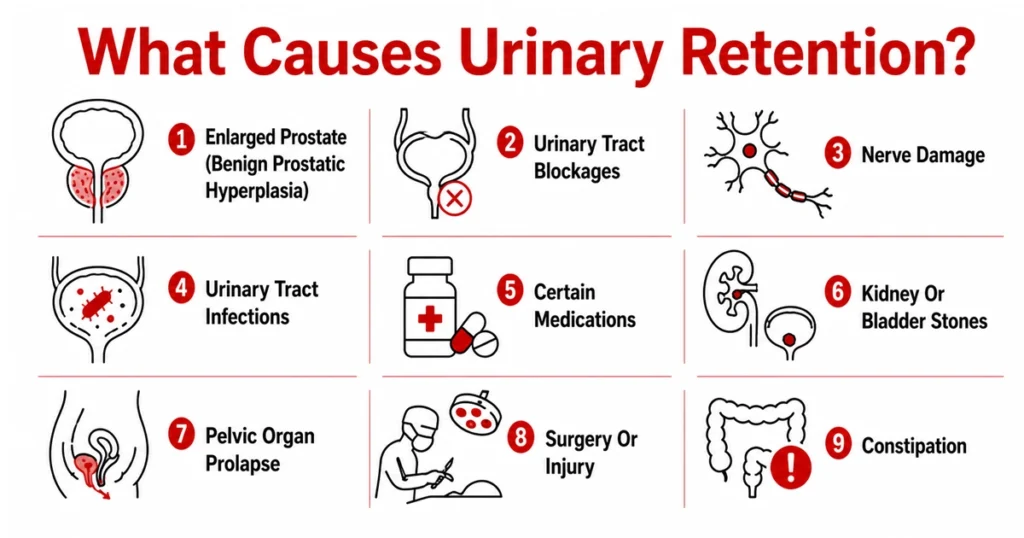
Urinary retention occurs when something blocks urine flow or affects the nerves and muscles that control bladder emptying. It can develop suddenly or gradually over time. Identifying the underlying cause is important to prevent complications such as infections, bladder damage, and kidney problems.
1. Enlarged Prostate (Benign Prostatic Hyperplasia)
An enlarged prostate is one of the most common causes of urinary retention in men. As the prostate grows, it can squeeze the urethra and make it difficult for urine to pass. This often leads to a weak urine stream, straining, and incomplete bladder emptying.
2. Urinary Tract Blockages
Blockages anywhere in the urinary tract can prevent urine from flowing normally. When urine cannot pass freely, it may build up in the bladder and cause retention. Symptoms can range from difficulty urinating to a complete inability to urinate.
3. Nerve Damage
The bladder depends on healthy nerve signals to store and release urine properly. When these nerves are damaged, the bladder may not contract effectively. This can result in incomplete emptying or chronic urinary retention.
4. Urinary Tract Infections
Urinary tract infections can cause inflammation and swelling that interfere with normal urination. Some people experience difficulty emptying their bladder along with burning urination and frequent urges to go. Severe infections may increase the risk of retention.
Also read: Can a UTI Cause Nausea?
5. Certain Medications
Some medications can affect bladder muscles or the nerves involved in urination. This may make it harder to start urinating or fully empty the bladder. Medication-related urinary retention can occur suddenly or develop over time.
6. Kidney Or Bladder Stones
Kidney or bladder stones can block the flow of urine if they move into the urinary tract. This may cause sudden urinary retention, pain, and discomfort. Larger stones are more likely to create significant obstruction.
7. Pelvic Organ Prolapse
In women, pelvic organs can shift and place pressure on the bladder or urethra. This pressure may interfere with normal urine flow and make bladder emptying difficult. Symptoms often worsen if the prolapse becomes more severe.
8. Surgery Or Injury
Surgery, trauma, or injuries involving the urinary tract, pelvis, or spine can temporarily affect bladder function. Swelling, pain, or nerve disruption may lead to urinary retention. In some cases, symptoms improve as the body heals.
9. Constipation
Severe constipation can put pressure on the bladder and nearby urinary structures. This pressure may make it harder for the bladder to empty completely. Treating constipation often helps improve urinary symptoms.
Urinary Retention Symptoms You Should Never Ignore
Urinary retention symptoms can vary depending on whether the condition develops suddenly or over time. While some people experience mild difficulty urinating, others may be unable to pass urine at all. Recognizing these warning signs early and seeking evaluation at a urological emergency center can help prevent serious complications.
- Difficulty starting urination.
- Weak or slow urine stream.
- Feeling unable to completely empty the bladder.
- Frequent urge to urinate.
- Urinating small amounts at a time.
- Straining or pushing to urinate.
- Stopping and starting during urination.
- Lower abdominal pain or pressure.
- Swollen or distended lower abdomen.
- Sudden inability to urinate.
- Dribbling urine after urination.
- Urinary incontinence (leakage).
- Pain or discomfort while urinating.
- Waking up multiple times at night to urinate.
- Recurrent urinary tract infections.
Can Urinary Retention Cause A UTI?
Yes, urinary retention can increase the risk of developing a urinary tract infection. When the bladder does not empty, urine remains trapped inside, creating conditions that allow bacteria to grow and multiply. If symptoms of infection develop alongside retention, visiting the nearest emergency room ensures prompt evaluation before the infection has a chance to spread.
- Urine Stays In The Bladder: When urine remains in the bladder after urination, bacteria have more time to grow, increasing the risk of infection.
- Bacterial Growth Increases: Stagnant urine provides an environment where bacteria can multiply more easily than they would in a normally emptying bladder.
- Reduced Natural Flushing: Regular urination helps flush bacteria out of the urinary tract. Urinary retention reduces this natural defense mechanism.
- Bladder Irritation Develops: Retained urine can irritate the bladder lining, making it more vulnerable to infection and inflammation.
- Risk Of Recurrent UTIs: People with ongoing urinary retention may experience repeated urinary tract infections if the underlying cause is not treated.
- Infection Can Spread: If left untreated, a bladder infection may travel to the kidneys, leading to a more serious and potentially dangerous infection.
When To Go To The ER
Urinary retention can quickly become a medical emergency, especially if you are unable to urinate at all. With ER wait times near me of just 11 minutes, Altus Emergency can relieve your symptoms fast and prevent serious complications such as bladder damage, kidney injury, or severe infection.
- Inability to urinate despite a strong urge to go.
- Severe lower abdominal pain or pressure.
- A swollen or visibly distended bladder.
- Sudden onset of urinary retention.
- Fever or chills along with urinary symptoms.
- Blood in the urine.
- Severe back, side, or kidney pain.
- Nausea or vomiting with urinary retention.
- Confusion, weakness, or dizziness.
- Symptoms of a urinary tract infection are rapidly worsening.
- Urinary retention after surgery or a recent injury.
- Signs of kidney problems, such as reduced urine output or swelling.
How To Treat Urinary Retention
Treatment for urinary retention depends on the underlying cause and severity of symptoms. Early medical care can help relieve discomfort, restore normal bladder function, and prevent complications such as urinary tract infections, bladder damage, and kidney problems. Identifying the cause is essential for choosing the most effective treatment.
- Bladder Catheterization: A catheter may be used to drain urine from the bladder when a person is unable to urinate. This is often the fastest way to relieve pressure and discomfort.
- Prescription Medications: Certain medications can help relax the urinary tract and improve bladder emptying. Most doctors recommend prescription medications based on the cause and severity of urinary retention.
- Intermittent Self-Catheterization: Some people with chronic urinary retention may need to use a catheter periodically to fully empty the bladder and prevent urine buildup.
- Pelvic Floor Physical Therapy: Specialized exercises and therapy techniques can improve muscle coordination and support better bladder function in some patients.
- Minimally Invasive Procedures: Medical procedures may be recommended when urinary retention does not improve with conservative treatment and bladder emptying remains difficult.
- Surgery: In severe or persistent cases, surgery may be necessary to restore normal urine flow and improve bladder function.
- Warm Bath Or Heating Pad: Applying gentle heat to the lower abdomen may help relax muscles and temporarily reduce discomfort associated with urinary retention.
- Scheduled Bathroom Visits: Urinating at regular intervals can help reduce bladder overfilling and improve bladder habits in some individuals.
- Limiting Alcohol And Caffeine: These beverages can irritate the bladder and worsen urinary symptoms. Reducing intake may help improve comfort and bladder function.
- Staying Hydrated: Drinking adequate fluids helps maintain urinary tract health and prevents overly concentrated urine, which can irritate the bladder.
- Treating Urinary Retention Early: Seeking prompt medical care can prevent complications such as urinary tract infections, bladder damage, and kidney problems.
Expert Care For Urinary Retention At Altus Emergency Centers
Urinary retention can quickly become a serious medical issue if left untreated. Delaying care may increase the risk of bladder damage, urinary tract infections, and kidney complications. At Altus Emergency Centers, patients receive prompt evaluation and treatment when symptoms arise.
If you are experiencing urinary retention symptoms, seeking timely medical attention is important. At Altus Emergency Centers, our team provides fast diagnosis and emergency care to identify the cause. Early treatment can help relieve symptoms and prevent complications.
Key Takeaways
- Urinary retention occurs when the bladder cannot empty completely or at all.
- The condition can develop suddenly (acute) or gradually over time (chronic).
- Common symptoms include difficulty urinating, a weak urine stream, straining, and a feeling of incomplete bladder emptying.
- Enlarged prostate, urinary tract blockages, nerve damage, infections, and certain medications are common causes.
- Urinary retention can increase the risk of urinary tract infections because urine remains trapped in the bladder.
- Untreated urinary retention may lead to bladder damage, kidney problems, and recurrent infections.
- Sudden inability to urinate, severe pain, fever, or a swollen bladder requires immediate emergency care.
- Treatment may include catheterization, medications, pelvic floor therapy, procedures, or surgery depending on the cause.
- Early diagnosis and treatment can help prevent serious complications and improve bladder function.
- Seeking prompt medical attention is important when urinary retention symptoms persist or worsen.