

Middle back pain can be unsettling, especially when it starts affecting your ability to sit, move, or sleep comfortably. Many people first notice a dull ache or stiffness and worry about what it could mean. The discomfort can interfere with daily life and make even simple activities feel difficult.
If you or someone you care about is dealing with middle back pain, it’s important to pay attention to how the symptoms progress. While some cases are mild and temporary, others may signal a more serious issue that needs medical attention. Understanding when to monitor symptoms and when to seek care at our Altus ER Lake Jackson can make a significant difference.
What Is Middle Back Pain?
Middle back pain, also known as thoracic spine pain, occurs in the area between the neck and lower back. This part of the spine supports posture, rib cage stability, and upper body movement, so pain here can affect daily comfort, breathing, and mobility. It may present as a dull ache, tightness, or sharp discomfort that worsens with movement or prolonged sitting.
According to the National Institute of Neurological Disorders and Stroke (NINDS), back pain is one of the most common medical problems in the United States and is a leading cause of doctor visits and missed work. While this data refers to overall back pain rather than only the middle back, it highlights how frequently spinal pain affects adults.
Also Read: What Causes Lower Back Pain
Dangerous Signs Of Middle Back Pain
- Sudden, severe back pain that does not improve with rest.
- Pain that spreads to the chest, arms, abdomen, or legs.
- Numbness, tingling, or weakness in the arms or legs.
- Difficulty breathing or shortness of breath.
- Loss of bladder or bowel control.
- Fever, chills, or unexplained weight loss.
- Pain following a fall, accident, or injury.
If you or your loved one is facing these symptoms, then look for back pain treatment near me.
Middle Back Pain Causes
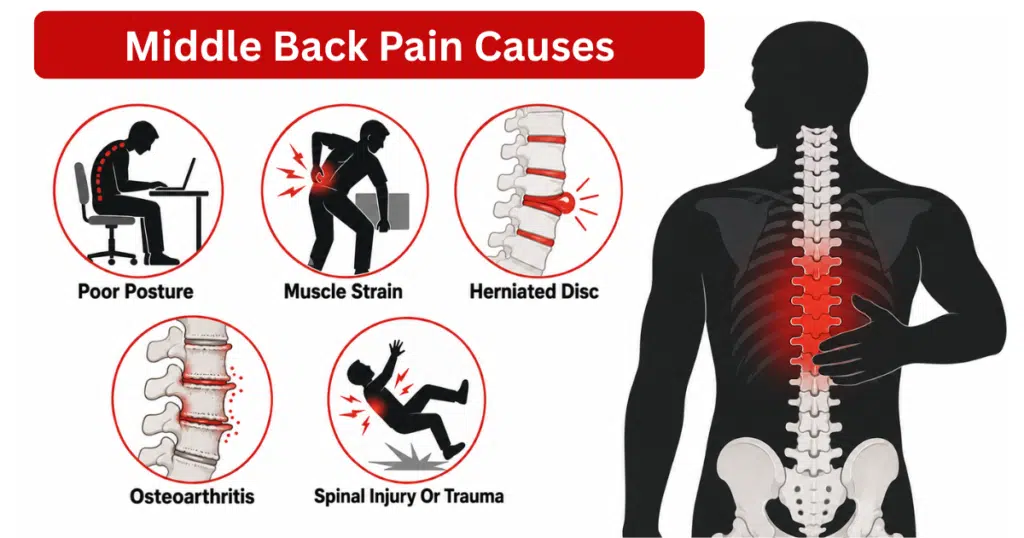
Middle back pain can develop for many different reasons, and it often starts gradually without a clear warning. For some people, it begins as mild discomfort that slowly becomes more noticeable during daily activities. In other cases, the pain may appear suddenly and feel more intense, making movement or posture difficult. Understanding the possible underlying reasons is important for identifying the right treatment approach and preventing symptoms from worsening.
1. Poor Posture
Poor posture is one of the most common contributors to middle back pain, especially in people who sit for long hours. Slouching or leaning forward can place extra stress on the thoracic spine and surrounding muscles. Over time, this strain can lead to stiffness, muscle fatigue, and ongoing discomfort. Correcting posture can significantly reduce pressure on the middle back.
2. Muscle Strain
Muscle strain occurs when the muscles in the middle back are overstretched or overused. This can happen from heavy lifting, sudden twisting movements, or repetitive physical activity. The affected muscles may feel tight, sore, or tender to touch. Mild strains often improve with rest, but severe strains may take longer to heal.
3. Herniated Disc
A herniated disc in the thoracic spine can irritate nearby nerves and cause middle back pain. This condition occurs when the soft inner material of a spinal disc pushes through its outer layer. It may lead to sharp pain, stiffness, or discomfort that worsens with movement. In some cases, it can also cause radiating pain or tingling sensations.
4. Osteoarthritis
Osteoarthritis can affect the joints in the spine and lead to middle back pain over time. As the protective cartilage wears down, bones may begin to rub against each other. This can cause stiffness, inflammation, and reduced flexibility in the back. Symptoms often worsen with age and repeated joint use.
5. Spinal Injury Or Trauma
Injuries from falls, accidents, or direct impact can damage the structures of the middle back. This may include muscles, ligaments, vertebrae, or discs. Such injuries often cause sudden, sharp pain that may limit movement. Prompt medical evaluation is important to prevent complications and ensure proper healing.
Diagnosis Of Middle Back Pain
Diagnosing middle back pain involves identifying the exact cause of discomfort through a combination of clinical evaluation and medical testing. Since symptoms can vary widely, healthcare providers carefully assess pain patterns, medical history, and any associated warning signs. This helps ensure that underlying issues such as muscle strain, spinal problems, or nerve involvement are correctly identified and treated.
- Physical examination: A doctor checks posture, range of motion, and areas of tenderness to understand pain triggers.
- Medical history review: Details about symptoms, lifestyle, injuries, and activity levels help identify possible causes.
- Imaging tests (X-ray, MRI, CT scan): These scans provide detailed views of bones, discs, and soft tissues in the spine.
- Neurological assessment: Tests reflexes, strength, and sensation to check for nerve involvement or compression.
When To Go To The ER
Middle back pain is often mild, but sometimes it may indicate a serious condition needing urgent care. Sudden worsening pain or symptoms like numbness or chest discomfort should not be ignored. Early ER evaluation helps prevent complications and ensures timely treatment.
- Severe, sudden middle back pain that does not improve with rest.
- Pain accompanied by chest pressure, tightness, or shortness of breath.
- Numbness, weakness, or loss of coordination in arms or legs.
- Loss of bladder or bowel control.
- Middle back pain after a serious fall, accident, or trauma.
If you or your loved one is experiencing these symptoms, seek care at the nearest emergency room.
Middle Back Pain Treatment
Middle back pain can affect comfort, movement, and daily activities in different ways. In many cases, it improves with proper care and supportive measures over time. However, persistent or worsening symptoms should not be ignored, as early management can help prevent complications. Choosing the right approach can reduce pain, improve flexibility, and support overall spinal health.
- Over-the-counter pain relief medications: Medicines like ibuprofen or acetaminophen can help reduce pain and inflammation. Most doctors recommend short-term use for mild to moderate symptoms. Follow dosage instructions carefully.
- Physical therapy: Targeted exercises strengthen back muscles and improve posture. A therapist designs a plan based on your condition. It is often recommended for long-term relief.
- Hot and cold therapy: Heat relaxes tight muscles while cold reduces swelling.
Alternating both can improve comfort. It is a simple home remedy for pain relief. - Massage therapy: Helps reduce muscle tension and improve blood flow in the middle back. It can ease stiffness and discomfort. Often used alongside other treatments.
- Medical procedures (severe cases): Injections or specialist procedures may be needed if pain persists. Most doctors recommend these only when other treatments fail. They target the underlying cause of pain.
How To Sleep With Middle Back Pain
- Sleep on your back with support: Use a pillow under your knees to reduce spinal pressure. Helps keep the spine aligned and relaxed.
- Use a supportive mattress: A medium-firm mattress supports proper posture. Prevents sinking that can worsen pain.
- Side sleeping with pillow: Place a pillow between knees for alignment. Reduces twisting of the spine.
- Avoid stomach sleeping: This position strains the spine and neck. It can worsen middle back pain.
- Add extra support: Use small pillows to maintain neutral spine position. Helps reduce discomfort at night.
Middle Back Pain Care At Altus Emergency Centers
Middle back pain can sometimes become severe or persistent, and ignoring it may lead to complications. When symptoms worsen or affect daily movement, timely medical evaluation at our 24/7 emergency room is important to identify the cause and prevent further issues.
At Altus Emergency Centers, patients with middle back pain receive fast and effective emergency care. The team focuses on quick diagnosis and prompt treatment to relieve pain and ensure patient safety.
Key Takeaways
- Middle back pain can range from mild discomfort to severe pain affecting daily activities.
- Poor posture, muscle strain, disc issues, osteoarthritis, and injuries are common causes.
- Symptoms like numbness, chest pain, or weakness may require urgent ER evaluation.
- Over-the-counter medications, physical therapy, and home remedies can help relieve pain.
- Proper sleeping positions and mattress support can reduce discomfort at night.
- Severe or persistent cases may need medical procedures or specialist care.
- Early diagnosis and treatment help prevent complications and long-term pain issues.