
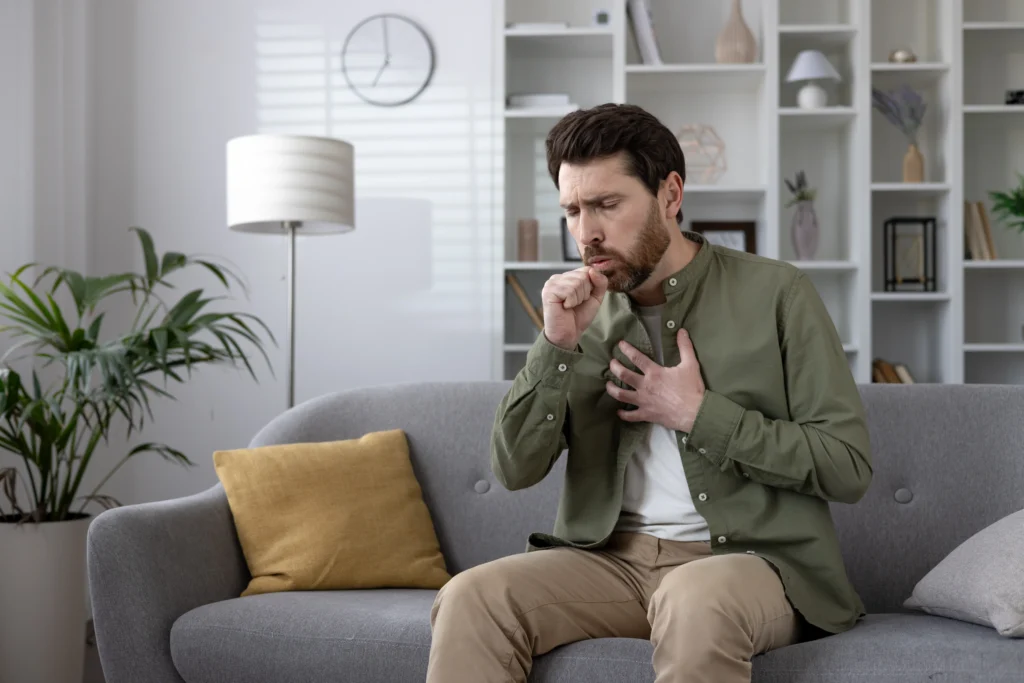
Chronic obstructive pulmonary disease (COPD) rarely shows up all at once. It usually starts as a lingering morning cough or getting winded on the stairs, and many people write it off as aging or being out of shape for years. Knowing the 4 stages of COPD helps you understand where your lungs are today, what to expect next, and how the right treatment can slow the disease down. About 5% of U.S. adults, roughly 12.5 million Americans, live with COPD, and in Texas the rate is 5.8% of adults.
Doctors grade COPD into four stages, mild, moderate, severe, and very severe, based on a simple breathing test. But the stage on paper is only part of the picture. A sudden flare-up can turn dangerous at any stage, and when breathing gets hard fast, the team at our emergency room Lake Jackson TX location can check your oxygen levels, run imaging, and start treatment right away.
What Is COPD?
COPD is a long-term lung disease that limits airflow and makes it harder to breathe out. It is an umbrella term that mainly includes emphysema, where the tiny air sacs in the lungs lose their stretch, and chronic bronchitis, where the airways stay inflamed and produce extra mucus. Most people with COPD have some of both.
Cigarette smoking is the leading cause, but long-term exposure to secondhand smoke, workplace dust and chemical fumes, air pollution, and a ra5+re genetic condition called alpha-1 antitrypsin deficiency can also lead to COPD. The lung damage cannot be reversed, but it can be slowed, which is why catching it early matters so much.
How Doctors Determine Your COPD Stage
COPD staging comes from the Global Initiative for Chronic Obstructive Lung Disease (GOLD), the international organization whose guidelines doctors follow to diagnose and treat the disease. The key tool is spirometry, a painless test where you take a deep breath and blow out as hard and fast as you can into a mouthpiece.
Spirometry measures two important numbers:
- FEV1 (forced expiratory volume in one second): how much air you can force out in the first second.
- FVC (forced vital capacity): the total amount of air you can blow out after taking a full breath.
To confirm COPD, your FEV1/FVC ratio must be below 0.70 after using a bronchodilator, a medicine that opens the airways. Your stage then depends on how your FEV1 compares with what is expected for someone of your age, height, and sex.
The 4 Stages of COPD Explained
Here is a quick look at the four GOLD grades before we break each one down:
- Stage 1 (Mild): FEV1 is 80% or more of predicted.
- Stage 2 (Moderate): FEV1 is between 50% and 79% of predicted.
- Stage 3 (Severe): FEV1 is between 30% and 49% of predicted.
- Stage 4 (Very Severe): FEV1 is below 30% of predicted.
1. Stage 1: Mild COPD
In stage 1, airflow is limited, but only slightly. Many people do not notice anything wrong, or they have a morning cough with a little mucus that they blame on allergies or smoking. Breathlessness, if it shows up at all, usually happens only with heavy exertion.
This is the stage where lifestyle changes make the biggest difference. Quitting smoking, staying active, and keeping up with vaccines can slow lung decline considerably. A doctor may prescribe a short-acting rescue inhaler for occasional symptoms.
2. Stage 2: Moderate COPD
Stage 2 is when most people are diagnosed, because symptoms become harder to ignore. You may get short of breath walking up an incline or carrying groceries, cough more often, and bring up more mucus. Colds tend to settle in the chest and last longer than they used to.
Treatment often adds daily long-acting inhalers, and many patients benefit from pulmonary rehabilitation, a supervised program of exercise and breathing training. Flare-ups can begin at this stage, so it is worth asking your doctor for a written COPD action plan.
3. Stage 3: Severe COPD
By stage 3, breathlessness limits daily life. Getting dressed, showering, or walking across a room can leave you winded. Fatigue, frequent chest infections, and swelling in the ankles or legs may appear, and flare-ups tend to happen more often and hit harder.
Care usually involves a combination of inhalers, closer monitoring, and sometimes oxygen therapy if blood oxygen levels drop. At this stage, a simple cold can quickly spiral into a serious flare-up, so early care matters. Looking for upper respiratory infection treatment near me in Ellis County? Altus Emergency Center in Waxahachie is open 24/7 to evaluate chest congestion, cough, and fever before they turn into something worse.
4. Stage 4: Very Severe COPD
Stage 4, sometimes called end-stage COPD, means lung function is less than 30% of what is expected. Breathlessness may be present even at rest, and many people need long-term oxygen. Low oxygen levels can strain the heart over time and lead to cor pulmonale, a form of right-sided heart failure that causes swelling and fatigue.
Treatment focuses on quality of life: optimizing medications, oxygen therapy, pulmonary rehab, and, for selected patients, procedures such as lung volume reduction or a lung transplant. Stage 4 does not automatically mean the end is near. Many people live for years with advanced COPD when they stay on treatment and avoid their triggers.
Why Your Stage Is Not the Whole Story: GOLD ABE Groups
Two people with the same FEV1 can feel very different. One may walk a mile with little trouble, while another struggles to cross a parking lot. That is why GOLD also sorts patients into groups based on their symptoms and how many flare-ups they have had in the past year:
- Group A: fewer symptoms and 0 to 1 moderate flare-ups that did not require a hospital stay.
- Group B: more symptoms, with 0 to 1 moderate flare-ups that did not require a hospital stay.
- Group E: 2 or more moderate flare-ups, or at least 1 flare-up that led to hospitalization, regardless of symptoms.
Many older articles still mention groups C and D, but GOLD merged them into a single Group E in 2023 to put more focus on preventing flare-ups. Your doctor uses both your grade (1 to 4) and your group (A, B, or E) to choose the right treatment. Symptoms are measured with short questionnaires such as the COPD Assessment Test (CAT) and the mMRC breathlessness scale.
Signs Your COPD Is Getting Worse
COPD usually progresses slowly, but certain changes suggest it is advancing or that your treatment needs adjusting:
- More breathlessness with activities you used to handle easily.
- Changes in mucus, especially more of it or a shift to yellow, green, or bloody.
- More frequent chest infections or colds that take weeks to clear.
- Swelling in the ankles, feet, or legs.
- Morning headaches or unusual sleepiness, which can signal carbon dioxide buildup.
- Unintended weight loss, since labored breathing burns extra energy.
Tell your doctor about any of these changes. Small medication adjustments made early can prevent bigger problems later.
Read more: Shortness of Breath: What It Means
When to Go to the ER for COPD
A COPD exacerbation, or flare-up, is a sudden worsening of symptoms that can happen at any stage. Respiratory infections such as the flu, colds, and pneumonia are the most common triggers, along with smoke, air pollution, and sudden weather changes. Some flare-ups can be managed at home with your action plan, but others are medical emergencies.
Call 911 or go to the nearest emergency room if you notice:
- Severe shortness of breath that does not ease with your rescue inhaler.
- Trouble speaking in full sentences.
- Blue or gray lips or fingertips.
- Confusion, extreme drowsiness, or trouble staying awake.
- A racing or irregular heartbeat.
- Chest pain or pressure.
- Oxygen readings below the target your doctor gave you.
Chest pain deserves special attention, because COPD and heart disease often occur together and their symptoms can overlap. If you feel pressure or tightness in your chest, our chest pain emergency room in Lumberton can run an EKG, labs, and imaging on-site to find the cause quickly.
In the ER, flare-up treatment usually includes oxygen, nebulized bronchodilators, steroids, and antibiotics when an infection is suspected. Some patients also need BiPAP, a mask that gently pushes air into the lungs to make breathing easier.
How to Slow COPD Progression
COPD cannot be cured, but the right habits can slow it down and reduce flare-ups at every stage:
- Quit smoking: It is the single most effective step you can take, no matter your stage.
- Take medications as prescribed: Ask your doctor or pharmacist to check your inhaler technique at each visit.
- Stay up to date on vaccines: This includes flu, COVID-19, pneumococcal, RSV for eligible adults, and Tdap.
- Join pulmonary rehab: Supervised exercise builds strength and teaches techniques like pursed-lip breathing.
- Avoid triggers: Limit time around smoke, strong fumes, and outdoors on high-pollution or high-pollen days.
Most importantly, treat infections early. The flu is especially dangerous for people with COPD. If you develop fever, body aches, and a worsening cough, search for flu treatment near me and get seen quickly, since antiviral medicines work best when started within 48 hours of symptoms.
Frequently Asked Questions
Can you go from stage 2 back to stage 1 COPD?
COPD lung damage is permanent, so you generally cannot move back to an earlier stage. However, quitting smoking and consistent treatment can slow the decline, and symptoms often improve enough that daily life feels much easier.
How long can you live with stage 4 COPD?
There is no single answer. Life expectancy depends on age, overall health, smoking status, how often flare-ups occur, and other conditions such as heart disease. Many people with very severe COPD live for years with good treatment, and your pulmonologist can give you the most accurate outlook.
How fast does COPD move from one stage to the next?
It varies widely. Some people stay in the same stage for many years, while others decline faster, especially if they keep smoking or have frequent flare-ups. Each serious flare-up can cause a lasting drop in lung function, which is why preventing them matters so much.
Is COPD the same as asthma?
No. Both conditions narrow the airways, but asthma is often reversible with treatment, while COPD causes permanent damage. Some people have features of both, which doctors call asthma-COPD overlap.
Do I need a specialist to stage my COPD?
Your primary care provider can order spirometry and diagnose COPD. A pulmonologist is usually involved for stage 3 and 4 disease, frequent flare-ups, or when symptoms do not match test results.
Breathe Easier With Altus Emergency Centers
Knowing your COPD stage helps you and your doctor plan treatment, but flare-ups do not wait for an appointment. If breathing suddenly becomes a struggle, Altus Emergency Centers in Lake Jackson, Lumberton, and Waxahachie are open 24/7 with board-certified physicians, on-site labs, and imaging to get you evaluated quickly.
Do not wait for your symptoms to get worse. If you or a loved one is struggling to breathe, call 911 or visit your nearest Altus ER today.