

Allergies are a common immune system reaction that occurs when the body mistakenly identifies a harmless substance as dangerous. These substances, called allergens, can include pollen, dust, food, pet dander, or insect stings. When exposed to an allergen, the immune system overreacts and releases chemicals like histamine, which cause allergy symptoms. These reactions can vary from mild irritation to more intense symptoms depending on the trigger and the individual’s sensitivity.
While many allergies are mild and manageable at home, some reactions can become severe and require immediate medical attention, especially when breathing is affected. Severe allergic reactions may develop suddenly and worsen quickly without proper treatment. In such cases, emergency evaluation at facilities like an emergency room in Lake Jackson, TX, or nearby centers offering Allergy care may be necessary.
What Are Allergies?
Allergies are immune system responses that occur when the body reacts to normally harmless substances. These substances are known as allergens and can trigger symptoms in the skin, respiratory system, digestive system, or eyes. Common allergy symptoms include:
- Sneezing and runny nose
- Itchy or watery eyes
- Skin rashes or hives
- Coughing or wheezing
- Nasal congestion
- Swelling in severe cases
What Causes Allergies?
Allergies develop when the immune system becomes overly sensitive to specific substances. When exposed, the body releases histamines and other chemicals that cause inflammation and symptoms.
1. Environmental allergens
These are the most common allergy triggers and are often found both indoors and outdoors. Seasonal changes can increase exposure to airborne allergens and worsen symptoms in sensitive individuals. Common environmental allergens include:
- Pollen from trees, grass, and weeds
- Dust mites
- Mold spores
- Pet dander (cats, dogs, etc.)
2. Food allergies
Food allergies occur when the immune system reacts abnormally to certain foods, even in very small amounts. Reactions can range from mild itching or stomach discomfort to severe swelling and breathing difficulties. Common food allergens include:
- Peanuts and tree nuts
- Shellfish
- Milk and dairy products
- Eggs
- Wheat
3. Insect stings
Bee, wasp, hornet, or fire ant stings can trigger allergic reactions in some people. While mild reactions may cause swelling and redness near the sting area, severe reactions can lead to anaphylaxis, which requires immediate medical attention. People with known insect sting allergies are often advised to carry emergency medication such as epinephrine.
4. Medications
Some individuals develop allergic reactions to medications, including antibiotics, pain relievers, or certain prescription drugs. Symptoms may include rashes, swelling, breathing problems, or digestive issues, depending on the severity of the reaction. Medication allergies should always be discussed with healthcare providers to prevent future complications.
5. Chemical or skin irritants
Certain chemicals and substances can irritate the skin or trigger allergic reactions in sensitive individuals. Latex, fragrances, soaps, detergents, and cleaning products are common causes of skin irritation and allergic contact dermatitis. Repeated exposure may worsen symptoms and increase skin sensitivity over time.
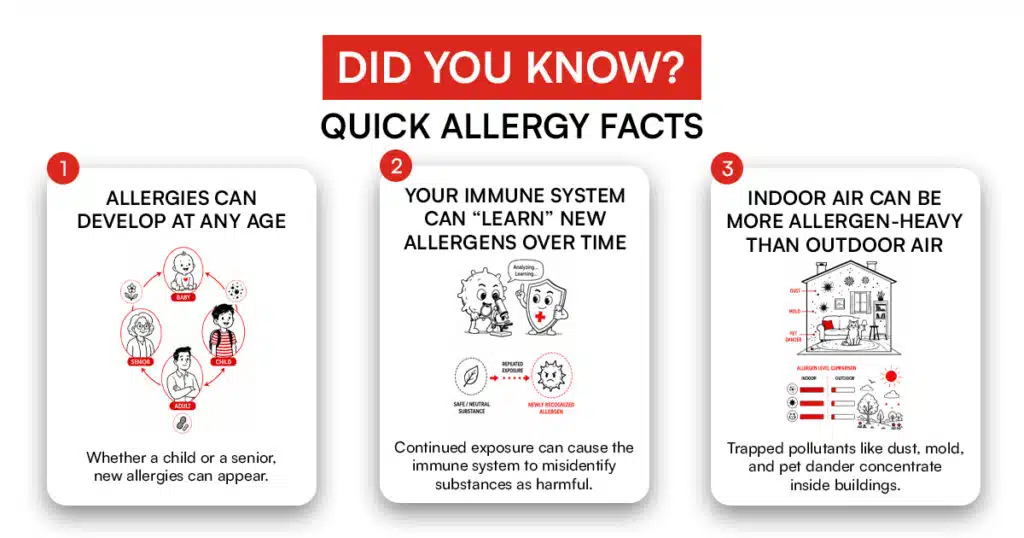
How Long Do Allergies Last?
The length of allergic reactions can vary widely depending on what triggers them and how your body responds. Some allergies come and go with the seasons, while others may persist continuously or appear suddenly after exposure to a specific substance.
- Seasonal allergies: Last as long as the allergen (like pollen) is present, usually weeks to months
- Perennial allergies: Can last year-round (dust, pet dander, mold)
- Food or drug allergies: Symptoms occur shortly after exposure and resolve once treated
Are Allergies Genetic?
Yes, allergies can be genetic. If one or both parents have allergies, asthma, or eczema, their children are more likely to develop allergic conditions. A family history of allergic diseases increases the chances that the immune system may react more strongly to certain triggers. Children with inherited allergies may develop symptoms early in life or later as they grow older.
However, genetics is not the only factor. Environmental exposure, diet, and lifestyle also play a role in whether a person develops allergies over time. Pollution, smoking exposure, climate conditions, and repeated contact with allergens may increase sensitivity in some individuals. In many cases, a combination of inherited traits and environmental factors contributes to the development and severity of allergies.
How to Get Rid of Allergies
While allergies cannot always be permanently cured, symptoms can be significantly reduced or controlled with proper management and treatment. Identifying and avoiding triggers is one of the most effective ways to prevent recurring allergic reactions and reduce symptom severity. In some cases, consistent allergy management can greatly improve daily comfort, sleep quality, and overall quality of life.
Common approaches include:
- Avoiding known allergens
- Using antihistamines
- Nasal sprays for congestion
- Allergy eye drops
- Immunotherapy (allergy shots) for long-term treatment
How to Treat Allergies
Allergy treatment varies depending on how severe the symptoms are, what triggers them, and how often they occur. While some people experience only mild seasonal discomfort, others may have persistent or even life-threatening reactions that require immediate medical attention. Treatment depends on the severity and type of allergy.
Mild allergies:
- Over-the-counter antihistamines
- Decongestants
- Saline nasal rinses
- Hydration and rest
Moderate allergies:
- Prescription allergy medications
- Corticosteroid nasal sprays
- Allergy testing and management plans
Severe allergies:
- Epinephrine injections (for anaphylaxis)
- Emergency medical care
- Long-term allergy immunotherapy
When Allergies Become Dangerous
Most allergies are not life-threatening, but some reactions can become severe and require urgent care. Seek emergency medical help if you experience:
- Difficulty breathing or wheezing
- Swelling of the face, lips, or throat
- Rapid heartbeat
- Severe dizziness or fainting
- Widespread hives or rash
- Signs of anaphylaxis
These symptoms may indicate a serious allergic reaction that requires immediate treatment. In such cases, visiting an emergency room Lake Jackson, TX, or facilities like Altus Emergency Centers is critical for stabilizing the condition.
Why Allergies Are Often Misunderstood
Allergies can be tricky to identify because their symptoms often overlap with many common illnesses. This similarity can lead people to underestimate or misinterpret what is actually an allergic reaction, delaying proper diagnosis and treatment. As a result, many individuals may treat the wrong condition without realizing the true cause of their discomfort.
Allergy symptoms are often confused with:
- Common colds
- Sinus infections
- Skin conditions
- Food intolerance
How Allergies Are Diagnosed?
Diagnosing allergies is an important step in identifying what triggers your symptoms and choosing the most effective treatment plan. Doctors use a combination of clinical evaluation and specific tests to accurately determine whether an allergy is present and how severe it may be. In some cases, symptoms alone are not enough, so further testing is needed to confirm the exact allergen and rule out other conditions.
Doctors diagnose allergies using several methods:
- Skin prick tests
- Blood tests (IgE testing)
- Elimination diets (for food allergies)
- Review of medical history and symptoms
After these tests, doctors combine the results with your symptom patterns to create a clear diagnosis and personalized treatment plan. In cases where reactions are severe or potentially life-threatening, immediate medical evaluation is essential. Facilities like Altus Emergency Centers can provide urgent care support for serious allergic reactions and help ensure timely treatment when symptoms escalate.
Key Takeaways
- Allergies occur when the immune system overreacts to harmless substances
- Common triggers include pollen, dust, food, and insect stings
- Genetics and environment both play a role in developing allergies
- Most allergies can be managed with medication and avoidance strategies
- Severe allergic reactions require immediate emergency care
Frequently Asked Questions
When should you go to the ER for allergies?
You should go to the ER immediately if you experience severe allergic reactions such as difficulty breathing, swelling of the face or throat, or a sudden drop in blood pressure. These symptoms may indicate anaphylaxis, which is a life-threatening emergency requiring urgent treatment. Prompt medical care can prevent serious complications and is essential in stabilizing the condition.
What 8 foods are 90% of allergies?
The eight most common food allergens are milk, eggs, peanuts, tree nuts, soy, wheat, fish, and shellfish. These foods account for the majority of allergic reactions in both children and adults. People with sensitivities should carefully read labels and avoid cross-contamination.
What is the 3-day rule for allergies?
The 3-day rule suggests avoiding a suspected allergen for at least three days to observe symptom changes. If symptoms improve during this period and return after re-exposure, it may indicate an allergy. This method is often used as a simple tracking approach, but should be confirmed with medical testing.