

Waking up with a raw, uncomfortable feeling in your throat can be frustrating, especially when every sip, swallow, or word feels like a struggle. It can quickly affect your whole day and make even simple tasks feel difficult. Many people experience this at different times, and while it is often temporary, the discomfort can still be worrying.
If the discomfort is getting worse or not improving, it is important not to ignore it. Visiting an emergency room, Waxahachie, or nearby urgent care centers like Altus Emergency Centers can help you get timely care. If symptoms persist or become severe, seek urgent medical attention without delay.
What Is a Sore Throat?
A sore throat is a condition where the throat feels painful, irritated, or raw, often making swallowing and speaking uncomfortable. It is one of the most common reasons people seek medical care and can range from mild irritation to more intense pain that affects daily life. Most cases improve on their own, but some may require closer medical evaluation.
According to the NIH-linked PubMed Central database, sore throat is highly common, with an estimated 82.2 episodes per 100 children per year (about 82%), showing how frequently it occurs in younger populations.
Dangerous Sore Throat Symptoms You Should Never Ignore
- Severe Throat Pain That Worsens Quickly: Sudden or increasing pain that affects swallowing or speaking may indicate a serious infection.
- Difficulty Breathing Or Swallowing: Any breathing difficulty or inability to swallow requires emergency care.
- High Fever With Chills: Persistent fever with throat pain may suggest a serious bacterial infection.
- Swelling In The Neck Or Throat: Visible swelling or tightness can indicate spreading infection.
- Pus Or White Patches In The Throat: Often linked with infections that may require urgent treatment.
Causes of Sore Throat
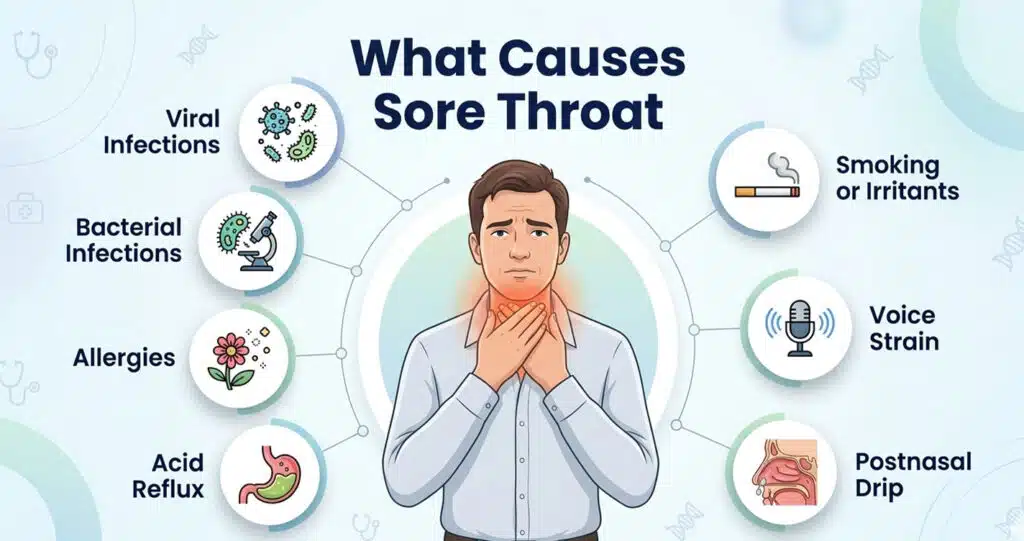
Waking up with a sore, scratchy, or painful throat can feel uncomfortable and worrying, especially when it makes speaking or swallowing difficult. Many people experience this at different times, and while it is often temporary, the discomfort can still be frustrating and concerning.
Viral Infections
Viral infections are one of the most common reasons behind a sore throat and often develop alongside colds or flu-like symptoms. They spread easily through coughing, sneezing, or close contact with infected individuals. The throat becomes inflamed as the body fights off the virus, leading to irritation and pain.
Symptoms
- Scratchy Or Painful Throat: A mild to moderate discomfort that worsens when swallowing or talking.
- Runny Or Blocked Nose: Often appears alongside throat irritation due to upper respiratory involvement.
- Cough And Mild Fatigue: The body feels tired while trying to recover from the infection.
- Low-Grade Fever: A slight rise in temperature may occur as part of the immune response.
Bacterial Infections (Strep Throat)
Bacterial infections such as strep throat can cause more intense throat pain compared to viral infections. They often develop suddenly and may require antibiotic treatment to prevent complications. The infection causes significant inflammation in the throat and tonsils.
Symptoms
- Severe Throat Pain: Sharp pain that makes swallowing very difficult.
- High Fever: Often above 38°C with sudden onset.
- Swollen Tonsils With White Patches: Visible signs of bacterial infection in the throat.
- Swollen Lymph Nodes: Tender lumps in the neck due to an immune response.
Allergies
Allergies can irritate the throat when the immune system reacts to triggers like dust, pollen, or pet dander. This reaction causes inflammation and constant throat discomfort. Postnasal drip often accompanies allergies, further irritating the throat lining. Symptoms may persist as long as exposure to the allergen continues.
Symptoms
- Itchy Throat: A persistent urge to scratch or clear the throat.
- Sneezing And Watery Eyes: Common allergic reactions affecting the upper airway.
- Mild Throat Irritation: Ongoing discomfort without severe pain.
- Postnasal Drip Sensation: Mucus draining into the throat, causing irritation.
Dry Air or Environmental Conditions
Dry air, especially from air conditioning or heaters, can strip moisture from the throat lining. This leads to irritation and a dry, scratchy feeling. People often notice symptoms more during seasonal changes or in low-humidity environments. Staying hydrated usually helps reduce discomfort.
Symptoms
- Dry, Scratchy Throat: Feels rough and uncomfortable, especially in the morning.
- Frequent Throat Clearing: Attempt to relieve dryness or irritation.
- Mild Hoarseness: Voice may sound slightly strained or weak.
- Thirst And Dry Mouth: Overall dryness in the mouth and throat area.
Acid Reflux (GERD)
Acid reflux occurs when stomach acid flows back into the esophagus and irritates the throat. This can cause a burning sensation and ongoing throat discomfort, especially after meals or when lying down. Over time, repeated exposure can inflame the throat lining. It is often worse at night or early morning.
Symptoms
- Burning Throat Sensation: A warm or acidic feeling in the throat.
- Hoarseness: Voice changes due to irritation of vocal cords.
- Sour Taste In Mouth: Acid reaching the throat or mouth area.
- Worsening After Meals: Symptoms increase after eating or lying down.
Smoking or Irritants
Exposure to smoke, pollution, or chemical fumes can directly irritate the throat lining. This constant irritation leads to inflammation and discomfort over time. Smokers often experience chronic throat issues due to repeated exposure. Even passive smoke can trigger symptoms.
Symptoms
- Persistent Throat Irritation: Ongoing discomfort that does not fully go away.
- Dry Cough: Frequent coughing without mucus production.
- Hoarseness: Voice becomes rough or strained.
- Burning Sensation: Mild burning feeling in the throat area.
Voice Strain
Overusing the voice through shouting, singing, or speaking loudly can strain the throat muscles and vocal cords. This leads to temporary inflammation and discomfort. Teachers, singers, and public speakers often experience this condition. Resting the voice usually allows recovery.
Symptoms
- Hoarse Voice: Voice sounds weak, rough, or altered.
- Throat Soreness: Discomfort after extended speaking or shouting.
- Difficulty Projecting Voice: Struggling to speak loudly.
- Tired Voice: Voice feels fatigued after use.
Postnasal Drip
Postnasal drip occurs when excess mucus from the nose flows down into the throat. This constant drainage irritates the throat lining and causes discomfort. It is commonly linked with colds, allergies, or sinus issues. The sensation often worsens when lying down.
Symptoms
- Frequent Throat Clearing: Constant need to clear mucus.
- Mucus Sensation In Throat: Feeling Of Something Stuck In The Throat.
- Cough, Especially At Night: Irritation increases when lying down.
- Sore Or Irritated Throat: Ongoing discomfort from mucus exposure.
Sore Throat in Kids
Seeing your child uncomfortable, especially when they struggle to eat, sleep, or swallow, can be stressful and worrying. Children may not clearly express their symptoms, so careful observation is important. While many cases improve with care, worsening symptoms may require pediatric emergency attention.
Sore Throat Medicine for Kids
- Paracetamol (Acetaminophen): prescribed by the doctor – Helps reduce pain and fever safely when dosed correctly.
- Ibuprofen: prescribed by the doctor – Reduces inflammation and throat discomfort.
- Antibiotics (If Bacterial Infection Confirmed): prescribed by the doctor – Must be completed fully if prescribed.
- Supportive Care Options: prescribed by the doctor – Safe soothing treatments depending on age.
When to Go to the ER for a Sore Throat
It can be difficult to know when a sore throat is becoming serious, but worsening symptoms should never be ignored. If breathing, swallowing, or pain becomes severe, immediate care is needed.
- Difficulty Breathing Or Noisy Breathing: Hard, fast, or noisy breathing may signal airway swelling needing urgent care.
- Severe Trouble Swallowing Or Drooling: Extreme pain when swallowing or inability to swallow is a serious warning sign.
- High Fever With Worsening Throat Pain: Ongoing fever with increasing pain may indicate a serious infection.
- Swelling In The Throat Or Neck: Tightness or visible swelling can suggest spreading infection or blockage.
- Muffled Or “Hot Potato” Voice: Thick or unclear voice changes may point to a deeper throat infection.
How to Treat Sore Throat
Dealing with a sore throat can make eating, drinking, and speaking uncomfortable and draining. It can affect your daily routine and leave you looking for relief. While many cases improve on their own, sore throat care can help ease discomfort and speed up recovery.
- Stay Well Hydrated: Warm fluids like water, tea, or soup help soothe irritation and keep the throat moist.
- Rest Your Voice: Avoid talking or shouting too much to allow the throat to heal faster.
- Use Pain Relievers If Needed: Paracetamol or Ibuprofen prescribed by the doctor
These medicines may help reduce pain and fever when taken only as advised by a healthcare professional. - Gargle With Warm Salt Water: Helps reduce swelling and ease throat discomfort.
- Use Humidified Air: Steam or a humidifier can relieve dryness and irritation in the throat.
Sore Throat Care at Altus Emergency Centers
A sore throat may seem minor, but when it becomes severe or persistent, it should not be ignored. Getting a timely evaluation helps identify the cause and prevents complications.
At Altus Emergency Centers, patients receive fast and accurate care for throat pain, fever, and swallowing or breathing difficulties. If you are searching for answers about what causes a sore throat, our emergency team can quickly evaluate your condition and provide appropriate treatment to support recovery and prevent worsening symptoms.
Key Takeaways
- Sore throat is a common condition that usually improves on its own, but can sometimes indicate a more serious issue.
- Persistent or severe symptoms should not be ignored, especially if breathing or swallowing becomes difficult.
- Children may need closer monitoring as they cannot always describe their symptoms clearly.
- Early evaluation helps identify the cause and prevents complications from worsening.
- Supportive care and timely medical attention can significantly speed up recovery.
FAQs
How Long Does a Sore Throat Last?
A sore throat typically lasts about 3–7 days when caused by a viral infection. If it persists longer, worsens, or keeps returning, it should be checked by a healthcare professional.
What Helps a Sore Throat?
Warm fluids, saltwater gargles, rest, and throat lozenges can help ease discomfort. Staying well hydrated also supports healing and reduces irritation.
Can Allergies Cause a Sore Throat?
Yes, allergies can lead to a sore throat, mainly due to postnasal drip that irritates the throat lining over time.
Does Tylenol Help With a Sore Throat?
Yes, Tylenol (acetaminophen) can help reduce pain and fever linked to a sore throat, but it does not treat the underlying cause of the condition.