
If you or someone you care about is living with diabetes, it can feel overwhelming and raise concerns about daily health and long-term well-being. Diabetes is a chronic condition that affects how the body regulates blood sugar (glucose), its main source of energy. Although often spoken of as one condition, it has two main types, Type 1 and Type 2 diabetes, which differ in how they develop, are treated, and affect overall health.
Understanding the difference between Type 1 and Type 2 diabetes is important because both conditions can become serious if not managed properly. In severe cases of blood sugar imbalance, immediate medical attention is critical. We at Altus emergency room, Lumberton, TX provide urgent evaluation and emergency care when every moment matters.
What Is Type 1 Diabetes?
Type 1 diabetes is an autoimmune condition in which the immune system mistakenly attacks and destroys insulin-producing cells in the pancreas. Insulin is essential because it allows sugar (glucose) to enter the body’s cells and be used for energy. Without insulin, blood sugar levels rise quickly and can become life-threatening if not managed with proper treatment such as insulin therapy.
According to the U.S. National Institute of Diabetes and Digestive and Kidney Diseases (NIDDK), Type 1 diabetes accounts for approximately 5% to 10% of all diabetes cases in the United States.
What Causes Type 1 Diabetes?
Type 1 diabetes develops when the immune system mistakenly begins targeting insulin-producing cells in the pancreas. This process gradually affects the body’s ability to produce insulin, which is essential for regulating blood sugar levels. It is not related to lifestyle or diet factors.
- Autoimmune Response: The immune system attacks insulin-producing beta cells in the pancreas, reducing or stopping insulin production over time.
- Genetic Factors: Certain genes can increase the risk, but they do not guarantee that Type 1 diabetes will develop.
- Environmental Triggers: Viral infections or other environmental factors may activate the immune response in people who are genetically at risk.
- Family History: Having a close relative with Type 1 diabetes slightly increases risk, but most cases occur without family history.
If symptoms become severe or blood sugar levels become dangerously unstable, immediate care may be required at an emergency room near me.
What Is Type 2 Diabetes?
Type 2 diabetes is the most common form of diabetes. In this condition, the body either does not produce enough insulin or becomes resistant to insulin, meaning it cannot use it effectively. Unlike Type 1 diabetes, Type 2 develops gradually over time and is often associated with genetic factors and lifestyle-related risks such as excess body weight and physical inactivity.
According to the U.S. National Institute of Diabetes and Digestive and Kidney Diseases (NIDDK), Type 2 diabetes accounts for about 90% to 95% of all diagnosed diabetes cases.
What Causes Type 2 Diabetes?
Type 2 diabetes develops when the body gradually becomes less effective at using insulin, causing blood sugar levels to rise over time. It usually develops slowly, so early changes may not be noticeable. It is not linked to a single factor but results from multiple influences affecting how the body processes glucose.
- Insulin Resistance: The body becomes less responsive to insulin, making it harder for glucose to enter cells and affecting blood sugar control over time.
- Excess Body Weight: Extra weight, especially around the abdomen, increases insulin resistance and raises blood sugar levels.
- Physical Inactivity: Lack of exercise reduces glucose use in the body, increasing the risk of insulin problems.
- Genetic Factors: A family history of Type 2 diabetes can raise the risk, especially with other contributing factors.
- Unhealthy Diet Patterns: High intake of sugar and processed foods can lead to weight gain and poor blood sugar control.
If symptoms become severe or blood sugar levels become dangerously high or low, immediate care may be required in an emergency room for diabetes management.
What Is the Difference Between Type 1 and Type 2 Diabetes?
| Feature | Type 1 Diabetes | Type 2 Diabetes |
| Definition | Autoimmune condition where the immune system destroys insulin-producing cells in the pancreas. | Metabolic condition where the body becomes resistant to insulin or does not produce enough insulin. |
| Cause | Autoimmune response (exact trigger unknown, not lifestyle-related). | Combination of insulin resistance, genetics, lifestyle factors, and body weight. |
| Onset | Sudden, often develops quickly. | Gradually, it develops slowly over time. |
| Age of Onset | Common in children, teens, and young adults, but can occur at any age. | More common in adults, but increasingly seen in younger individuals. |
| Insulin Production | Little to no insulin produced. | Insulin is produced but not used effectively, and may decrease over time. |
| Treatment | Lifelong insulin therapy required. | Managed with lifestyle changes, oral medications, and sometimes insulin. |
| Prevention | Cannot be prevented. | Often preventable or delayed with healthy lifestyle choices. |
| Body Weight Link | Not related to body weight. | Strongly linked to overweight and obesity. |
| Risk Factors | Genetics and autoimmune factors. | Long-term complications, like heart disease, kidney damage, and nerve damage. |
| Complications if Untreated | Rapid complications like diabetic ketoacidosis (DKA). | Long-term complications, like heart disease, kidney damage, and nerve damage. |
| Percentage of Cases | About 5–10% of diabetes cases. | About 90–95% of diabetes cases. |
Which Is Worse: Type 1 or Type 2 Diabetes?
Neither Type 1 nor Type 2 diabetes is “worse” than the other, as both can cause serious complications if not managed properly. Type 1 requires lifelong insulin therapy, while Type 2 develops gradually and may progress over time. Both conditions can affect major organs if blood sugar is not controlled. With proper treatment and monitoring, both can be effectively managed.
Can Type 1 Turn Into Type 2 Diabetes?
Type 1 and Type 2 diabetes are separate medical conditions and do not convert into one another. Type 1 involves an autoimmune process that affects insulin production, while Type 2 is linked to reduced insulin effectiveness over time. In some cases, people with Type 1 may later develop insulin resistance, making management more complex. Despite this overlap, both conditions remain distinct in their underlying cause and progression.
When to Go to the ER
Diabetes can become life-threatening when blood sugar levels become extremely high or dangerously low. Emergency care is necessary when symptoms appear suddenly or become severe, as delayed treatment can lead to serious complications such as loss of consciousness or diabetic coma. In such situations, an ER for diabetics is essential for immediate evaluation and stabilization.
Type 1 Diabetes Emergency Signs
- Severe nausea or vomiting: May indicate diabetic ketoacidosis (DKA), a medical emergency.
- Rapid breathing or fruity breath odor: A sign of ketone buildup in the blood.
- Extreme fatigue or confusion: Indicates dangerously high or low blood sugar levels.
- Loss of consciousness: Requires immediate emergency medical attention.
Type 2 Diabetes Emergency Signs
- Very high blood sugar levels: Can lead to confusion, dehydration, or hyperosmolar hyperglycemic state (HHS).
- Severe dehydration or dry mouth: Indicates the body is unable to regulate fluids properly.
- Blurred vision or difficulty staying awake: Signs of worsening blood sugar imbalance.
- Chest pain or sudden weakness: May indicate serious complications requiring urgent care.
Treatment for Type 1 and Type 2 Diabetes
Diabetes treatment focuses on maintaining stable blood sugar levels and preventing complications over time. While both Type 1 and Type 2 diabetes require careful management, the treatment approach differs depending on how the body produces and uses insulin. Ongoing monitoring, medical guidance, and lifestyle support are essential for both conditions.
Type 1 Diabetes Treatment
- Insulin therapy (prescribed by the doctor): Required for all individuals with Type 1 diabetes to replace the insulin the body cannot produce. It may be given through injections or an insulin pump under medical supervision.
- Blood sugar monitoring: Regular glucose checks help adjust insulin doses and prevent sudden highs or lows.
- Healthy meal planning: Balanced nutrition supports stable blood sugar levels when combined with insulin therapy.
- Physical activity guidance: Exercise is encouraged, but must be carefully managed with insulin and food intake adjustments prescribed by the doctor.
Type 2 Diabetes Treatment
- Oral medications (prescribed by the doctor): Medicines such as metformin help improve insulin sensitivity and control blood sugar levels.
- Insulin therapy (prescribed by the doctor): May be required in advanced cases when oral medications are not enough.
- Lifestyle changes: Healthy eating, weight management, and regular physical activity are key parts of treatment.
- Blood sugar monitoring: Helps track progress and adjust treatment plans as needed under medical supervision.
Altus Emergency Care Centers: Type 1 vs Type 2 Diabetes
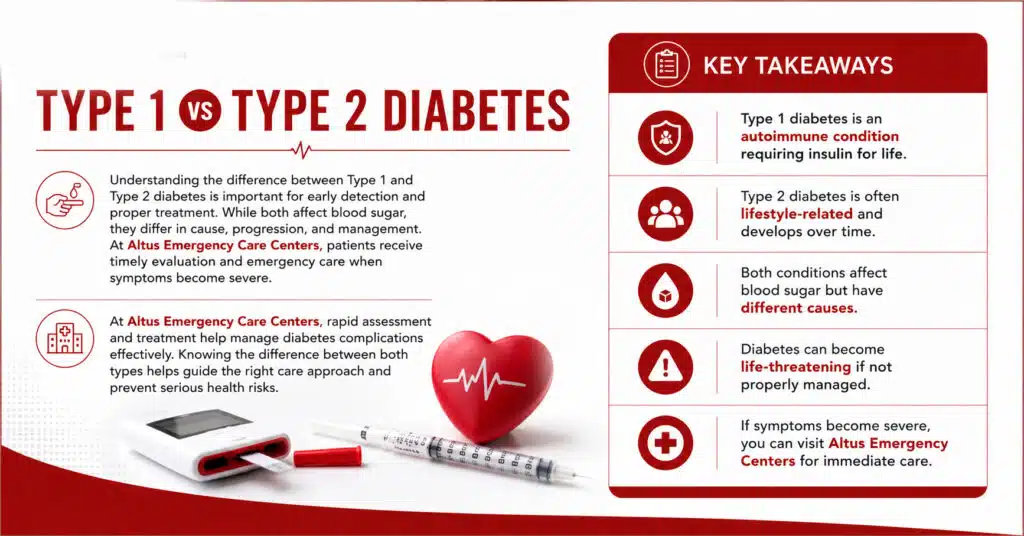
Understanding the difference between Type 1 and Type 2 diabetes is important for early detection and proper treatment. While both affect blood sugar, they differ in cause, progression, and management. At Altus Emergency Care Centers, patients receive timely evaluation and emergency care when symptoms become severe.
At Altus Emergency Care Centers, rapid assessment and treatment help manage diabetes complications effectively. Knowing the difference between the both types helps guide the right care approach and prevent serious health risks.
Key Takeaways
- Type 1 diabetes is an autoimmune condition requiring insulin for life.
- Type 2 diabetes is often lifestyle-related and develops over time.
- Both conditions affect blood sugar but have different causes.
- Diabetes can become life-threatening if not properly managed.
- If symptoms become severe, you can visit Altus Emergency Centers for immediate care.
Frequently Asked Questions
What is diabetes?
Diabetes is a long-term condition where the body cannot properly control blood sugar levels due to lack of insulin or insulin resistance.
How many types of diabetes are there?
There are mainly three types: Type 1 diabetes, Type 2 diabetes, and gestational diabetes (which occurs during pregnancy).
Can type 2 diabetes be reversed?
Type 2 diabetes may be managed and sometimes put into remission with lifestyle changes like weight loss, healthy diet, and exercise, but it is not considered permanently “cured.”
How to know if you have diabetes?
Common signs include frequent urination, excessive thirst, unexplained weight loss, fatigue, and blurred vision. A blood test is needed for confirmation.
When should you go to the ER?
Go to the ER if you experience severe confusion, unconsciousness, extremely high or low blood sugar symptoms, or breathing difficulties.