

Mucus is a slippery, gel-like substance produced by the body to protect tissues and maintain moisture. It is secreted by mucous membranes in areas like the nose, throat, lungs, digestive tract, and reproductive organs. This protective fluid traps dust, bacteria, viruses, and other harmful particles, preventing them from reaching deeper organs. Normal mucus production is essential for overall health, aiding immune defense, hydration, and lubrication of tissues. Occasionally, mucus changes in color, thickness, or quantity due to minor irritations, infections, or allergies. Persistent or unusual changes may indicate underlying health issues that require medical attention or even a visit to a Flu treatment near me center.
Key Takeaways
- Mucus is a vital protective fluid that traps dust, pathogens, and keeps mucous membranes hydrated.
- Changes in color, consistency, or frequency of mucus may indicate infections, allergies, or chronic conditions.
- Persistent or severe symptoms, such as blood in mucus, difficulty breathing, or chest pain, require immediate contact with a healthcare provider or a visit to the ER.
- Mild cases of mucus buildup can often be managed with hydration, lifestyle adjustments, and over-the-counter medications.
- Professional evaluation ensures proper treatment, prevents complications, and maintains long-term respiratory and overall health.
How Mucus Is Produced in the Human Body
Mucus is generated by specialized cells called goblet cells and mucous glands. These cells secrete a mixture of water, salts, glycoproteins, and enzymes that form a protective gel. The composition of mucus allows it to trap pathogens, neutralize harmful substances, and keep tissue surfaces moist.
- Respiratory Tract: The mucus lining in the nose, sinuses, and airways captures dust, pollen, and pathogens, reducing the risk of respiratory infections. Excess production may occur during colds, allergies, or flu.
- Digestive Tract: Mucus coats the stomach and intestines to protect against digestive acids and enzymes, preventing tissue damage and aiding smooth passage of food.
- Reproductive System: In females, cervical mucus supports sperm transport and protects the reproductive tract, while in males, mucus contributes to semen composition.
- Response to Irritants: When exposed to smoke, chemicals, or allergens, goblet cells increase mucus production, which explains runny noses or phlegm during environmental irritations.
Functions of Mucus in the Body
Mucus is essential for maintaining overall health and protecting body tissues.
- Protection: Coats tissues to shield them from pathogens, irritants, and stomach acid.
- Immune Defense: Contains antibodies and enzymes that neutralize bacteria and viruses.
- Moisture Regulation: Keeps tissues like the eyes, mouth, and respiratory tract hydrated, preventing dryness and irritation.
- Facilitation: Assists in digestion, sperm transport, and clearing debris from airways, aiding normal bodily functions.
- Health Importance: Without mucus, the body would be more susceptible to infections, dehydration, and tissue damage.
What Does a Mucus Plug Look Like
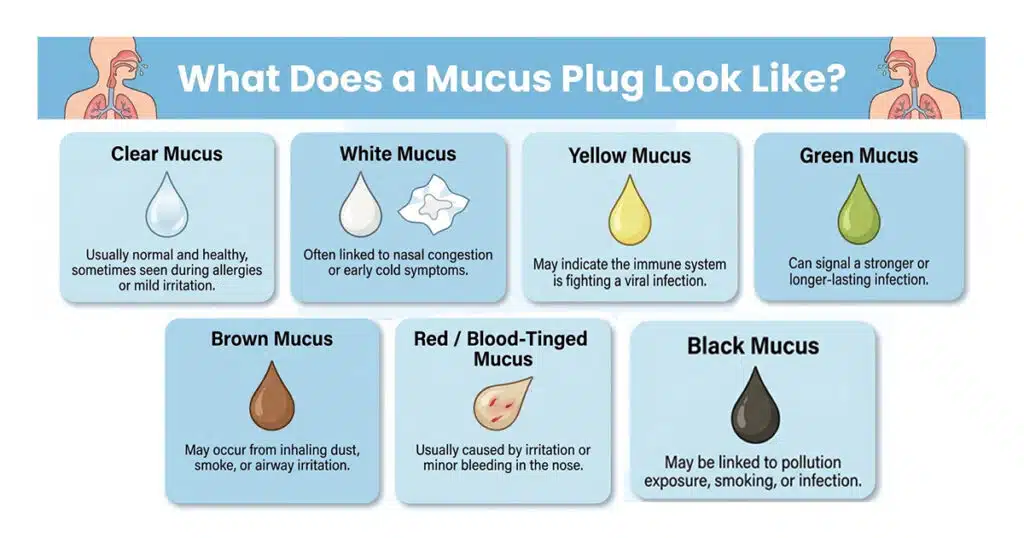
Mucus can reveal important information about your health, and its color is one of the clearest indicators of what’s happening in your body. Changes in mucus color may point to infections, irritation, or other underlying conditions that require attention.
- Clear Mucus: Usually normal and healthy, indicating proper hydration and functioning airways. It can also appear during allergies or mild irritation.
- White Mucus: Often linked to congestion or inflammation in the nasal passages. It may be an early sign of a cold or sinus blockage.
- Yellow Mucus: Yellow mucus indicates the immune system is actively fighting an infection. It is commonly seen during viral illnesses like colds or flu.
- Green Mucus: Green mucus suggests a stronger or prolonged infection, where white blood cells are actively combating bacteria. It may require medical evaluation if persistent.
- Brown Mucus: Brown mucus can result from inhaling dust, smoke, or dried blood. It may also be seen in people exposed to pollutants or after irritation in the airways.
- Red or Blood-Tinged Mucus: Indicates the presence of blood, often due to irritation, dryness, or minor injury. However, frequent or heavy bleeding may signal a serious condition and needs immediate medical attention.
- Black Mucus: Black mucus is rare but can be associated with heavy pollution exposure, smoking, or fungal infections. It should always be evaluated by a healthcare professional.
If you notice unusual mucus colors along with symptoms like fever, chest pain, difficulty breathing, or persistent coughing, seek medical attention immediately.
What is the Cause of Mucus
Mucus changes often signal the body’s reaction to irritants, infections, or chronic conditions. Understanding the cause is key to proper care.
- Respiratory Infections: Viruses such as colds, influenza, or COVID-19 can trigger thickened yellow or green mucus as the immune system fights pathogens.
- Allergies: Exposure to dust, pollen, or pet dander increases production of clear, watery mucus in the nose and throat.
- Sinusitis: Inflammation of the sinuses often leads to thick, discolored mucus and may be accompanied by facial pressure or headaches.
- Gastrointestinal Issues: Conditions like acid reflux, gastritis, or IBS can increase mucus in the throat or stool.
- Smoking and Pollution: Tobacco smoke, chemicals, and polluted air irritate mucous membranes, causing excessive mucus production.
- Chronic Conditions: Asthma, chronic bronchitis, or cystic fibrosis can cause persistent, thick, and sticky mucus that requires long-term management.
How to Get Rid of Mucus
Excess mucus can cause discomfort, congestion, and difficulty breathing or swallowing. Reducing it early helps improve overall comfort and supports normal body function, and in severe cases, prompt evaluation at Lumberton Hospital ER may be necessary.
Home Remedies
These natural methods can help reduce mucus buildup and improve ease of breathing or passage without medication:
- Stay Hydrated: Drinking plenty of water thins mucus, making it easier for the body to expel. Proper hydration also supports healthy mucous membranes.
- Use Humidifiers: Moist air prevents mucus from thickening and reduces irritation, especially in dry environments.
- Saline Sprays or Rinses: Saline solutions help flush out nasal passages and other areas, clearing mucus naturally and safely.
- Avoid Irritants: Smoke, dust, and chemical fumes can worsen mucus production. Limiting exposure speeds recovery.
- Healthy Diet: Eating fruits, vegetables, and drinking warm liquids like teas or broths soothes membranes and strengthens immunity.
If mucus persists or worsens, professional evaluation or an ER visit may be necessary to prevent complications.
Medications for Excess Mucus
When natural remedies aren’t enough, medications can help control mucus and relieve symptoms:
- Decongestants: Reduce nasal or sinus mucus and pressure for easier breathing; usually for short-term relief.
- Expectorants: Thin mucus in the chest or respiratory tract, making it easier to expel.
- Antihistamines: Help reduce mucus caused by allergies, easing congestion and irritation.
- Antibiotics or Antivirals: Used for bacterial or viral infections to treat the underlying cause. Always follow medical instructions carefully.
If symptoms continue despite treatment, contact your healthcare provider or visit the ER for proper assessment.
Chronic Conditions Affecting Mucus
Mucus production and appearance can change due to a variety of health conditions. These changes may affect its color, thickness, and amount, often signaling how the body is responding to irritation, infection, or disease. Understanding these conditions can help identify when medical attention is necessary.
- Common Cold and Flu: Viral infections often increase mucus production, making it thicker and changing its color to yellow or green as the immune system responds.
- Allergies: Allergic reactions can cause excessive, clear, and watery mucus due to irritation in the nasal passages and sinuses.
- Sinus Infections (Sinusitis): Bacterial or viral sinus infections can lead to thick, discolored mucus, facial pressure, and nasal congestion.
- Bronchitis: Inflammation of the bronchial tubes causes persistent coughing and mucus production, which may be clear, yellow, or green.
- Asthma: Asthma can lead to thick mucus buildup in the airways, making breathing more difficult and triggering coughing or wheezing.
- Pneumonia: This lung infection often produces thick mucus that may be yellow, green, or even blood-tinged, along with fever and chest pain.
- Chronic Obstructive Pulmonary Disease (COPD): Conditions like chronic bronchitis can cause long-term mucus overproduction, especially in smokers.
- Cystic Fibrosis: A genetic disorder that causes extremely thick and sticky mucus, leading to breathing difficulties and frequent lung infections.
- Gastrointestinal Issues: Mucus in stool may be linked to infections, irritable bowel syndrome (IBS), or inflammatory bowel disease (IBD).
- Dehydration: Lack of fluids can make mucus thicker and harder to clear from the body.
If mucus changes persist or are accompanied by symptoms like fever, chest pain, shortness of breath, or blood in mucus, it is important to seek medical evaluation promptly.
Mucus vs Phlegm vs Saliva
Understanding the differences helps determine the source of symptoms and guides proper care.
- Mucus: Produced throughout the body, mucus traps particles and keeps tissues moist. It is essential for respiratory, digestive, and reproductive health.
- Phlegm: A type of mucus from the lungs or lower respiratory tract, usually thicker, and expelled through coughing. It often indicates infection or inflammation.
- Saliva: Secreted in the mouth to aid digestion, maintain oral hygiene, and keep tissues moist. It helps prevent tooth decay and supports proper swallowing.
- Importance: Differentiating these fluids helps identify whether symptoms originate from respiratory, digestive, or oral systems and determines if medical attention is needed.
When to Seek ER for Mucus
While mild mucus changes are common, certain symptoms require urgent attention.
- Emergency Signs: Chest pain or difficulty breathing alongside thick or bloody mucus.
- Infections: High fever or persistent green/yellow mucus could indicate bacterial infection.
- Digestive Warning: Vomiting blood or passing black/bloody stool alongside mucus needs immediate evaluation.
- Chronic Condition Flare-Ups: Sudden worsening of asthma, bronchitis, or other chronic issues requires ER care.
For fast, reliable assessment, find the nearest facility like ER near me, offering 24/7 care for respiratory distress and severe digestive symptoms. Early intervention helps prevent complications and ensures proper treatment.
Care For Mucus Concerns At Neighbors Emergency Center
Texas Emergency Care Center provides comprehensive care for both acute and chronic mucus-related problems. The medical team evaluates respiratory, sinus, and digestive concerns that may cause excessive or abnormal mucus production. Care plans include medications, supportive therapies, and lifestyle guidance to reduce symptoms and improve overall health. Patients benefit from continuous monitoring and personalized recommendations to prevent recurrence. The center ensures quick and professional attention in a comfortable and accessible environment. Emergency care is available if symptoms worsen suddenly or become life-threatening, including access to an emergency room for pediatrics for young patients. Early evaluation and treatment help minimize discomfort and reduce the risk of complications.
FAQs
1. What are boogers?
Boogers are dried or hardened nasal mucus that helps trap dirt, bacteria, pollen, and other airborne particles. They form naturally as the mucus in your nose dries. While they serve a protective function, picking or forcing them out can irritate the nasal lining or cause minor nosebleeds.
2. Where does mucus come from?
Mucus is secreted by specialized cells called goblet cells found in the mucous membranes of the respiratory, digestive, and reproductive tracts. It acts as a protective barrier, keeping tissues hydrated and trapping bacteria, dust, and allergens. The body constantly produces mucus to maintain overall health and prevent infections.
3. What is snot?
Snot is the common term for nasal mucus, which lines the nose and traps germs, dust, and allergens. Its thickness, color, and consistency can vary depending on hydration, infections, or irritants. Snot plays a critical role in protecting the respiratory system by preventing harmful particles from entering the lungs.