

Nausea during pregnancy goes beyond mild morning discomfort and may include persistent queasiness, vomiting, loss of appetite, dizziness, and difficulty keeping food or fluids down, sometimes interfering with daily activities and leading to dehydration. Although often called “morning sickness,” it can occur at any time of day and varies in intensity from person to person. These symptoms are mainly caused by hormonal changes in early pregnancy, typically beginning in the first trimester and improving as pregnancy progresses, though the duration differs for everyone. While some experience short-term symptoms, others may have prolonged nausea, persistent vomiting, inability to retain fluids, or signs of dehydration, which may require medical evaluation, and in severe cases, visiting an ER for nausea treatment can ensure prompt care for both mother and baby.
What Is Pregnancy Nausea?
Pregnancy nausea refers to feelings of queasiness, stomach discomfort, and sometimes vomiting caused by hormonal changes in early pregnancy. It is most commonly linked to rising levels of hormones such as hCG and estrogen. Common features include:
- Nausea with or without vomiting
- Sensitivity to smells or foods
- Loss of appetite
- Worsening symptoms in the morning or after certain triggers
Pregnancy nausea symptoms can occur at any time of day, and if nausea becomes severe or persistent, seeking an emergency room near me can provide timely evaluation and treatment.
Pregnancy Nausea Duration
Pregnancy nausea follows a general timeline but can vary from person to person depending on hormonal changes and individual response. While most cases improve after the first trimester, some may last longer or become more severe, and in such situations, visiting an emergency room Lake Jackson, TX can provide prompt care and relief.
- Starts around weeks 4–6 of pregnancy
- Peaks between weeks 8–10
- Improves by weeks 12–14 for most individuals
- May continue into the second trimester in some cases
- Can last throughout pregnancy (less common)
- Severe cases may require medical treatment
- Hyperemesis gravidarum can cause prolonged, severe symptoms with dehydration and weight loss
Timeline of Nausea During Pregnancy
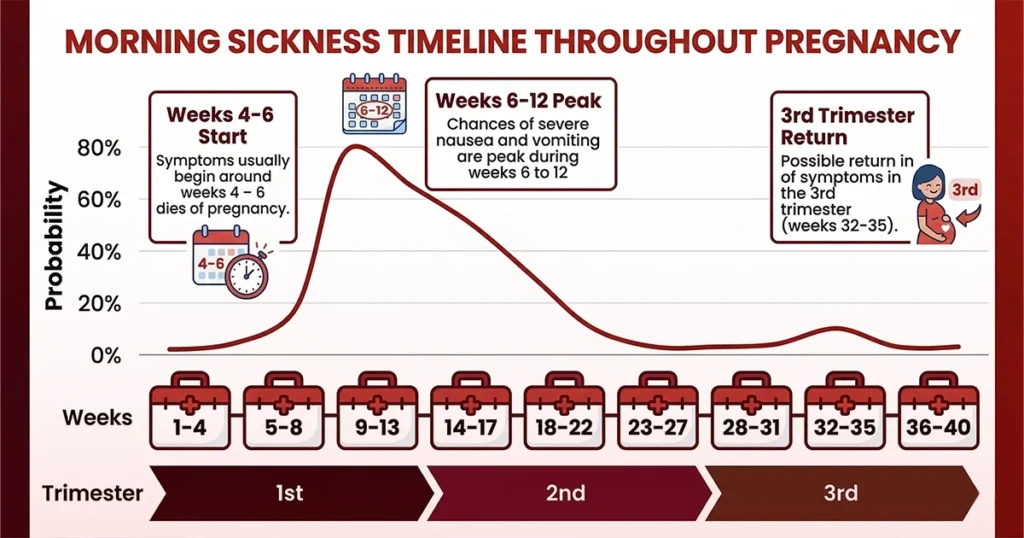
Understanding the typical timeline helps distinguish normal symptoms from warning signs and recognize when nausea is expected versus when it may require medical attention. This progression typically follows a predictable pattern throughout pregnancy, with symptoms evolving across different stages as the body adjusts to hormonal changes. Seeking care at Altus Emergency Centers can ensure timely evaluation if symptoms become severe or concerning.
- Early pregnancy (weeks 4–6): first onset of nausea, usually mild to moderate, with increased sensitivity to smells and foods.
- Peak phase (weeks 8–12): symptoms often worsen, with frequent nausea, possible vomiting, and strong food aversions.
- Improvement phase (weeks 12–14): symptoms begin to subside for most women, appetite gradually returns, and energy levels improve.
- Second trimester and beyond: many women experience relief, though some continue to have mild nausea; persistent or worsening symptoms may require evaluation.
Pregnancy Nausea Symptoms: You Shouldn’t Ignore
Pregnancy nausea is often accompanied by symptoms such as vomiting, loss of appetite, fatigue, dizziness, increased saliva production, sensitivity to odors, and food aversions or cravings, and while these symptoms are usually manageable, their severity and frequency should be monitored closely. Pregnancy nausea is often accompanied by other symptoms, including:
- Vomiting or retching
- Loss of appetite
- Fatigue
- Dizziness or lightheadedness
- Increased saliva production
- Sensitivity to odors
- Food aversions or cravings
These symptoms are usually manageable but should be monitored for severity and frequency.
What Causes Nausea in Pregnancy?
Nausea during pregnancy is driven by a combination of hormonal and physical changes that affect how the body processes food and responds to stimuli. Rising hormone levels, particularly hCG and estrogen, can directly trigger the brain’s nausea center, while other changes in the body can intensify the sensation and make symptoms more frequent.
- Hormonal Changes: Rapid increases in hCG and estrogen levels can trigger nausea.
- Increased Sensitivity: Pregnant individuals often become more sensitive to smells, certain foods, and environmental triggers, which can worsen nausea symptoms.
- Gastrointestinal Changes: Slower digestion and relaxation of stomach muscles can contribute to discomfort.
- Blood Sugar Fluctuations: Low blood sugar may worsen nausea, especially when meals are delayed.
When Nausea in Pregnancy Becomes Concerning
While mild to moderate nausea is normal, certain symptoms may indicate complications. Seek medical attention if you experience:
- Persistent vomiting that prevents eating or drinking
- Signs of dehydration (dark urine, dry mouth, dizziness)
- Weight loss during pregnancy
- Inability to keep fluids down
- Severe fatigue or weakness
These may indicate a more serious condition, such as Hyperemesis gravidarum, which requires medical evaluation and treatment.
Nausea Medicine for Pregnancy
When lifestyle changes are not enough, doctors may recommend nausea medicine for pregnancy.
Common options include:
- Vitamin B6 (pyridoxine)
- Doxylamine (often combined with B6)
- Antiemetic medications prescribed by a physician
- IV fluids in severe cases
Important considerations:
- Always consult a healthcare provider before taking any medication
- Some medications are only used when the benefits outweigh the risks
- Treatment is tailored based on severity and individual health
Home Remedies for Pregnancy Nausea Relief
For mild pregnancy nausea, several non-medical strategies such as dietary adjustments, hydration, rest, and avoiding triggers may help reduce symptoms and improve overall comfort, and these approaches can be used daily to help manage nausea and support better tolerance of food and fluids.
- Dietary adjustments: eat small, frequent meals, avoid an empty stomach, and choose bland, easy-to-digest foods.
- Hydration: sip fluids throughout the day and try cold or clear liquids if warm drinks trigger nausea.
- Trigger avoidance: avoid strong smells and limit greasy, spicy, or fatty foods.
- Lifestyle tips: rest when needed, get fresh air, and eat crackers or light snacks before getting out of bed.
These methods can reduce symptoms but may not eliminate nausea completely.
Risk Factors for Severe Pregnancy Nausea
Some individuals are more likely to experience prolonged or severe nausea:
- First pregnancy
- History of motion sickness or migraines
- Multiple pregnancies (twins or more)
- Hormonal sensitivity
- Family history of severe morning sickness
Recognizing these risk factors can help anticipate symptom severity.
When to Go to the ER for Pregnancy Nausea
Although nausea is common, certain symptoms require emergency evaluation. Visit the ER if you experience:
- Severe, persistent vomiting
- Inability to keep fluids down for 24 hours or more
- Signs of dehydration (dizziness, fainting, very dark urine)
- Rapid heartbeat or weakness
- Confusion or difficulty concentrating
- Significant weight loss
- Abdominal pain with nausea and vomiting
These symptoms may indicate complications such as dehydration or Hyperemesis gravidarum, which can affect both maternal and fetal health if untreated.
Emergency care may include:
- IV fluids for hydration
- Electrolyte replacement
- Prescription anti-nausea medications
- Monitoring of maternal and fetal well-being
Diagnosis and Evaluation of Severe Pregnancy Nausea
At an emergency center, healthcare providers evaluate nausea severity and rule out complications. Common assessments include:
- Vital signs and physical examination
- Blood tests to check hydration and electrolytes
- Urine tests for dehydration or ketones
- Fetal monitoring when appropriate
Early evaluation ensures proper treatment and prevents complications.
Expert Care at Altus Emergency Center of Pregnancy Nausea
When pregnancy nausea becomes severe or leads to dehydration, prompt care is important at Altus Emergency Center, where rapid evaluation and treatment are provided to help manage symptoms and prevent complications. Services may include rapid medical evaluation, IV fluids for dehydration, anti-nausea medications, diagnostic testing to identify underlying causes, and monitoring of vital signs and overall condition. Seek emergency care if you experience persistent vomiting, inability to keep fluids down, dizziness, or signs of dehydration.
Key Takeaways
- Pregnancy nausea typically starts in weeks 4–6 and improves by weeks 12–14.
- Most cases are mild and resolve naturally.
- Sickness, nausea pregnancy can vary in severity and duration.
- Severe or persistent symptoms may indicate conditions like Hyperemesis gravidarum.
- Nausea medicine for pregnancy is available, but should only be used under medical supervision.
- Warning signs like dehydration, inability to eat or drink, or severe vomiting require emergency care.
Frequently Asked Questions
When does nausea start in pregnancy?
Nausea typically begins around weeks 4–6 of pregnancy as hormone levels rise. However, the exact onset can vary, with some individuals experiencing symptoms earlier or slightly later. Symptoms may also fluctuate in intensity during the early weeks of pregnancy.
When does nausea stop in pregnancy?
Nausea generally improves by weeks 12–14 for most individuals as the body adjusts to hormonal changes. In some cases, it may continue into the second trimester or, less commonly, throughout pregnancy.
How to control nausea in pregnancy?
Nausea can often be reduced by eating small, frequent meals, maintaining good hydration, avoiding triggers, getting adequate rest, and following healthcare provider recommendations, such as vitamin B6 or other safe remedies.