 Skip to content

Noticing brown mucus can be unsettling. While mucus is a normal part of your body’s defense system, a change in color, especially to brown, can raise concerns about your respiratory health. Brown mucus can appear in your throat or nose, and knowing what it may indicate helps you take the right steps for care.
Some causes are harmless or temporary, but persistent brown mucus may indicate infection, irritation, or exposure to pollutants. If symptoms continue or worsen, seeking medical evaluation, such as at our Altus emergency room in Lumberton, TX, ensures timely care and peace of mind.
What Does Brown Mucus Mean?
Brown mucus, also called brown phlegm, occurs when dried blood, environmental particles, or inflammation mix into respiratory secretions. Studies show that approximately 46.4% of discolored sputum samples, including brown, contained bacterial pathogens, suggesting a possible infection. It can appear in the nose or during coughing up brown mucus in the throat, particularly in smokers or those exposed to pollution.
Symptoms of Brown Mucus
- Persistent productive cough or coughing up brown mucus.
- Brown mucus and cough with congestion.
- Phlegm with brown flecks after blowing your nose.
- Brown mucus spit or thick discharge.
- Fatigue, fever, or shortness of breath.
Also Read: Why Is My Mucus Black
Reasons Your Mucus Is Brown
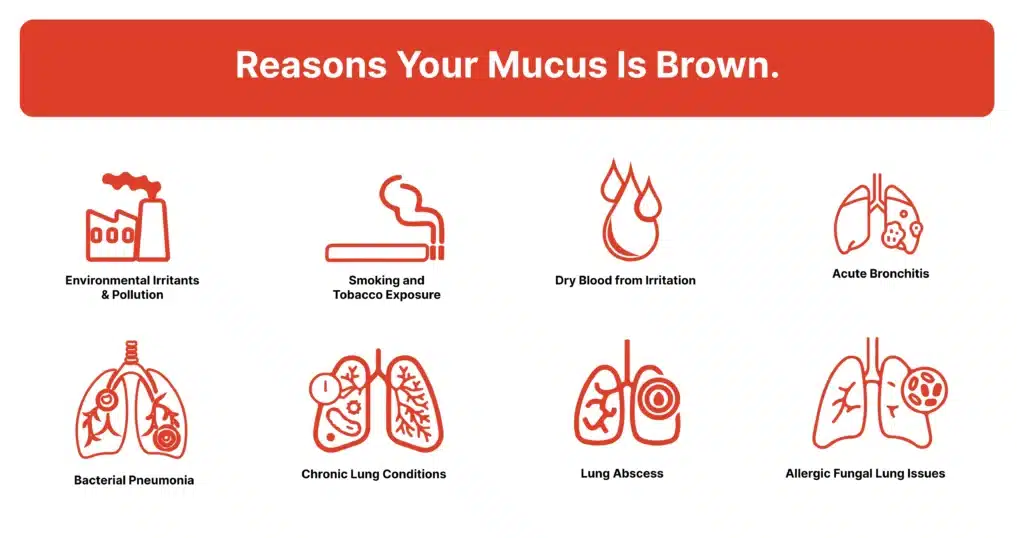
Brown mucus indicates that your respiratory system is reacting to an irritant, minor bleeding, or inflammation. While often not serious, understanding the underlying cause is essential to manage symptoms and prevent complications. Below are the most common contributors.
Environmental Irritants & Pollution
Breathing in dust, smoke, or industrial fumes can stain mucus brown. People living in polluted areas or working in dusty conditions are most affected. Even short-term exposure to wildfire smoke or vehicle emissions can trigger brown mucus from the nose. Your body produces this mucus as a protective barrier against inhaled particles.
Smoking and Tobacco Exposure
Tar, nicotine, and other chemicals from smoking can mix with mucus, giving it a brown color. Even after quitting, lungs may continue clearing trapped particles. Long-term smokers often experience thicker, discolored mucus more frequently. Smoking also increases the risk of infections that contribute to brown phlegm.
Dry Blood from Irritation
Minor bleeding from nasal or airway vessels, caused by forceful coughing, dry air, or frequent nose blowing, can discolor mucus brown. This often results in brown mucus in the throat or nose. Even mild irritation can cause temporary changes. Persistent bleeding, however, warrants medical evaluation.
Acute Bronchitis
Inflammation from bronchitis can trigger excess mucus production. Small amounts of bleeding from irritated tissue can mix with mucus, turning it brown. This condition is commonly viral but can sometimes be bacterial. Phlegm with brown flecks is often observed during coughing episodes.
Also Read: Upper Respiratory Infections
Bacterial Pneumonia
Bacterial pneumonia may produce thick, rust-colored, or brown phlegm. Infection and inflammation damage lung tissue and small blood vessels, causing brown mucus and a cough. Additional symptoms include fever, chills, and shortness of breath. Prompt medical care is critical to prevent complications.
Chronic Lung Conditions
Chronic diseases like COPD, bronchiectasis, and cystic fibrosis lead to persistent inflammation and mucus buildup. Repeated irritation and minor bleeding often result in ongoing brown phlegm. Patients may experience chronic cough and frequent mucus production. Managing the underlying condition helps reduce brown mucus episodes.
Lung Abscess
A lung abscess is a localized infection that can produce foul-smelling brown or blood-tinged mucus. Tissue damage and infection contribute to brown mucus spit and may cause fever or malaise. Treatment often requires antibiotics or drainage. Early intervention prevents further lung complications.
Allergic Fungal Lung Issues
Fungal allergies, such as reactions to Aspergillus, can inflame airways and produce phlegm with brown flecks. This is common in people with asthma or weakened immunity. The mucus may be thicker than normal. Identifying the fungus or allergen is essential for effective treatment.
When Brown Mucus Is an Emergency?
Most of the time, brown mucus alone doesn’t require emergency care. However, certain signs alongside brown or brown phlegm with blood suggest more serious issues:
- Trouble breathing, wheezing, or shortness of breath.
- High fever or chills.
- Chest pain or rapid heartbeat.
- Confusion or extreme weakness.
- Large amounts of brown mucus spit or persistent brown mucus in the throat.
If you experience these emergency symptoms, contact the Altus Emergency Centers without delay, especially if symptoms escalate quickly.
How to Get Rid of Mucus
Managing thick or discolored mucus involves supporting your body’s natural clearance mechanisms. Hydration, mucus-thinning strategies, and avoiding irritants can help reduce brown mucus from the nose or throat and ease discomfort.
Treatments for Brown Mucus
- Expectorants (e.g., Guaifenesin): Thin mucus for easier coughing, especially helpful for thick, rubbery mucus from the throat.
- Hydration & Steam Therapy: Drinking fluids and inhaling steam loosens brownish-yellow mucus, aiding clearance from the airways.
- Nasal Saline Irrigation: Saline sprays or rinses flush out mucus and brown discharge, reducing irritation from dust, blood, or pollutants.
- Avoiding Irritants: Limiting exposure to smoke, pollution, and allergens prevents further discoloration of mucus.
- Antibiotics or Antifungals (When Prescribed): Used for confirmed bacterial or fungal infections to clear pathogens and reduce brown phlegm production.
- Bronchodilators & Inhaled Therapies: Medications for chronic conditions like COPD or bronchitis reduce airway inflammation and improve mucus clearance.
- Rest & Immune Support: Adequate rest, nutrition, and immune support help the body fight infections, causing brown mucus and cough.
Altus Emergency Centers: Expert Care for Brown Mucus
If you are asking yourself, “Why Is My Mucus Brown?” or notice persistent brown phlegm, it may indicate infection, irritation, or environmental exposure. At Altus Emergency Centers, our medical team provides fast, thorough evaluation to identify the cause and guide effective treatment. Early intervention can prevent complications and protect your respiratory health.
Our center also offers inpatient care when needed for severe infections or chronic lung conditions. From monitoring thick or brown mucus in the throat or nose to personalized treatment plans, we deliver compassionate, expert care to help you recover safely and comfortably.
