

Have you ever wondered, “Why Is My Mucus Black?” Seeing dark or black phlegm can be alarming, and it often raises concerns about your respiratory health. Understanding the reasons behind black mucus is crucial to identify potential risks and know when to seek help.
Whether it appears occasionally or persists over time, learning what might be causing it can help you take the right steps. If symptoms worsen or feel severe, our emergency room in Waxahachie is ready to provide prompt care.
What Is Black Mucus?
Black mucus, also called black phlegm or melanoptysis, is sputum that appears dark or black due to trapped particles, tissue debris, or infections. It often results from inhaled pollutants, smoke, or lung tissue changes. A study on coal workers with pneumoconiosis found black-pigmented sputum from liquefied lung masses, indicating serious lung damage. This makes black mucus a significant indicator requiring careful medical attention.
Symptoms Of Black Mucus
- Frequent coughs produce dark or black sputum.
- Black specks in phlegm or black spots within mucus.
- Thick, sticky mucus rather than thin and watery.
- Possible change in smell (mucus might smell worse than usual).
- Nasal congestion or nasal discharge (black snot).
What Causes Black Mucus?
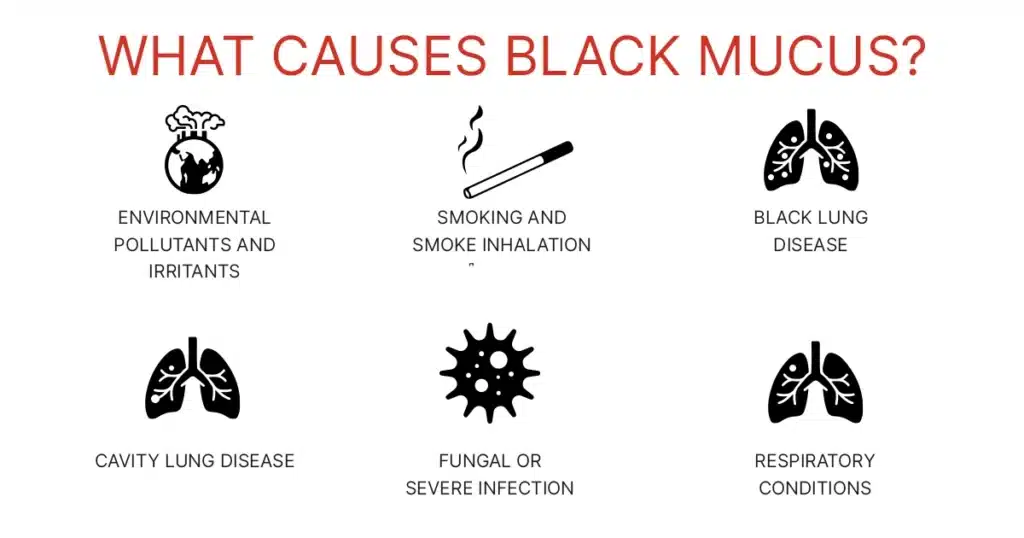
Black mucus doesn’t appear randomly; it often signals that your respiratory system is reacting to inhaled particles or an underlying disease. Causes vary in severity and origin, making context crucial for proper evaluation.
Environmental Pollutants And Irritants
Living or working in areas with heavy air pollution, including soot, dust, industrial chemicals, or smoke, can lead to mucus trapping those particles. Over time, these inhaled pollutants accumulate in the respiratory tract, darkening phlegm and sputum. People exposed regularly may notice black snot or black phlegm even without illness.
Smoking And Smoke Inhalation
Tobacco smoke, wildfire smoke, or smoke from burning wood deposits tar and other residues into the airways. These substances mix with mucus, turning it dark or black, and can irritate the lungs over time. Smoking also damages cilia, the lung’s cleaning mechanism, allowing thickened mucus to accumulate.
Black Lung Disease
Long-term inhalation of coal dust, silica, or other industrial particles can cause occupational lung diseases like pneumoconiosis. Scar tissue and fibrosis in the lungs trap these particles, resulting in black-pigmented sputum. This black mucus may persist and indicate chronic lung damage.
Fungal Or Severe Infections
Certain infections, including upper respiratory infections, can cause black mucus, particularly in individuals with weakened immune systems or preexisting lung conditions. The infection may also lead to tissue damage and bleeding, darkening the sputum further. Timely medical evaluation is critical to prevent complications.
Cavitary Lung Disease
Diseases that create cavities in the lungs, or necrosis of lung tissue, can lead to liquefied tissue draining into the airways. This process often produces black or dark-colored mucus mixed with debris. Such conditions may require imaging and urgent medical attention.
Respiratory Conditions
Chronic conditions like COPD or prolonged lung damage can cause thick mucus that accumulates debris, dried blood, or pollutants. Over time, this can appear as dark or black phlegm, which may occur in infections like bronchitis. Persistent black mucus in these cases often signals a worsening of the underlying respiratory condition.
Learn More About: Winter Respiratory Illnesses
When Black Mucus Could Be Dangerous
Sometimes black mucus results from temporary exposure (e.g., smoke, dust) and resolves on its own. However, persistent black mucus or black phlegm may indicate serious underlying conditions. Watch out for these warning signs:
- Cough lasting several weeks or worsening over time.
- Increasing amounts of dark or black sputum.
- Blood in mucus or phlegm.
- Chest pain, shortness of breath, or difficulty breathing.
- Unexplained weight loss, night sweats, or general weakness.
- Fever, chills, or other signs of systemic illness.
If you notice these signs, especially along with black mucus, contact the Altus Emergency Centers immediately.
How Mucus Forms and Where It Exists
Mucus is a protective fluid produced by membranes in the respiratory tract, trapping dust, microbes, and allergens to prevent lung damage. The body continuously produces and clears it to maintain healthy airways. When irritants, infections, or tissue damage occur, mucus collects debris such as soot, dead cells, or blood. This buildup can change its color, making it appear black or dark when expelled.
Where Mucus/Spread Can Occur:
- Nasal Passages And Sinuses: Dark mucus often appears as black snot from trapped particles.
- Throat And Upper Airway: Post-nasal drip can deposit dark mucus in the throat.
- Bronchi And Lungs: Deeper airways can mix mucus with debris, blood, or infection-related material, producing black phlegm.
- When Coughing: Lung-derived mucus (sputum) may appear black, indicating deeper respiratory involvement.
Treatments for Black Mucus
Treatment depends on the underlying cause. Causes range from temporary exposure (dust, smoke) to serious lung diseases or infections. Correct diagnosis ensures proper treatment. Early intervention can help reduce symptoms and prevent complications.
Medical treatment
- Antibiotics Or Antifungal Medications: Treat infections causing black mucus.
- Lifestyle Changes / Pollutant Avoidance: Quit smoking and reduce exposure to polluted environments.
- Respiratory Therapy / Lung Treatments: In chronic conditions, inhalers, bronchodilators, or physiotherapy may help.
- Specialized Occupational Lung Care: For pneumoconiosis, monitoring, imaging, and oxygen therapy may be needed.
How To Get Rid Of Mucus Naturally
- Stay Hydrated: Fluids thin mucus for easier clearance.
- Use A Humidifier: Moist air loosens mucus in dry environments.
- Avoid Irritants: Smoke, dust, and pollutants worsen black mucus.
- Nasal Rinses Or Saline Sprays: Clear the nasal passages of trapped particles.
How To Get Rid Of Mucus In The Throat
- Gentle Throat Clearing Or Coughing: Helps expel sputum safely.
- Steam Inhalation: Loosens mucus in the throat and airways.
- Elevate Head During Sleep: Reduces post-nasal drip accumulation.
- Avoid Allergens And Irritants: Reduces mucus production and throat irritation.
Altus Emergency Centers: Care for Black Mucus
Are you seeing dark or black phlegm and asking yourself, “Why is my mucus black?” While sometimes caused by smoke or dust, persistent black mucus can indicate serious respiratory issues that need prompt medical attention. Early evaluation can help prevent complications and ensure the right treatment.
At Altus Emergency Centers, our team provides fast, trusted emergency care for patients with troubling respiratory symptoms. From black snot and phlegm with brown flecks to coughing up dark mucus, we offer personalized assessment, monitoring, and guidance to protect your lung health and reduce discomfort.