

If you frequently deal with abdominal pain, bloating, diarrhea, or constipation, it can be frustrating when these symptoms keep coming back. Irritable bowel syndrome (IBS) is a common digestive condition that can affect your daily comfort and bowel habits.
IBS is a disorder of gut-brain interaction that affects how the intestines function. It commonly causes recurring abdominal pain along with changes in bowel movements, such as diarrhea, constipation, or both. IBS does not cause visible damage to the digestive tract, but persistent or severe symptoms should be medically evaluated at an ER in Waxahachie, TX.
What Causes IBS Disease?
If you are dealing with recurring abdominal pain, bloating, diarrhea, or constipation, it is understandable to want to know what is behind these symptoms. IBS does not have one single known cause and may develop from several factors that affect how the gut and brain communicate. These factors can vary from person to person, so identifying your triggers can help with symptom management and appropriate medical care.
- Problems With Gut-Brain Interaction: Changes in communication between the brain and digestive system can increase gut sensitivity and affect how quickly food moves through the intestines.
- Digestive Tract Infections: Some people develop IBS symptoms after a bacterial infection or episode of gastroenteritis, even after the infection has cleared.
- Changes In Gut Bacteria: Differences in the types or amounts of bacteria in the digestive tract may contribute to IBS symptoms, although researchers are still studying this connection.
- Food Sensitivities: Certain foods can trigger or worsen IBS symptoms, but individual food triggers vary from person to person.
- Stress: Stress can affect gut-brain communication and may trigger or worsen abdominal pain, diarrhea, constipation, and other IBS symptoms.
- Genetic Factors: IBS can run in families, suggesting that genetics may play a role, although having a family history does not mean you will develop IBS.
Dangerous IBS Symptoms
IBS commonly causes abdominal pain, bloating, diarrhea, constipation, and changes in bowel habits, but some symptoms should not be assumed to be caused by IBS. A study of 337 people with IBS found that 82.5% reported bloating, showing how common this symptom can be. However, blood in the stool, unexplained weight loss, anemia, severe or worsening abdominal pain, or symptoms that wake you at night can signal another condition and require prompt medical evaluation.
- Severe or worsening abdominal pain.
- Blood in the stool or black, tarry stools.
- Unexplained weight loss.
- Persistent vomiting or inability to keep fluids down.
- Fever along with significant digestive symptoms.
- Severe or persistent diarrhea.
- New symptoms that begin later in adulthood.
- Symptoms that repeatedly wake you from sleep.
- Signs of anemia, such as unusual weakness, fatigue, or shortness of breath.
- A significant change in bowel habits that does not improve.
If any of these warning signs occur, do not assume they are simply part of IBS. Seek prompt medical attention or visit the nearest emergency room if symptoms are severe, sudden, or worsening.
How Is IBS Diagnosed?
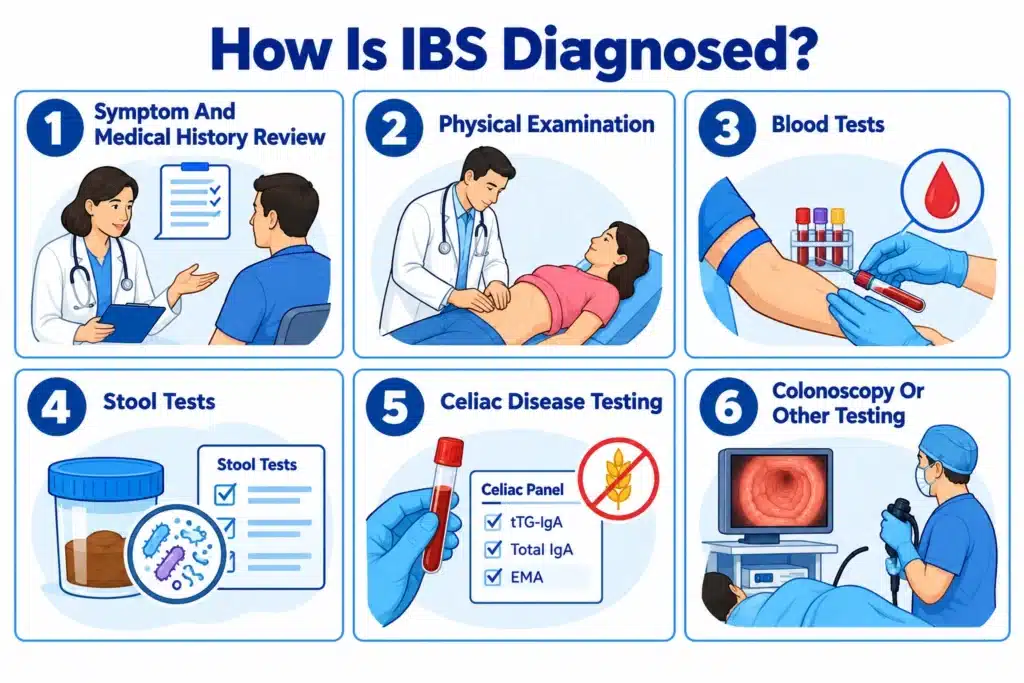
Getting a clear explanation for recurring abdominal pain, bloating, diarrhea, or constipation can be reassuring, especially when symptoms keep returning. IBS is diagnosed by looking at the overall pattern of symptoms rather than relying on one specific test. A healthcare professional will consider your medical history, symptoms, and physical examination to determine whether they fit IBS.
Symptom And Medical History Review
Your healthcare provider will ask about abdominal pain, bowel movements, stool consistency, and how long your symptoms have been occurring. They may also ask whether symptoms improve or worsen after passing stool, along with questions about diet, medications, previous infections, and family history. This information helps determine whether your symptoms match the typical pattern of IBS.
Physical Examination
A physical examination helps your provider assess your overall health and look for findings that may suggest another cause of your digestive symptoms. They may examine your abdomen for tenderness, swelling, or other abnormalities. The findings can help determine whether additional testing is necessary.
Blood Tests
Blood tests do not confirm IBS, but they can help rule out other conditions with similar symptoms. For people with IBS symptoms and diarrhea, testing for celiac disease is commonly recommended. Other blood tests may be considered depending on your symptoms, medical history, and physical examination.
Stool Tests
Stool tests may be useful when diarrhea is present and inflammatory bowel disease or another intestinal condition needs to be considered. Fecal calprotectin can help distinguish inflammatory bowel disease from IBS in appropriate patients. Other stool testing may be considered when an infection or another digestive problem is suspected.
Celiac Disease Testing
Celiac disease can cause symptoms similar to IBS, including abdominal pain, bloating, and diarrhea. Blood testing can check for antibodies associated with celiac disease. This testing is particularly important when a person has IBS symptoms with diarrhea or other features that raise concern for celiac disease.
Colonoscopy Or Other Testing
A colonoscopy is not routinely needed to diagnose IBS in younger adults who have typical symptoms and no warning signs. Your provider may recommend a colonoscopy or other testing if you have concerning symptoms, are due for colorectal cancer screening, or need evaluation for another gastrointestinal condition.
When To Go To The ER
IBS symptoms are usually not life-threatening, but severe or unusual symptoms should not be ignored. Go to the ER if you have sudden or severe abdominal pain, heavy rectal bleeding, repeated vomiting, severe dehydration, fainting, or other symptoms that could indicate a more serious condition.
- Severe or sudden abdominal pain.
- Heavy rectal bleeding or black, tarry stools.
- Repeated vomiting or inability to keep fluids down.
- Severe dehydration, dizziness, or fainting.
- High fever with severe abdominal or digestive symptoms.
- A swollen or rigid abdomen with worsening pain.
- New symptoms that are significantly different from your usual IBS symptoms.
How To Treat IBS
IBS treatment focuses on controlling symptoms and reducing flare-ups. Because IBS affects people differently, treatment depends on whether diarrhea, constipation, abdominal pain, or bloating is the main concern. A combination of diet, lifestyle changes, remedies, and medication may provide better symptom control.
- Low-FODMAP Diet: This diet can reduce bloating, gas, abdominal pain, and bowel changes. Most doctors recommend trying it with a dietitian and gradually reintroducing foods.
- Soluble Fiber: Psyllium and other soluble fibers can improve bowel regularity, especially with constipation. Most doctors recommend increasing fiber slowly to avoid worsening gas and bloating.
- Over-The-Counter Medicines: Most doctors recommend loperamide for diarrhea when appropriate. For constipation, polyethylene glycol or fiber supplements may help.
- Peppermint Oil: Enteric-coated peppermint oil may reduce abdominal pain and bloating. Most doctors recommend checking with a healthcare professional before using supplements.
- Prescription Medicines: Depending on the IBS type, doctors may prescribe medicines such as rifaximin for IBS with diarrhea or linaclotide for IBS with constipation.
- Probiotics: Some people may benefit from probiotics, although results vary. Most doctors recommend discussing their use with a healthcare professional first.
- Regular Exercise: Physical activity may improve bowel function and reduce IBS symptoms. Aim for regular, manageable activity rather than intense exercise during flare-ups.
- Stress Management: Stress can worsen IBS symptoms. Relaxation techniques, adequate sleep, and stress-management strategies may help reduce flare-ups.
- Gut-Directed Therapy: Cognitive behavioral therapy and gut-directed hypnotherapy may help manage persistent IBS symptoms by addressing the gut-brain connection.
- Pelvic Floor Therapy: People with constipation or difficulty passing stool may benefit from pelvic floor therapy or biofeedback to improve bowel movement coordination.
Here is a version tailored to the IBS blog, with the 24/7 emergency room mention and no wait time:
Altus Emergency Centers For IBS Care
If IBS symptoms become severe or are accompanied by intense abdominal pain, persistent vomiting, blood in the stool, severe dehydration, or fainting, seek emergency care without delay. At Altus Emergency Centers, our 24/7 emergency room is equipped to evaluate serious digestive symptoms and provide prompt emergency care.
From diagnostic evaluation and symptom management to treatment for dehydration, bleeding, or other concerning complications, Altus Emergency Centers provides timely, compassionate emergency care. If your symptoms suddenly become severe or continue to worsen, do not wait for them to improve on their own. Seek immediate medical attention.
Key Takeaways
- IBS is a common digestive disorder that causes recurring abdominal pain and changes in bowel habits.
- Common symptoms include bloating, diarrhea, constipation, gas, and abdominal discomfort.
- IBS does not damage the digestive tract, but severe or unusual symptoms may indicate another condition.
- Treatment may include dietary changes, fiber, lifestyle changes, over-the-counter medicines, and prescription medications.
- Seek emergency care for severe abdominal pain, heavy bleeding, persistent vomiting, severe dehydration, or fainting.
Frequently Asked Questions
Is IBS An Autoimmune Disease?
No, IBS is not considered an autoimmune disease. IBS is a disorder of gut-brain interaction that affects how the digestive system functions. Unlike autoimmune diseases, IBS does not cause the immune system to attack healthy tissues.
Is IBS Curable?
There is currently no single cure for IBS, but its symptoms can often be managed effectively. Dietary changes, lifestyle adjustments, stress management, and appropriate medications can help reduce symptoms and improve quality of life.
Is IBS A Disability?
IBS can be considered disabling when severe symptoms significantly interfere with a person’s ability to work or perform daily activities. Whether it qualifies as a disability depends on the severity of the condition and applicable legal or workplace requirements.
Is IBS Dangerous?
IBS itself is generally not dangerous and does not damage the digestive tract or increase the risk of colorectal cancer. However, severe symptoms such as significant bleeding, unexplained weight loss, persistent vomiting, or severe abdominal pain should be evaluated promptly because they may indicate another condition.