

Asthma symptoms can appear without warning, turning an ordinary day into a stressful experience. If you or someone you love keeps dealing with coughing, wheezing, chest tightness, or shortness of breath, it’s natural to wonder what causes asthma and why these episodes keep happening. Knowing the possible triggers is the first step toward recognizing the condition early.
Ignoring recurring breathing problems can allow symptoms to become more severe over time. While some asthma flare-ups are mild, others can quickly become life-threatening and require emergency medical care. Our ER Lumberton TX provides prompt evaluation and treatment for asthma attacks and other respiratory emergencies.
What Is Asthma?
Asthma is a chronic lung condition that causes inflammation and narrowing of the airways, making it difficult for air to move in and out of the lungs. Symptoms often come and go, with flare-ups triggered by different environmental or physical factors. The severity varies from person to person, ranging from mild occasional symptoms to life-threatening asthma attacks. Early diagnosis and proper treatment can help most people manage the condition and maintain an active lifestyle.
Study: A systematic review and meta-analysis published in The Lancet Respiratory Medicine estimated that 5.4% of people aged 5–69 years worldwide had current asthma in 2019, highlighting the ongoing global burden of this chronic respiratory disease.
Understanding What Causes Asthma
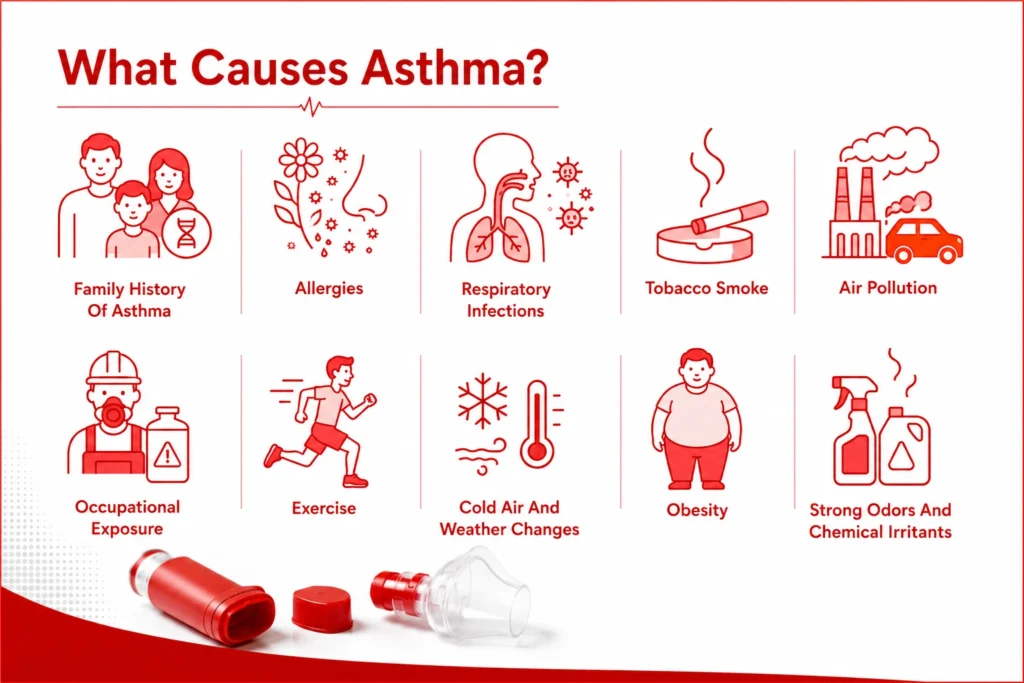
If you or your child has asthma, it is understandable to wonder why it developed. Asthma usually results from a combination of genetic and environmental factors rather than a single cause. Some people are born with a higher risk, while others develop asthma after repeated exposure to certain triggers or respiratory illnesses. Identifying what contributes to asthma can help reduce flare-ups and improve long-term symptom control.
Family History Of Asthma
People with a parent or sibling who has asthma are more likely to develop the condition themselves. Certain inherited genes can make the immune system more sensitive to allergens and airway inflammation. Although genetics increase the risk, not everyone with a family history develops asthma.
Allergies
Allergic reactions are one of the most common causes of asthma symptoms. Pollen, dust mites, mold, pet dander, and cockroach allergens can trigger airway inflammation in sensitive individuals. Managing allergies often helps reduce asthma flare-ups.
Respiratory Infections
Viral infections such as the common cold, influenza, or RSV can irritate the airways and contribute to asthma, especially in children. Frequent respiratory infections during early childhood may increase the likelihood of developing asthma later in life.
Tobacco Smoke
Exposure to cigarette smoke, whether through active smoking or secondhand smoke, damages the airways and increases inflammation. Children exposed to tobacco smoke are at a significantly higher risk of developing asthma and experiencing more severe symptoms.
Air Pollution
Outdoor pollution, vehicle exhaust, industrial emissions, and indoor pollutants can irritate sensitive airways. Long-term exposure to poor air quality increases the risk of asthma and can make existing symptoms more frequent and severe.
Occupational Exposure
Some workplaces expose employees to dust, chemicals, paints, fumes, or industrial gases that irritate the lungs. Continued exposure may lead to occupational asthma, particularly among healthcare workers, cleaners, farmers, and factory employees.
Exercise
Physical activity, especially in cold or dry weather, can temporarily narrow the airways in some people. This condition, known as exercise-induced bronchoconstriction, often causes coughing, wheezing, or shortness of breath during or after exercise.
Cold Air And Weather Changes
Cold, dry air can irritate the airways and trigger asthma symptoms. Sudden changes in temperature or humidity may also contribute to coughing, wheezing, and chest tightness in people with asthma.
Obesity
Excess body weight places additional strain on the lungs and increases inflammation throughout the body. Research suggests obesity may increase the risk of developing asthma and make symptoms more difficult to control.
Strong Odors And Chemical Irritants
Perfumes, cleaning products, paint fumes, smoke, and other strong odors can irritate the airways. These substances do not always cause asthma but commonly trigger symptoms in people who already have the condition.
Asthma Symptoms You Should Never Ignore
- Severe shortness of breath.
- Persistent wheezing.
- Chest tightness or pressure.
- Continuous coughing, especially at night.
- Difficulty speaking because of breathlessness.
- Rapid breathing.
- Lips or fingernails turning blue or gray.
- Needing to use a rescue inhaler more often than usual.
- Symptoms that suddenly become worse.
- Confusion or extreme fatigue during an asthma attack.
If these symptoms become severe or rapidly worsen, visit the nearest emergency room for immediate evaluation and treatment.
How To Test For Asthma?
Asthma cannot be diagnosed based on symptoms alone because several lung conditions can cause similar breathing problems. A healthcare provider evaluates your medical history, symptoms, and breathing function to confirm the diagnosis. Testing also helps determine the severity of asthma and guides the most appropriate treatment plan. Early testing is important if symptoms keep returning or interfere with daily activities.
- Spirometry: Measures how much air you can breathe in and out and how quickly you can exhale. It is the most common test used to diagnose asthma and monitor lung function.
- Peak Flow Test: Uses a handheld device to measure how forcefully you can blow air out of your lungs. It helps monitor asthma control at home and detect worsening symptoms.
- Bronchodilator Reversibility Test: Spirometry is repeated after using a bronchodilator inhaler. Improved breathing after the medication supports an asthma diagnosis.
- Methacholine Challenge Test: If routine tests are normal but asthma is still suspected, this test checks whether your airways become overly sensitive after inhaling methacholine.
- Fractional Exhaled Nitric Oxide (FeNO) Test: Measures nitric oxide in your breath, which can indicate airway inflammation commonly seen in asthma.
- Allergy Testing: Skin or blood tests identify allergens that may trigger asthma symptoms and help guide avoidance strategies.
- Chest X-Ray: Although it does not diagnose asthma directly, it helps rule out pneumonia, lung disease, or other conditions causing breathing symptoms.
- Blood Tests: May identify allergies, infections, or elevated eosinophils that can contribute to asthma.
When To Go To The ER
An asthma attack can become a life-threatening emergency within minutes. Seek emergency medical care immediately if symptoms are severe, rapidly worsening, or do not improve after using a rescue inhaler.
- Severe shortness of breath that does not improve.
- Blue lips, face, or fingernails.
- Difficulty speaking full sentences.
- Rapid breathing with chest retractions.
- A rescue inhaler provides little or no relief.
- Extreme drowsiness or confusion.
- Wheezing suddenly stops despite worsening breathing.
- Loss of consciousness.
If you experience any of these warning signs, visit our 24/7 emergency room immediately for prompt asthma treatment.
Asthma Treatment
Asthma treatment focuses on controlling airway inflammation, preventing flare-ups, and quickly relieving symptoms when they occur. Your treatment plan depends on your age, symptom frequency, asthma severity, and individual triggers. Working closely with a healthcare provider helps achieve better long-term control and reduces the risk of severe attacks.
- Rescue Inhalers (Albuterol): Most doctors recommend a rescue inhaler such as albuterol to quickly open the airways and relieve sudden asthma attacks.
- Inhaled Corticosteroids: Most doctors recommend daily inhaled corticosteroids to reduce airway inflammation and prevent asthma flare-ups.
- Combination Inhalers: Most doctors recommend combination inhalers for moderate to severe asthma to improve long-term symptom control.
- Leukotriene Modifiers: Most doctors recommend these oral medications to reduce inflammation and help control allergy-related asthma.
- Allergy Medications: Most doctors recommend antihistamines or allergy immunotherapy if allergies are triggering asthma symptoms.
- Biologic Therapy: Most doctors recommend biologic injections for severe asthma that does not respond to standard treatments.
- Oxygen Therapy: Most doctors recommend oxygen therapy during severe asthma attacks to maintain healthy oxygen levels.
- Nebulizer Treatments: Most doctors recommend nebulizer treatments during severe flare-ups to deliver medication directly into the lungs.
- Trigger Avoidance: Most doctors recommend avoiding smoke, allergens, pollution, and other known asthma triggers.
- Breathing Exercises: Most doctors recommend breathing exercises to improve breathing control alongside prescribed medications.
- Regular Exercise: Most doctors recommend regular physical activity once asthma is well controlled to support lung health.
- Asthma Action Plan: Most doctors recommend following a personalized asthma action plan to recognize worsening symptoms and seek timely treatment.
Altus Emergency Centers for Asthma Treatment
Asthma can result from a combination of genetics and environmental triggers such as allergies, infections, smoke, and pollution. Recognizing symptoms early and seeking timely treatment can help prevent serious asthma attacks and improve long-term control.
At Altus Emergency Centers, our emergency physicians are available 24/7 to evaluate and treat asthma attacks and other breathing emergencies. If your symptoms become severe or don’t improve with treatment, visit us for prompt emergency care.
Key Takeaways
- Asthma develops from a combination of genetic factors and environmental triggers, including allergies, respiratory infections, tobacco smoke, air pollution, and workplace irritants.
- Common asthma symptoms include wheezing, coughing, chest tightness, and shortness of breath. Symptoms that become severe or suddenly worsen require immediate medical attention.
- Asthma is diagnosed using breathing tests such as spirometry, peak flow testing, bronchodilator reversibility testing, and other evaluations based on your symptoms and medical history.
- Treatment focuses on long-term control and quick symptom relief through rescue inhalers, controller medications, trigger avoidance, and a personalized asthma action plan.
- Go to the ER immediately if breathing becomes extremely difficult, your rescue inhaler does not help, your lips or fingernails turn blue, or you have trouble speaking because of shortness of breath.
Frequently Asked Questions
Is Asthma Genetic?
Yes. Genetics can increase your risk of developing asthma, especially if a close family member has the condition. However, environmental exposures, allergies, and respiratory infections also contribute to whether asthma develops.
Can Asthma Go Away?
Asthma symptoms may become less frequent or even disappear for a period of time, particularly in children. However, asthma is a chronic condition, and symptoms can return later, making ongoing monitoring and proper management important.
Can You Develop Asthma As An Adult?
Yes. Asthma can first appear in adulthood, even if you never had symptoms as a child. It may be triggered by allergies, workplace exposures, respiratory illnesses, smoking, air pollution, or other environmental factors.
How To Test For Asthma?
Asthma is diagnosed by reviewing your symptoms, medical history, and lung function. Spirometry is the primary test, but your healthcare provider may also use peak flow measurements, bronchodilator testing, FeNO testing, allergy testing, or other evaluations to confirm the diagnosis.