
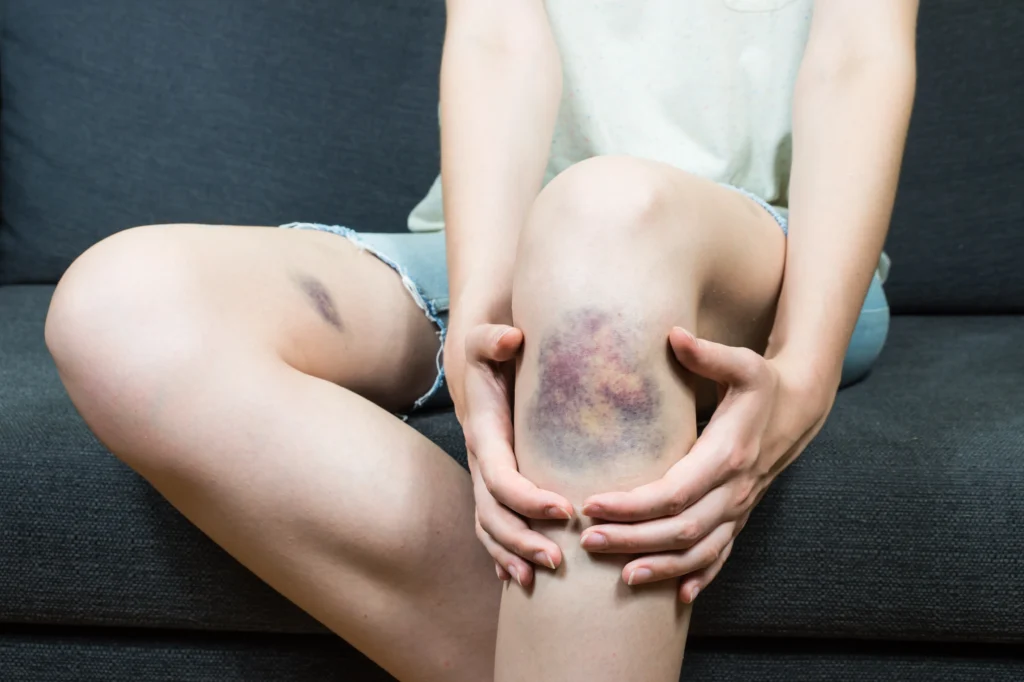
You glance down and notice a purple mark on your leg, and you have no idea how it got there. Everyone bruises now and then, but if you find yourself asking “why do I bruise so easily?” more often than you used to, your body may be telling you something. In many cases, easy bruising is harmless and linked to age or thin skin. In other cases, it can point to a medication side effect, a vitamin deficiency, or a problem with how your blood clots.
Most bruises fade on their own within two weeks. But large, unexplained bruises, especially with bleeding gums, nosebleeds, or after a fall or head injury, deserve a closer look. Our Lake Jackson ER is open 24/7 to evaluate injuries and unusual bleeding with on-site imaging and lab testing.
What Is a Bruise?
A bruise, also called a contusion, forms when small blood vessels under the skin break and leak blood into the surrounding tissue. The trapped blood creates the familiar discoloration, which changes color as your body breaks it down:
- Red or purple: in the first day or two.
- Blue or dark purple: around days 2 to 5.
- Green: around days 5 to 7.
- Yellow or light brown: around days 7 to 10, before it fades completely.
10 Common Reasons You Bruise Easily
1. Aging
As we get older, the skin becomes thinner and loses some of its protective fat layer. Blood vessels also become more fragile, so even a light bump can leave a mark. Many older adults notice dark purple patches on the forearms and backs of the hands, known as senile purpura.
2. Blood-Thinning Medications
Medicines such as warfarin, apixaban, rivaroxaban, clopidogrel, and daily aspirin make it harder for blood to clot. Bruising more easily is a common side effect. Never stop these medications on your own, but tell your doctor if bruising suddenly increases.
3. Other Medications and Supplements
Steroids, some antidepressants, and certain antibiotics can increase bruising. Supplements like fish oil, ginkgo biloba, vitamin E, and garlic can also thin the blood.
4. Vitamin Deficiencies
Vitamin C helps build the collagen that supports blood vessel walls, and vitamin K helps your blood clot. Low levels of either can lead to easy bruising and bleeding gums.
5. Sun Damage
Years of sun exposure weaken the skin and the tissue around blood vessels, making bruises more likely on sun-exposed areas.
6. Bleeding Disorders
Conditions such as von Willebrand disease and hemophilia affect the proteins that help blood clot. People with these disorders may bruise easily, bleed for a long time after cuts, or have heavy menstrual periods.
7. Low Platelet Count (Thrombocytopenia)
Platelets are the cells that plug damaged blood vessels. When levels are low because of infection, medication, immune conditions, or bone marrow problems, bruises and tiny red skin spots called petechiae can appear.
8. Liver Disease
The liver makes many of the proteins that help blood clot. Liver disease, including damage from heavy alcohol use, can cause easy bruising and bleeding.
9. Blood Cancers
Leukemia and other blood cancers can crowd out healthy blood cells. Easy bruising may come with fatigue, frequent infections, fever, or unexplained weight loss.
10. Unnoticed Bumps and Falls
Sometimes the explanation is simple: you bumped into furniture or a doorframe and did not notice. However, older adults on blood thinners should take falls seriously, since bleeding inside the body or head can be hidden at first.
How Doctors Find the Cause of Easy Bruising
If you are bruising more than usual, your doctor will ask about your medications, supplements, and family history, then examine your skin. A simple blood test lab panel can check your platelet count, clotting time, liver function, and vitamin levels. At our Lumberton location, on-site labs return many results quickly, so you do not have to wait days for answers.
Common tests include a complete blood count (CBC), prothrombin time (PT/INR), partial thromboplastin time (PTT), and sometimes tests for specific clotting factors.
Read more: What is a Blood Clot?
When Should You Worry About Bruising?
Make an appointment with your doctor if you notice:
- Frequent, large bruises with no known cause.
- Bruises on your back, face, or torso without an injury.
- Bruising that started after beginning a new medication.
- Bruises that do not improve after two weeks.
- A family history of bleeding problems.
Go to the ER or call 911 if bruising comes with:
- Bleeding that will not stop after 10 minutes of pressure.
- Blood in your urine or stool, or vomiting blood.
- A severe headache, confusion, or vomiting after a head injury.
- Sudden swelling, severe pain, or numbness around a bruise.
- Fever, extreme fatigue, or many small red or purple spots on the skin.
Serious bruising after a car accident, sports collision, or fall can hide damage underneath, such as fractures or internal bleeding. Our emergency room for trauma injury care in Lumberton uses X-rays and CT scans to check what is happening below the skin.
How to Treat a Bruise at Home
Most bruises heal on their own. These steps can ease pain and swelling:
- Ice it: apply a cold pack wrapped in a cloth for 15 to 20 minutes at a time during the first 24 to 48 hours.
- Elevate it: raise the bruised area above your heart when possible.
- Rest: avoid heavy use of the injured area for a day or two.
- Use warm compresses later: after 48 hours, gentle warmth can help the body reabsorb the blood.
- Choose pain relief carefully: acetaminophen is usually preferred, since aspirin and ibuprofen can increase bleeding.
How to Prevent Easy Bruising
You cannot prevent every bruise, but you can lower your risk:
- Clear clutter, rugs, and cords to reduce trips and falls at home.
- Use night lights and grab bars, especially for older family members.
- Eat foods rich in vitamins C and K, such as citrus fruit, berries, and leafy greens.
- Protect your skin from the sun.
- Review your medications and supplements with your doctor once a year.
Falls are one of the leading causes of bruising and injury in older adults. If a loved one has had a fall, watch for pain, swelling, or bruising that spreads. Our Waxahachie team treats slip and fall injuries around the clock, including fractures and head injuries.
Frequently Asked Questions
Why do I bruise so easily on my legs?
Legs bump into furniture and objects more often than other parts of the body, and blood vessels in the legs are under more pressure. Easy leg bruising is common, but sudden changes should be checked.
Can stress cause bruising?
Stress does not directly cause bruises, but it can affect sleep and diet, and some people bump into things more when they are tired or distracted.
Are unexplained bruises a sign of cancer?
Rarely. Most unexplained bruises have harmless causes. However, bruising with fatigue, fever, frequent infections, or weight loss should be checked by a doctor.
Why do women bruise more easily than men?
Women generally have thinner skin and a different distribution of fat and collagen, which can make bruising more noticeable.
Get Answers About Bruising at Altus Emergency Centers
Easy bruising is often nothing to worry about, but it can sometimes be the first sign of a medication problem or blood disorder. Altus Emergency Centers in Lake Jackson, Lumberton, and Waxahachie are open 24/7 with board-certified physicians, on-site labs, and imaging.
If bruising comes with heavy bleeding, a head injury, or severe pain, do not wait. Visit your nearest Altus ER today.