
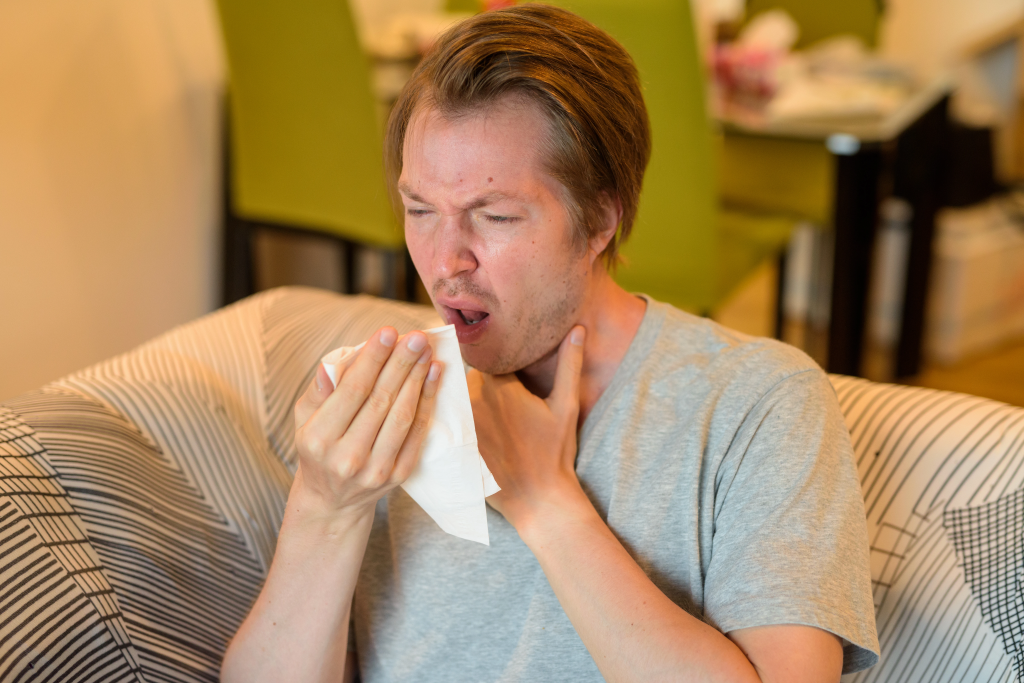
Wheezing is a high-pitched whistling sound that happens when air squeezes through narrowed or swollen airways. You usually hear it when breathing out, though it can happen on the way in too. Wheezing is not a disease by itself. It is a sign that something is irritating, inflaming, or blocking the tubes that carry air to your lungs, and figuring out what causes wheezing is the key to treating it.
Many cases come from short-term problems like a chest cold, while others point to conditions such as asthma, COPD, or a severe allergic reaction. If wheezing comes on suddenly or you are struggling to breathe, our Lake Jackson ER provides 24/7 breathing treatments, oxygen monitoring, and imaging to find the cause fast.
What Is Wheezing?
Your airways branch from the windpipe into smaller and smaller tubes inside the lungs. When those tubes tighten, swell, or fill with mucus, air has to move through a narrower space. That turbulence creates the musical, whistling sound known as wheezing.
Wheezing often comes with other symptoms, such as chest tightness, coughing, or shortness of breath. Some people wheeze only during exercise or at night, while others wheeze whenever they catch a cold.
Common Causes of Wheezing
1. Asthma
Asthma is the most common cause of recurring wheezing. Triggers like pollen, dust, smoke, cold air, or exercise make the airways tighten and swell. Wheezing from asthma often improves with a rescue inhaler, but an asthma attack that does not respond needs urgent care.
2. Respiratory Infections
Viral infections such as colds, flu, RSV, and COVID-19 can inflame the airways and fill them with mucus. Bronchitis and pneumonia can also cause wheezing along with fever and a deep cough. If an infection leaves you short of breath or wheezing hard, visiting an ER for respiratory infection symptoms, like our Waxahachie location, lets doctors check your oxygen and provide breathing treatments.
3. COPD
Chronic obstructive pulmonary disease, which includes emphysema and chronic bronchitis, permanently narrows the airways. People with COPD may wheeze daily and notice it getting worse during flare-ups.
4. Allergies and Anaphylaxis
Seasonal allergies can trigger wheezing in people with sensitive airways. A severe allergic reaction, called anaphylaxis, can cause sudden wheezing along with hives, throat swelling, and dizziness. Anaphylaxis is a medical emergency that needs epinephrine and a call to 911.
5. Bronchiolitis in Babies
Bronchiolitis, usually caused by RSV, inflames the smallest airways in infants and toddlers. It is a common reason young children wheeze during fall and winter.
6. Acid Reflux (GERD)
Stomach acid that backs up into the throat can irritate the airways, especially at night, and trigger wheezing or coughing.
7. Other Causes
- Inhaled objects: a small toy or piece of food stuck in a child’s airway can cause sudden one-sided wheezing.
- Smoking and vaping: both irritate and inflame the airways over time.
- Heart failure: fluid buildup in the lungs can cause wheezing, sometimes called cardiac asthma.
- Certain medicines: including beta-blockers and aspirin in sensitive people.
- Vocal cord dysfunction: the vocal cords close when they should open, causing noisy breathing.
Wheezing in Children
Children have smaller airways, so even mild swelling can cause noticeable wheezing. Common causes in kids include viral infections, bronchiolitis, asthma, and swallowing small objects. Watch closely for fast breathing, flaring nostrils, or skin pulling in around the ribs. Parents in Ellis County searching for a children hospital near me can bring kids to Altus Waxahachie for 24/7 pediatric emergency care, including breathing treatments and chest X-rays.
How to Relieve Mild Wheezing at Home
If your wheezing is mild and you are breathing comfortably otherwise, these steps may help while you wait to see your doctor:
- Use your prescribed inhaler: follow your asthma or COPD action plan.
- Drink warm fluids: warm tea or water can help loosen mucus.
- Breathe moist air: a warm shower or humidifier can soothe irritated airways.
- Try pursed-lip breathing: breathe in through your nose and out slowly through pursed lips.
- Avoid triggers: stay away from smoke, strong fumes, and cold air.
Home care is not a substitute for medical treatment, especially for first-time wheezing or wheezing that keeps coming back.
Read more: Shortness of Breath: What It Means
When Is Wheezing an Emergency?
Call 911 or go to the nearest ER if wheezing comes with:
- Severe shortness of breath or trouble speaking in full sentences.
- Blue or gray lips, face, or fingernails.
- Swelling of the face, lips, tongue, or throat.
- Chest pain or pressure.
- Confusion, extreme drowsiness, or fainting.
- Wheezing that does not improve after using a rescue inhaler.
- Sudden wheezing after choking on food or an object.
How Doctors Diagnose and Treat Wheezing
Doctors start by listening to your lungs and checking your oxygen level. Depending on your symptoms, they may order a chest X-ray, blood tests, or a lung function test. Treatment depends on the cause and may include bronchodilator breathing treatments, steroids, oxygen, antibiotics for bacterial infections, or epinephrine for allergic reactions.
Infections are among the most common reasons adults and kids start wheezing during cold and flu season. Our Lake Jackson team offers upper respiratory infection treatment around the clock to ease airway swelling and prevent complications like pneumonia.
Frequently Asked Questions
Is wheezing always asthma?
No. Asthma is a common cause, but infections, allergies, COPD, acid reflux, and even heart problems can cause wheezing.
Why do I only wheeze at night?
Nighttime wheezing is common with asthma, acid reflux, and allergies to dust mites or pet dander in the bedroom. Lying flat can also make reflux and postnasal drip worse.
Can wheezing go away on its own?
Wheezing from a mild cold often improves as the infection clears. Wheezing that keeps returning or gets worse needs a doctor’s evaluation.
Should I worry if my baby is wheezing?
Yes. Any wheezing in a baby should be checked by a doctor, and fast or labored breathing needs emergency care.
Breathe Easier With Altus Emergency Centers
Wheezing is your body’s signal that your airways need attention. Whether it is caused by an infection, asthma, or an allergic reaction, fast treatment can relieve symptoms and prevent serious complications. If you or your child is wheezing and struggling to breathe, do not wait. Altus Emergency Centers in Lake Jackson, Lumberton, and Waxahachie are open 24/7 with board-certified physicians, on-site labs, and imaging.