

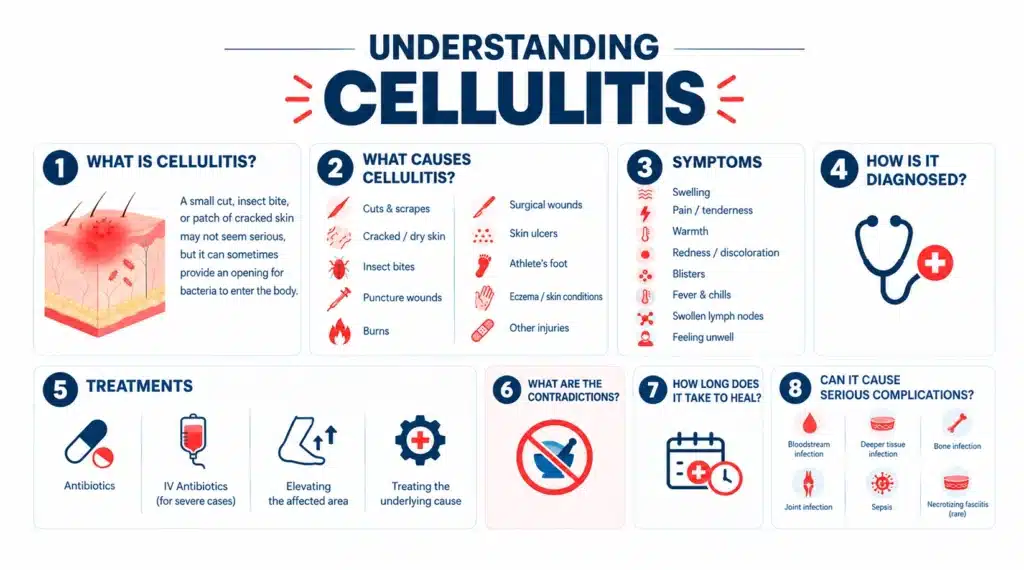
A small cut, insect bite, or patch of cracked skin may not seem serious, but it can sometimes provide an opening for bacteria to enter the body. When bacteria infect the deeper layers of the skin, the result can be cellulitis, a common bacterial skin infection that can become serious if treatment is delayed.
Cellulitis often causes painful, warm, swollen, and discolored skin. It can develop anywhere on the body but frequently affects the lower legs. Early medical evaluation and appropriate antibiotic treatment can help prevent the infection from spreading to deeper tissues or the bloodstream.
A Closer Look at Cellulitis
Cellulitis is a bacterial infection involving the deeper layers of the skin and the tissue underneath it. It occurs when bacteria enter through a break in the skin and begin multiplying in the surrounding tissue. Cellulitis is different from an abscess. An abscess is a localized collection of pus, while cellulitis is generally a spreading infection of the skin and underlying tissue. Because an abscess may require drainage in addition to other treatment, Altus ER Lumberton TX can provide prompt medical evaluation when you are concerned about a skin infection.
What Causes Cellulitis?
When people ask what causes cellulitis, the answer usually involves bacteria entering the skin through a break or damaged area.
Common entry points include:
- Cuts and scrapes
- Cracked or excessively dry skin
- Insect bites
- Puncture wounds
- Burns
- Surgical wounds
- Skin ulcers
- Athlete’s foot
- Eczema or other skin conditions
- Other injuries that break the skin
The opening may sometimes be so small that you never notice it. Streptococcus and Staphylococcus bacteria are among the common causes of cellulitis.
What Are the Symptoms of Cellulitis?
Recognizing cellulitis symptoms early is important because the infection can spread if it is not treated appropriately.
Common symptoms include:
- Swelling
- Pain or tenderness
- Warmth over the affected area
- Redness or other skin discoloration
- Tight or stretched-looking skin
- Blisters
- Skin dimpling
- Fever
- Chills
- Swollen or painful lymph nodes
- Feeling generally unwell
Cellulitis may look different depending on a person’s skin tone. Redness can be less noticeable on brown or Black skin, so warmth, swelling, tenderness, pain, and changes in skin appearance or texture can also be important warning signs.
How Quickly Can Cellulitis Symptoms Develop?
Cellulitis can develop over a relatively short period and may become more noticeable as the infection progresses. A rash or swollen area that is rapidly changing or spreading deserves prompt medical attention, particularly when accompanied by fever or other systemic symptoms.
Who Is More Likely To Develop Cellulitis?
Although cellulitis can affect anyone, certain factors can make the infection more likely.
Broken Skin
Cuts, burns, punctures, surgical wounds, and scrapes can break the skin’s protective barrier.
These openings can give bacteria an entry point and increase the risk of cellulitis.
Chronic Skin Conditions
Eczema, athlete’s foot, and other conditions that cause dry, cracked, or damaged skin can increase the risk of infection.
Lymphedema and Chronic Swelling
Long-term swelling of the arms or legs can increase the risk of developing cellulitis and may contribute to recurrent infections.
Diabetes and Weakened Immunity
Diabetes, weakened immunity, and certain medications can make it harder for the body to fight infections. These factors can increase the risk of developing cellulitis.
Past Cellulitis
A previous episode of cellulitis can increase the likelihood of developing another infection, particularly when underlying risk factors remain untreated.
How Is Cellulitis Diagnosed?
A healthcare professional can often diagnose cellulitis by examining the affected skin and reviewing your symptoms and medical history. Depending on the presentation, additional testing may be used to evaluate the infection or rule out other conditions. Blood or wound cultures are not routinely necessary for typical uncomplicated cellulitis, but clinicians may consider additional testing in people with certain severe infections, immune problems, unusual exposures, or other risk factors.
What Are the Most Effective Cellulitis Treatments?
The appropriate cellulitis treatments depend on the severity of the infection and the individual’s health history.
Antibiotics for Cellulitis
Your healthcare professional will select the medication and treatment duration based on factors such as the severity of infection, suspected bacteria, allergies, medical history, and local considerations. Take antibiotics exactly as prescribed rather than stopping treatment simply because symptoms begin to improve.
Intravenous Antibiotics for Severe Cellulitis
More serious infections may require antibiotics delivered through a vein. Hospital-based treatment may be considered when cellulitis is extensive, accompanied by significant systemic illness, fails to respond to oral treatment, or occurs in someone with significant immune compromise.
Elevating the Affected Area
Keeping an affected arm or leg elevated when possible may help reduce swelling. Your healthcare professional may recommend elevation as part of your recovery plan.
Treating the Underlying Cause
If recurrent cellulitis is associated with conditions such as chronic swelling, eczema, venous insufficiency, or athlete’s foot, addressing these contributing factors can help reduce the risk of future infections.
What are the Contradictions
Do not rely on home remedies instead of appropriate medical treatment for suspected cellulitis. Applying random creams, attempting to drain an infected area yourself, or delaying evaluation while the infection spreads can allow a potentially serious infection to progress.
How Long Does Cellulitis Take To Heal?
Symptoms of cellulitis may not disappear immediately after starting antibiotics. Some people notice improvement within a few days, while more extensive infections can take longer to resolve. In some cases, symptoms may temporarily appear worse during the first 48 hours before improvement begins.
If symptoms continue to worsen or you do not begin improving after starting treatment, seek prompt medical evaluation at the nearest emergency room. Your condition may require reassessment and further treatment.
Can Cellulitis Cause Serious Complications?
Cellulitis is treatable, but delaying care can allow the infection to spread.
Potential complications include:
- Bloodstream infection
- Infection of deeper tissues
- Bone infection
- Joint infection
- Sepsis
- Necrotizing fasciitis in rare but severe cases
Repeated episodes can also contribute to persistent swelling and other complications involving the lymphatic system.
Severe pain that seems disproportionate to the visible skin changes, rapidly progressing infection, significant skin discoloration, tissue damage, systemic illness, or failure to respond to appropriate treatment can raise concern for a deeper infection requiring immediate evaluation.
When To Go to the ER for Cellulitis
Knowing when to go to the ER can be especially important when cellulitis symptoms change rapidly or are accompanied by signs of a serious infection.
Seek emergency medical care if cellulitis is associated with:
- Rapidly spreading redness, swelling, or discoloration
- Severe or rapidly worsening pain
- Very high fever or severe chills
- Rapid heartbeat or rapid breathing
- Dizziness or fainting
- Confusion or disorientation
- Purple patches or significant skin discoloration
- Cold, clammy, or unusually pale skin
- Severe weakness
- Loss of consciousness
- Signs that the infection is spreading despite treatment
These symptoms can indicate a serious systemic infection or another potentially dangerous condition.
If you are unsure whether your symptoms require emergency attention, worsening symptoms should not be ignored. A medical professional can assess the infection and determine the appropriate level of care. If you need immediate attention, a 24/7 emergency room like Altus ER Lumberton TX can provide prompt evaluation and treatment.
How To Prevent Cellulitis
You cannot prevent every case of cellulitis, but good skin care can reduce opportunities for bacteria to enter the body.
Keep Cuts and Wounds Clean
Clean cuts and scrapes promptly and follow appropriate wound-care instructions. Keeping wounds protected can help reduce exposure to bacteria.
Protect Dry and Cracked Skin
Moisturizing dry skin may help maintain the skin barrier and reduce cracking that can provide bacteria with an entry point.
Treat Skin Conditions
Athlete’s foot, eczema, and other conditions that damage the skin should be appropriately managed to reduce the risk of infection.
Manage Chronic Swelling
If you have persistent swelling or lymphedema, follow your healthcare professional’s recommendations for managing it.
Pay Attention to Your Feet
Regularly check your feet for cuts, blisters, cracks, or other injuries, particularly if you have conditions that may affect sensation or circulation.
Cellulitis Vs. Other Skin Conditions
Not every red, swollen, warm, or painful area is cellulitis. Conditions such as abscesses, allergic reactions, insect bites, blood clots, inflammatory skin disorders, and deeper soft-tissue infections can cause similar symptoms but require different treatments. A healthcare professional can assess the affected area and determine whether you need antibiotics, drainage, imaging, or other treatment.
Emergency Care For Serious Cellulitis Symptoms
Cellulitis can often be successfully treated when identified early, but rapidly worsening symptoms should never be ignored. If you develop severe pain, rapidly spreading swelling or discoloration, high fever, confusion, fainting, rapid breathing, or other signs of a serious infection, emergency evaluation may be necessary.
Altus Emergency Centers provides 24/7 emergency care for patients experiencing urgent symptoms and medical concerns. If cellulitis symptoms are severe, rapidly progressing, or accompanied by signs of a potentially serious infection, seek immediate medical attention rather than waiting for the condition to improve on its own.
Key Takeaways
- Cellulitis is a bacterial infection affecting deeper layers of the skin.
- Common cellulitis symptoms include warmth, swelling, pain, tenderness, and skin discoloration.
- The legs are a common location, particularly when wounds, athlete’s foot, chronic swelling, or other risk factors are present.
- Rapidly spreading infection, severe pain, high fever, confusion, fainting, purple skin changes, or other signs of serious illness require urgent medical evaluation.
Frequently Asked Questions
Is Cellulitis Contagious?
Generally, no. Cellulitis itself is not usually spread from person to person through casual contact. It occurs when bacteria enter the deeper layers of the skin, typically through a cut, wound, crack, bite, or another break in the skin.
Is Cellulitis Spreadable?
Cellulitis is not typically spreadable from one person to another, but the infection can spread within the affected person’s body.
What Does Cellulitis Look Like?
Cellulitis commonly appears as an area of swollen, warm, tender, and painful skin. It may look red or discolored, depending on the person’s skin tone. The affected area may become increasingly swollen or develop blisters or a dimpled appearance.
What Causes Cellulitis in the Legs?
Cellulitis in the legs usually develops when bacteria enter through damaged skin. Cuts, scrapes, ulcers, insect bites, cracked skin, and fungal infections such as athlete’s foot can create an entry point.
How Do You Get Cellulitis?
You generally develop cellulitis when bacteria enter deeper layers of the skin through an opening such as a cut, scrape, puncture wound, insect bite, burn, surgical wound, ulcer, or crack in the skin.
Can Cellulitis Go Away on Its Own?
Cellulitis should not be expected to resolve without appropriate medical treatment. Because it is a bacterial infection that can spread, early evaluation and appropriate antibiotic treatment are important.